





217

32
I had so much fun making this that I plan on making more similar flying models- but I don't know what I should make next. Another WWI bird like a Sopwith Camel? Something bizarre like a pusher prop F-104 Starfighter? Something else entirely? Help me out by dropping a comment on what tiny flying models you would like to see next!
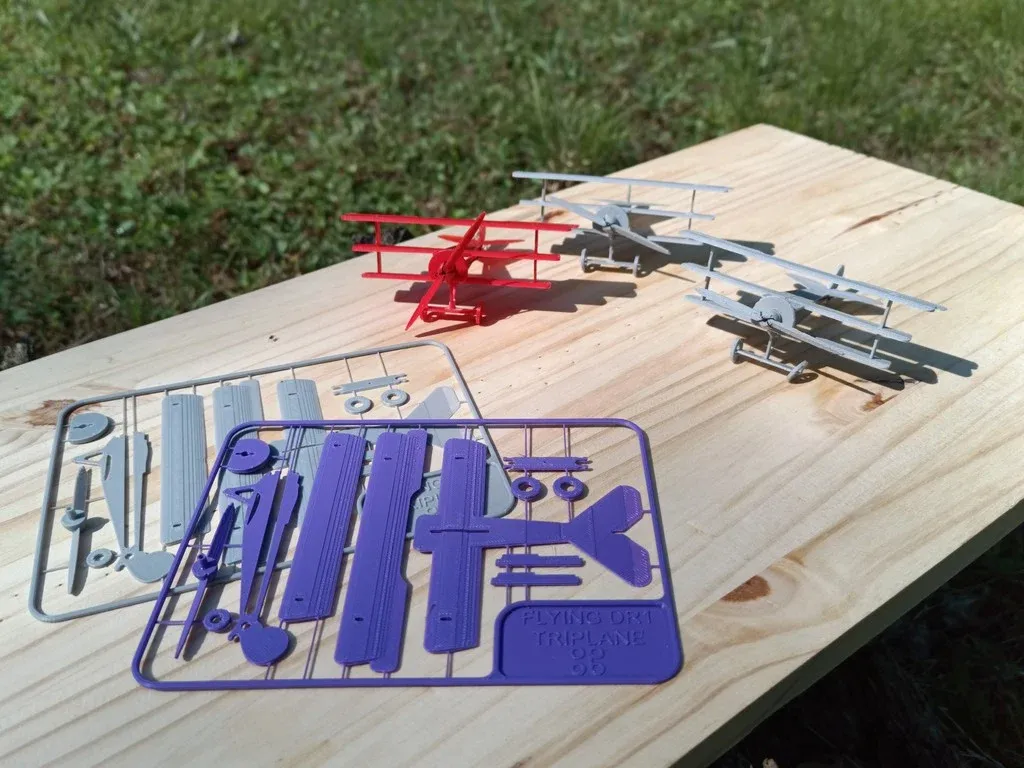
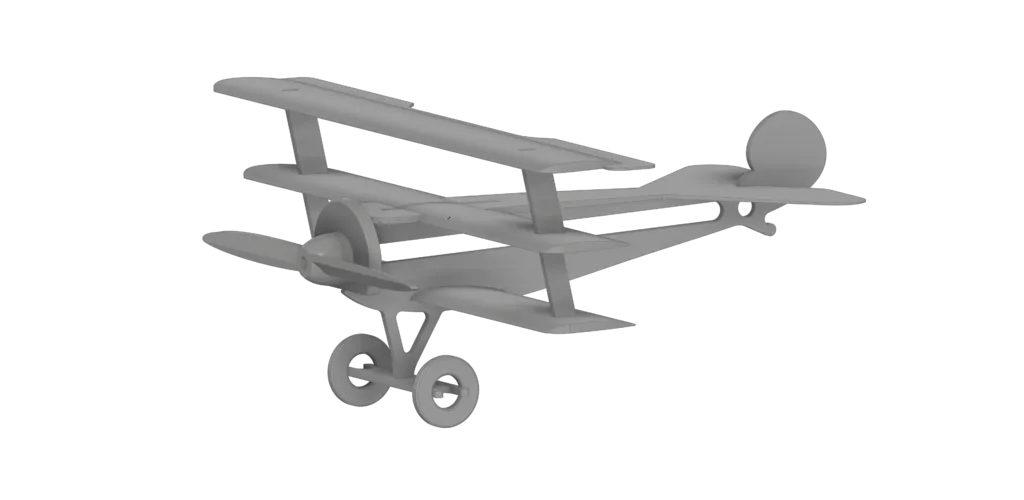
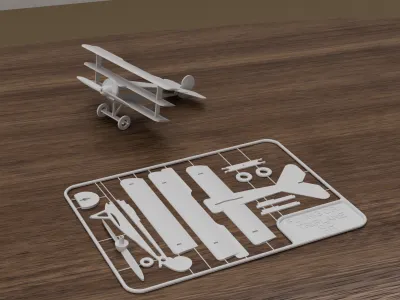
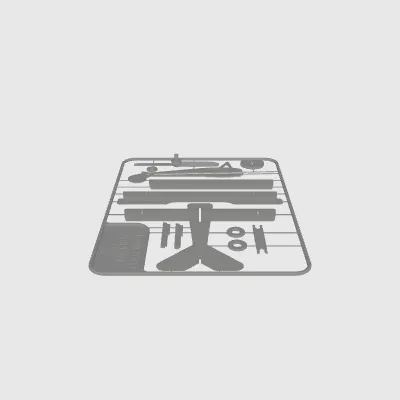
This is a flying kit card model based on the Fokker DR1 Triplanes that flew in the first World War.
I designed this Thing for the Fiverr X Thingiverse Flat Pack Fun Challenge, and indeed this was a challenging and fun model to design!
I recently noticed a large amount of 3D printed kit card planes are never intended to fly, and the nostalgia of being a young kid with nothing but an afternoon and a 79¢ Guillows Starfire flooded back. I felt compelled to make a model that flew. Better yet, I decided to make this little Fokker elastic powered for some self-propelled fun!
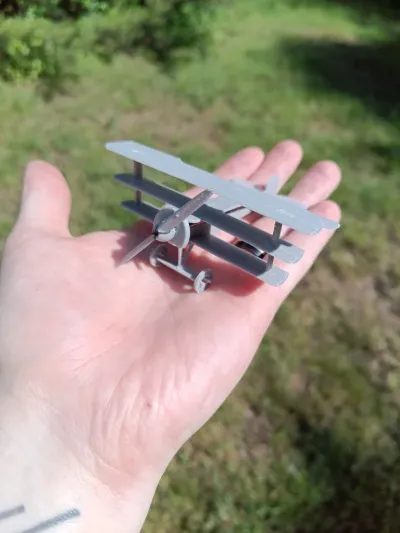
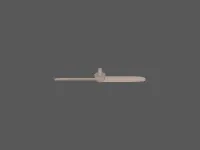
The wingspan of the top wing and control surfaces comes in at just 110mm (a hair over 4 inches.) Snap the parts out and clean them up, a little super glue, a piece of .5mm jewelry elastic and a dab or two of lubrication and this little Baron is ready to take flight! Be careful removing this model from the buildplate to preserve the small details and thin areas. Also, the propeller is intentionally long to allow trimming to alter the flight characteristics- an independent file for a spare prop is included in case you trim a little too much.
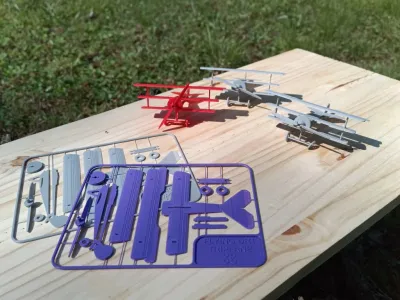
0.2mm layer heights work best for some of the thinner areas. Drop your print speed! A modern high speed printer will cause some roundness in the corners and lead to more cleanup when assembling. Favor lighter filaments if you plan for this model to fly- ABS/ASA, HIPS, PP all have decent strength and densities near 1g/cm3. For the best performance a foaming/lightweight PLA is an option, but expensive if you don't already have a spool on hand..
This Thing is marked as a work in progress due to issues with the elastic. Currently, the planes are only capable of powered flight for 2-3 seconds, and the elastic I've been using fails after 1-2 flights. I have a tons of different options coming, and will be experimenting to determine the best material for this build, with a goal of at least 10 seconds flight time. In the meantime, this is still a fun model to build!
This is the elastic I am currently using that is not recommended:
https://amzn.to/3FvQp1R
This model benefits greatly from Polymaker's Light-Weight PLA, one of my assembled planes with this filament weighs less than 7g!:
https://us.polymaker.com/products/polylite-lw-pla?variant=39574342828089&aff=1186&utm_source=affiliately&utm_campaign=aff
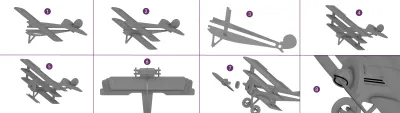
Steps as indicated by the provided image:
First, remove all pieces, clean up with a hobby knife where needed, and dry fit components to see where you may need to trim/file/sand/etc.
- Combine the Fuselage and Central Wing with a few dabs of glue.
- Slide in the Lower Wing
- Insert Spars from above- Note: the thicker section remains on top of the main wing, with the top pin forward. Small drops of glue where spars meet wings.
- Attach the Top Wing, again with small dots of glue on mating surfaces.
- Glue the Wheel Strut and Engine Cowl to the Fuselage- Note: point the printbed surface of the Cowl forward to provide a smoother surface for the Propeller to ride on. If you have trouble keeping the Fuselage tabs aligned in the Cowl, an M3 screw can be inserted to provide a perfect spacing.
- Once the glue has cured, gently press the two Wheels onto the Wheel Strut.
- Insert the Propeller into the Thrust Bearing, slide both into the hole in the Cowl- Notes: ensure the printbed surface of the Bearing is making contact with the printbed surface of the Cowl, adding a drop of silicone or other stable lubricant to both sides of the bearing is recommended. An M3 washer can be added to reduce the friction between the Cowl and Bearing.
- Wrap a piece of ~0.5mm elastic around the Propeller, and feed it through the Fuselage, tie it off at the hole in the back of the Fuselage and trim any excess.
This model is a public domain contribution- make it, gift it, sell it, modify it, do whatever you want. Every plane kit card that I design after this will also be public domain.
Some of the links shared on this post may be affiliate links. If you choose to make a purchase through them, I may earn a small commission—at no extra cost to you. This helps support my designs and future projects. Thanks for your support!
If you greatly enjoy this model, or plan to sell it- consider sending me a small donation that will help me make more free projects like this one.
www.paypal.me/OptimalObjects
I know there is some room for improvement- I'm working on a better printable propeller profile, better kit card sprues, more functional landing gear, and a few other aspects. These will all be improved with each plane I design, and this model may receive a future update to reflect the improvements I make as I continue to learn this form of functional kit making.
.3MF, .STL, .STEP, and Fusion files included.
If you liked this model, it may be a good time to follow me. I plan on more models like this, and I am a few months into the development of a printable remote control fixed wing recon drone with modular sensors and comms relay. That drone, called Eider, should be coming soon.
Originality of the Model
The author declares that this work is their personally original model
This model is licensed under the following terms:
No Copyright.
Models(4)
 Flying_WW1_German_Triplane_Kit_Card.3mfDesigner
3.34 MB

2025-08-09
 Flying_WW1_German_Triplane_Kit_Card.stlDesigner
13.61 MB
2025-08-09
 Spare_Propeller.3mfDesigner
1.18 MB
2025-08-09
 Spare_Propeller.stlDesigner
4.88 MB
2025-08-09
View all(4)


