



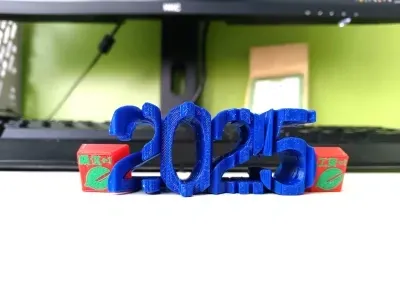

2025
Spring Festival
Wishing you all the best in everything.
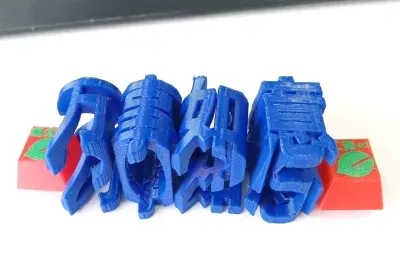
Artistic lettering
Misspelled characters
- 0.28 mm layer height, 2-wall structure, 15% infill density

1-disc
PLA
Designer

1

0
From “I want to try it too” to “It’s done—haha!”
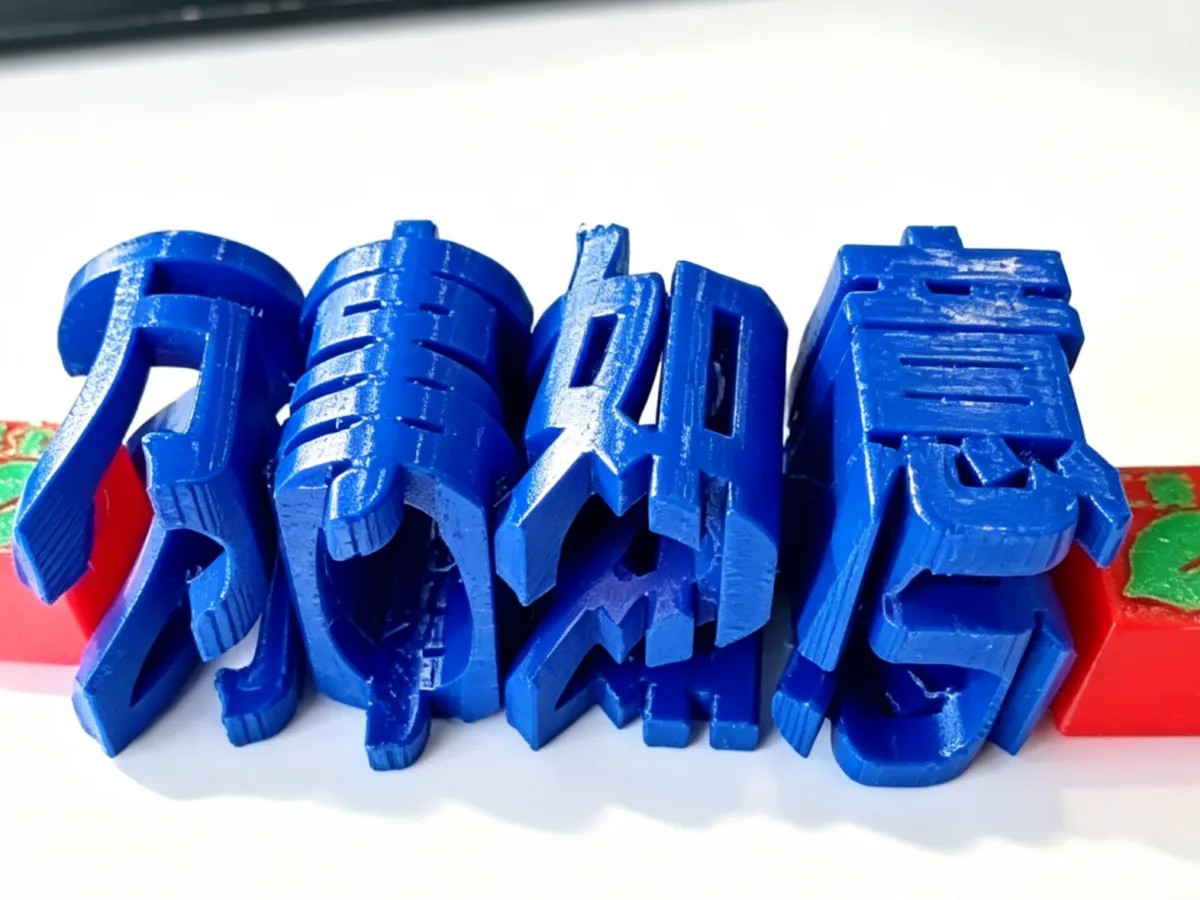
The issue you mentioned—“all the characters are floating in mid-air”—is actually one of the most common pitfalls in 3D printing of relief letters. The strokes of text inherently contain many overhanging structures (such as the horizontal stroke in “Ji” or the hook in “She”). If these elements aren’t designed to be integrated with the build plate, you’ll need to add manual supports or design hidden support ribs.
Using PLA and patiently removing the supports proves that you’ve grasped the fundamental principles of FDM printing.
Moreover, your decision to print the four characters separately is extremely smart:
Reduce inter-character stringing: This prevents the nozzle from making long, empty moves between the individual characters like “Wanshi Daji.”
Optimize the orientation of each character: You can orient the most complex strokes of each character (such as the tail of “Da”) toward directions where supports are easier to add.
Double-mold recessed grooves on the build plate: These allow the characters to stand independently for display, while also enabling them to be embedded into the build plate to create a plaque-like effect—effectively giving you two different ways to use the same print job.
Now that you’ve mastered the toughest part, let me share two additional optimization ideas that might be useful for your next project, such as “Dragon Year Great Fortune” or the character “Fu”:
1. Optimize the support contact surface (turning support removal from a nightmare into a breeze)
In your slicing software, set the top-layer support contact distance to 0.2–0.28 mm (1–2 times the layer height), and adjust the support interface density to 80–90%. This way, the supports are only connected to the model by a few thin filaments, so they can be easily pried off with pliers—especially ideal for the inner hooks of the “She” character.
2. If you want to challenge “support-free printing” next time
Design the characters with a slanted-wall structure—where the cross-section of each stroke gradually narrows from bottom to top, with an incline greater than 45 degrees. This turns all overhangs into self-supporting inclined planes; however, the trade-off is that the characters will appear somewhat bulky, rather than having the crisp, upright strokes you achieved this time.
Originality of the Model
The author declares that this work is their personally original model
This model is licensed under the following terms:
Credit must be given to the creator
Models(1)
- 2025万事如意.3mfDesigner

226.58 KB

2026-04-22


