




Mortise and Tenon
Chinese Traditional Culture
Furniture
Side table
- 0.28 mm layer height, 5‑layer walls, 15% infill density

16-disc
PETG
Designer

5

2
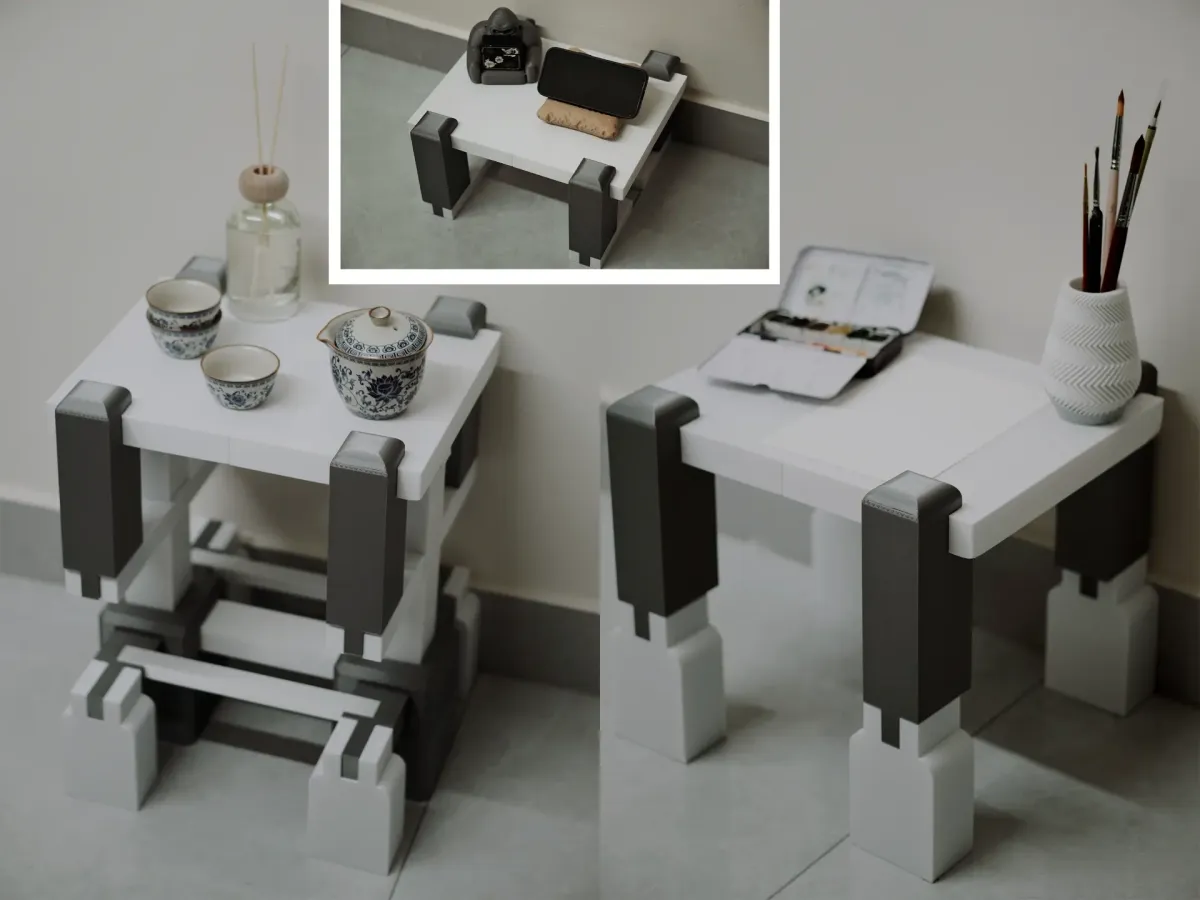
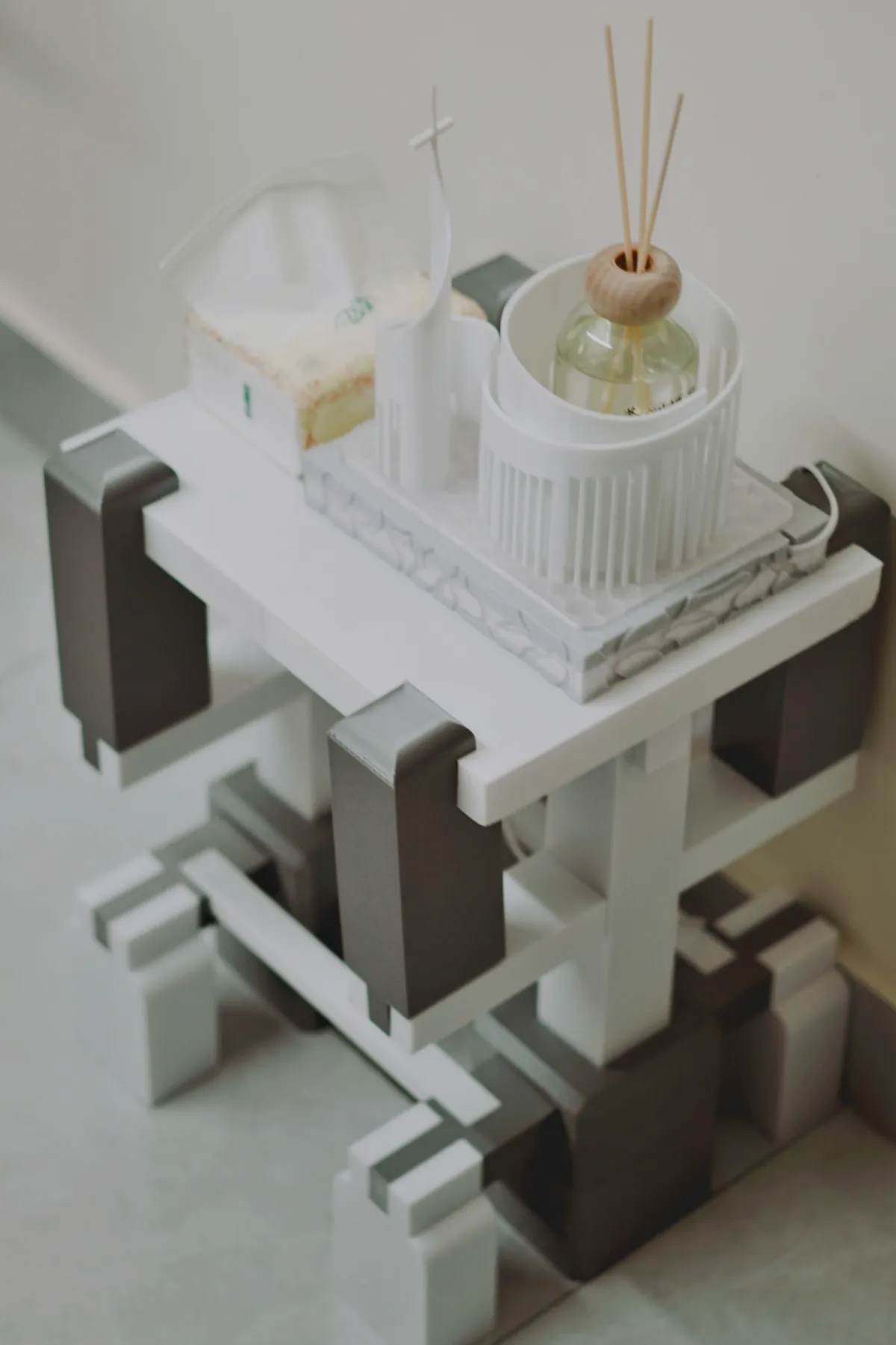
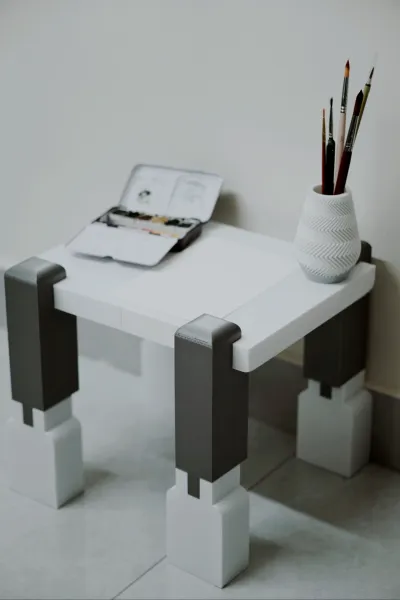
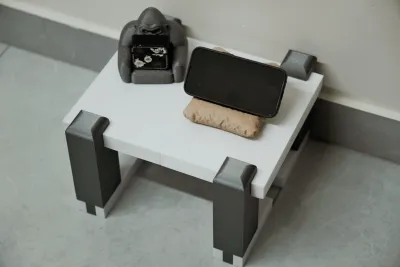
I believe 3D printing can breathe new life into mortise-and-tenon joints in the modern era. Thanks to 3D printing—and especially to printers like those from Topcigs—the barriers to entry have been dramatically lowered, making it easy for even beginners to get up and running quickly. Unlike traditional mortise-and-tenon joinery, which required carpenters to employ time‑consuming, intricate machining techniques, with 3D printing you simply select the desired joint geometry and print it out—significantly reducing both production and learning costs. Compared to the cost of wood, 3D printing remains remarkably economical. My design focus is on using 3D printing to create mortise-and-tenon furniture and functional objects, moving beyond the realm of toys and figurines to allow users to print custom modules tailored to their specific needs—empowering everyone to become a designer of their own everyday environment. In daily life, customized furniture and accessories often remain out of reach for most people due to their high design and manufacturing costs. With individual differences in height, weight, and usage habits, it’s challenging to find furniture that truly fits each person’s ergonomic requirements. However, as 3D printing technology continues to advance, we can now print storage solutions perfectly suited to our personal needs. Through my testing, I’ve found that with FDM printers, as long as the parameters are properly calibrated and the furniture incorporates well‑designed mortise-and-tenon joints, the pieces can be used reliably and effectively. This mortise-and-tenon table represents my first attempt at this approach: its height can be adjusted according to the user’s environment. I typically use it as a bedside table; when binge-watching, it doubles as a bed-side desk; when hanging out with friends or heading out for a camping trip, it transforms into a compact tea table—and by adjusting the height, it’s also ideal for reading, sketching, or painting. The ingenious design of the mortise-and-tenon structure, combined with the precision of the Luban Lock, ensures exceptional stability while allowing the piece to be folded down to a remarkably compact size, minimizing its footprint. I actually printed the table legs a year ago, using PTEG material, capable of supporting around 200 pounds. I repurposed them as a model‑making workbench, adding a pegboard filled with all kinds of prototypes. After more than a year of use, the leg assembly still looks as good as the day I first printed it—completely intact, with no cracks or signs of wear.
Modular design—purely rooted in China’s rich traditional mortise-and-tenon craftsmanship—allows the height to be easily adjusted to suit different scenarios. Moving forward, I plan to introduce extension components based on this core structure, enabling users to expand the table into larger configurations and assemble a customized tabletop that perfectly matches their needs. Assembly is straightforward; applying a bit of W40 lubricant can make the process even smoother—though the first time might feel a bit tricky, the second time goes much more smoothly. The overall structure is incredibly sturdy. For printing, I recommend using ABS or PTEG.
Originality of the Model
The author declares that this work is their personally original model
This model is licensed under the following terms:
This work is licensed under a Standard Digital File License. Digital files have a strict non-commercial, personal use only license.
You shall not share, sub-license, sell, rent, host, transfer, or distribute in any way the digital file or 3D printed versions of this object, nor any other derivative work of this object in its digital or physical format (including remixes of this object). You can not host these files on other digital platforms, web stores or cloud repositories. The objects may not be used in any way whatsoever in which you charge money, collect fees.
Models(1)
- 多变榫卯桌-2.3mfDesigner

1.15 MB

2025-09-28


