


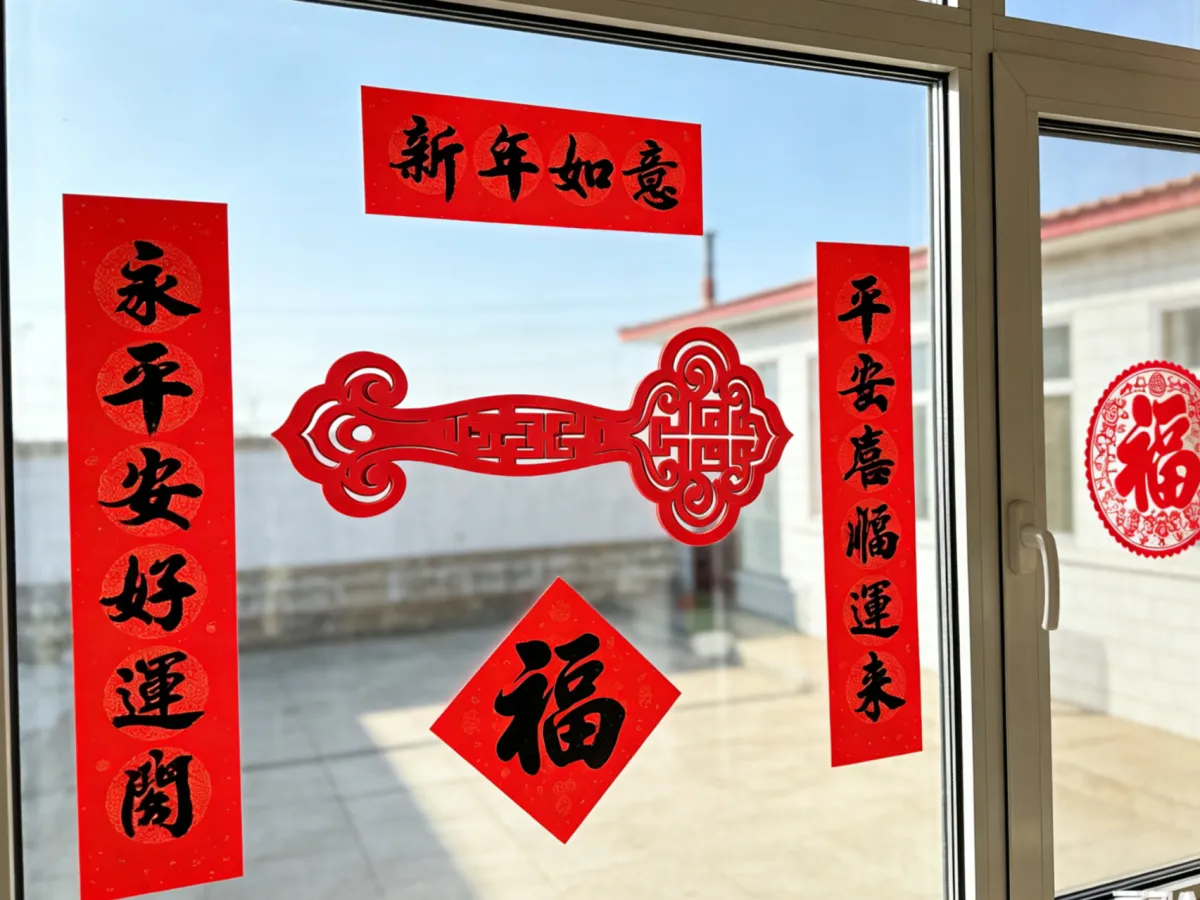
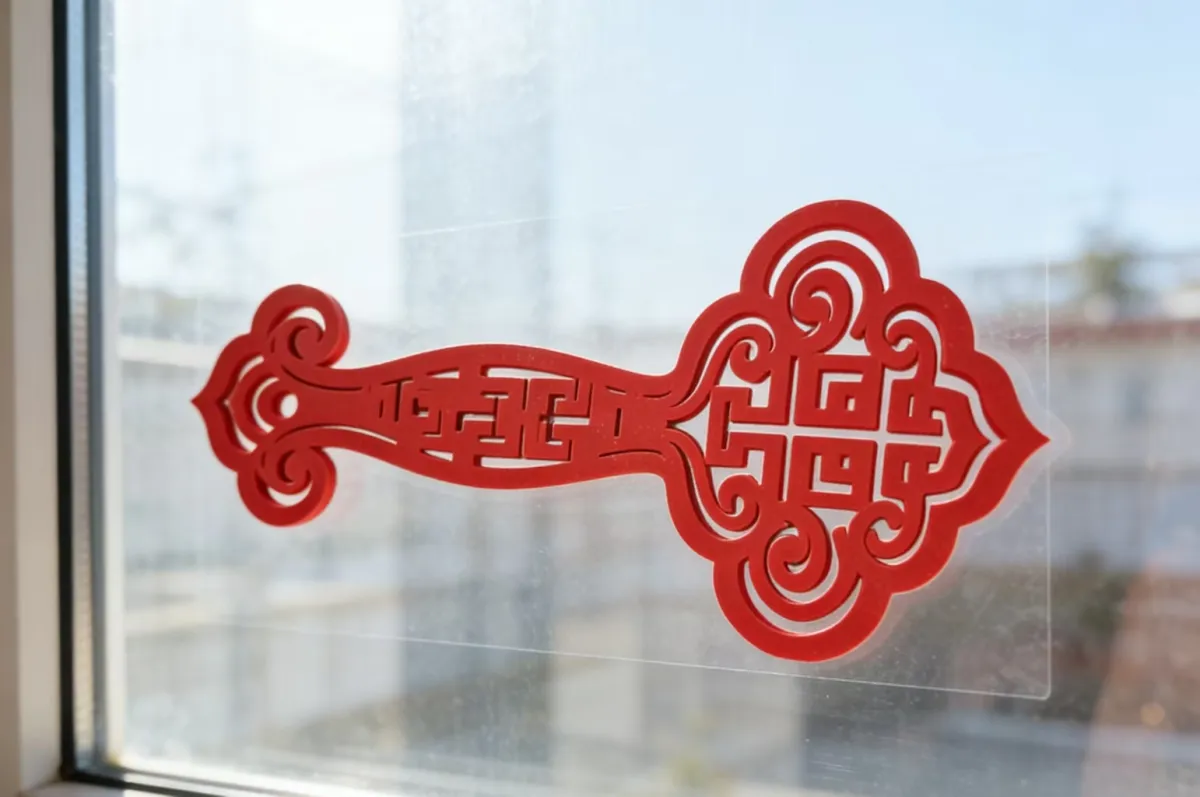

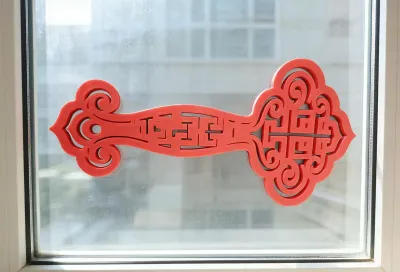

Enjoy a truly satisfying 3D printing experience!
Easy to replicate
Traditional Art Meets 3D Technology
No additional post‑processing required.
Robust and durable, capable of handling a wide range of applications.
Precision Hole Drilling
Design with Zero Gaps
Smooth Contour for Adhesion
Striking red accents
Intricate scrolling vine motifs
Perfect for the Chinese New Year!
If you’re unsure, it’s best to start with a small-scale test print.
Use glue sticks to achieve better adhesion.
Proper bed preheating ensures zero warping or deformation.
Layer-to-layer adhesion consistency
Fast printing speed
Minimal Post‑Processing
No support marks

- 0.2 mm layer height, 3‑layer walls, 15% infill density

1-disc
PLA
Designer

1

0
1. Sources of Printing Inspiration
This wall decal draws its core design from the harmonious fusion of traditional Chinese Ruyi motifs and Huiwen patterns.
- Ruyi Motif: Rooted in the ancient Chinese auspicious object known as the “Ruyi,” this motif symbolizes “everything going as one wishes and all endeavors succeeding smoothly,” making it one of the most iconic and representative symbols of good fortune in traditional Chinese ornamentation.
- Huiwen Pattern: As a quintessential geometric motif in Chinese art, the Huiwen pattern conveys the寓意 of “endless continuity and enduring prosperity.” When combined with the Ruyi motif, it amplifies the profound blessing of “wealth and prosperity that never cease.”
- Design Innovation: The overall form captures the graceful curves of the Ruyi, while modern hollow‑cut techniques bring traditional patterns to life—preserving the dignified elegance and heartfelt blessings of Chinese aesthetics while seamlessly integrating minimalist contemporary sensibilities. This design is perfectly suited for wall decor in New Chinese–style interiors, tea rooms, studies, and other spaces.
2. Printing Configuration Requirements
To ensure the precision of each three‑dimensional component and achieve optimal assembly results, we recommend the following printing settings:
Item | Recommended Parameters | Notes
Printer Type | FDM 3D Printer (e.g., Prusa, Ender 3) | Ideal for printing large, disassemblable models—cost‑effective and easy to operate.
Filament | PLA Filament (Red or Custom Colors) | PLA offers high printing accuracy and a neutral odor, making it an excellent choice for indoor decorative pieces; the red hue particularly complements the festive, celebratory ambiance of traditional Chinese design.
Layer Height | 0.2 mm | Strikes a balance between print speed and surface finish quality.
Fill Density | 15%–20% | Ensures structural integrity while minimizing material waste.
Print Speed | 40–60 mm/s | For intricate curves and hollowed-out areas, we recommend reducing the speed to 40 mm/s to enhance detail fidelity.
Support Settings | Add supports only where overhanging structures exist | The curled sections of the Ruyi motif may require support; we suggest using tree‑like supports that are easy to remove after printing.
Splitting Principles | Divide according to the natural breaks in the pattern | Each individual module should not exceed the printer’s maximum build volume, with alignment markers left along the edges to facilitate seamless assembly.
3. Assembly Instructions
Since the decorative piece is composed of multiple independently printed components, installation should follow these steps:
1. Preparation
- Remove all completed printed modules and carefully clean any residual support material and burrs from the surfaces.
- Gather your tools: a spirit level, pencil, double‑sided tape or adhesive without nails (choose based on the wall’s surface material), and sandpaper (optional, for smoothing module edges).
2. Positioning and Layout
- On a flat surface such as the floor or a sturdy table, pre‑assemble all modules according to the design drawing to confirm the overall shape and relative positioning of each component.
- Use a pencil and spirit level to mark the outline of the entire design on the wall, ensuring that the central axis of the Ruyi motif is perfectly horizontal and centered.
3. Adhesion and Installation
- Begin by attaching the central module, then work outward in alternating directions. Apply double‑sided tape to the back of each module (or dot adhesive without nails onto the wall), align with the marked guidelines, and gently press down to secure the piece.
- For larger modules, apply additional adhesive dots to the back to ensure a firm bond; if the wall surface is made of latex paint or other delicate materials, we recommend using non‑trace double‑sided tape.
4. Fine‑Tuning and Reinforcement
- Once all modules are affixed, inspect the overall form to verify alignment and surface smoothness. If slight misalignments occur, gently peel off a module and reposition it as needed.
- If using adhesive without nails, press each module firmly for 1–2 minutes and avoid touching the surface for at least 24 hours to allow the adhesive to fully cure.
Originality of the Model
The author declares that this work is their personally original model
This model is licensed under the following terms:
Credit must be given to the creator
Models(1)
- 如意浮图.3mfDesigner

12.32 MB

2026-02-23


