




Air filtration
Filtering Particles
Dust

- 0.16mm layer, 2 walls, 15% infill

1-disc
PLA
Designer

13

1
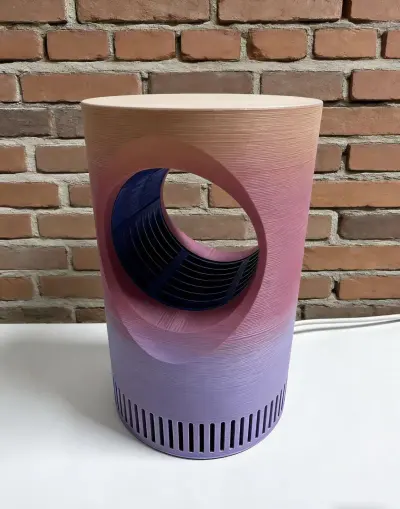
This is a highly integrated 3D-printed desktop air purifier. From both its aesthetic design and structural features, it stands as a quintessential maker‑grade custom creation, seamlessly blending the form‑giving advantages of 3D printing with practical air purification functionality. Below is a detailed disassembly and analysis, illustrated with real‑world component details:
I. Core Positioning and Aesthetic Design
Functional Focus: Primarily designed for desktop or personal microenvironment air purification, this compact device is ideal for placement on office desks, nightstands, or living room side tables—balancing air purification with decorative appeal, and even doubling as a small side table.
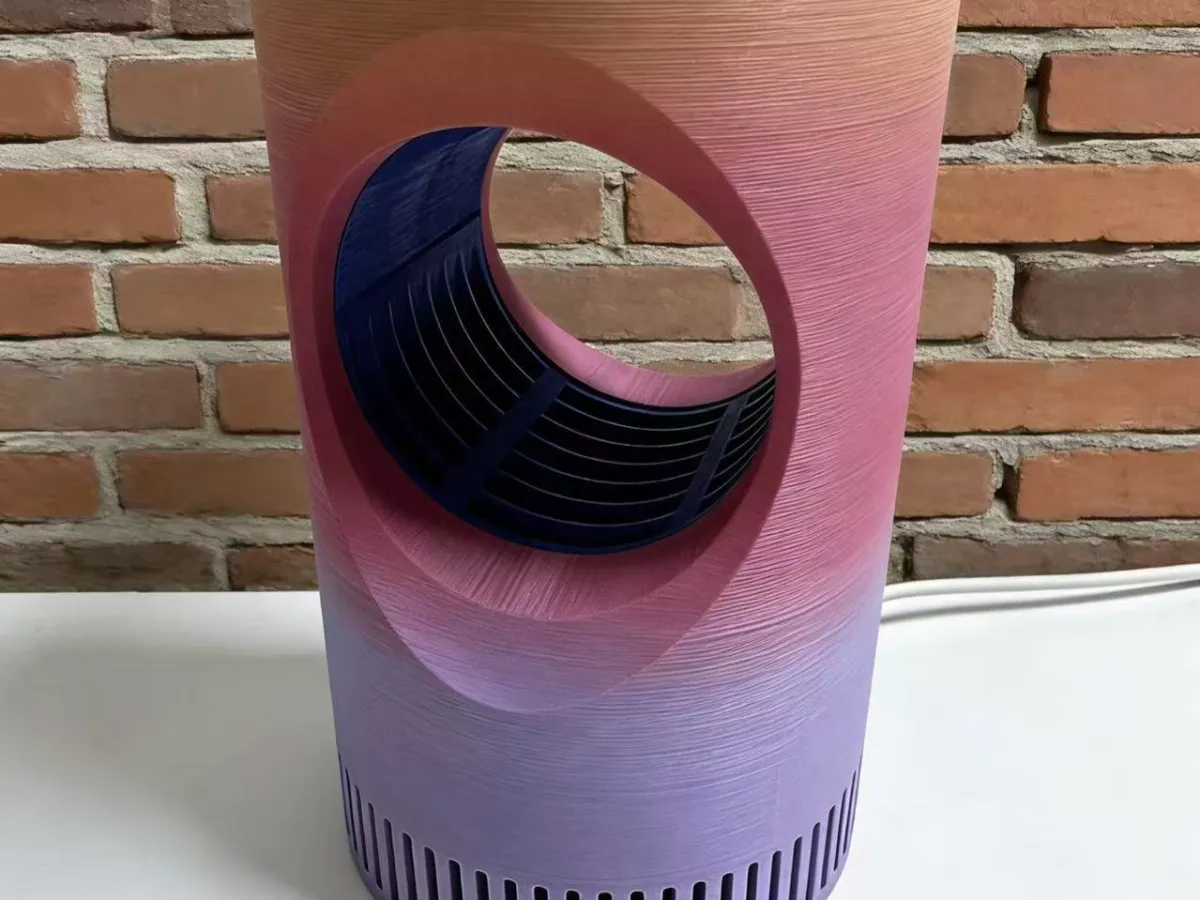
Visual Style: The device adopts a gradient rainbow / cyberpunk color palette (a pink‑purple gradient), leveraging FDM 3D‑printed multi‑color blended filaments to achieve seamless color transitions. The surface retains distinct layer‑wise texture, exuding a strong sense of technological sophistication while still conveying a warm, handcrafted feel.
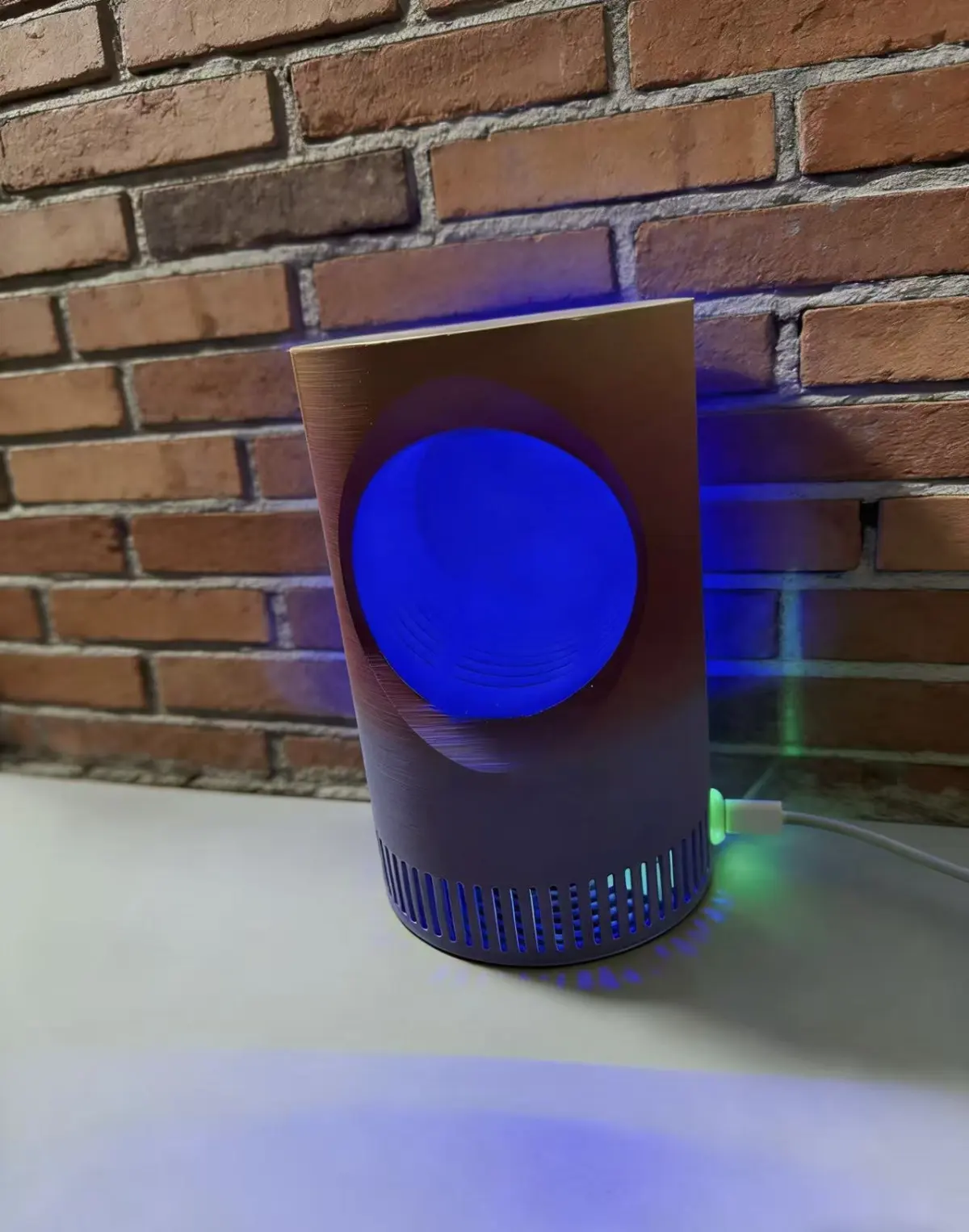
Design Ingenuity: The overall structure is barrel‑shaped, wider at the top and tapering toward the base. The flat top provides a convenient surface for placing objects, while the large circular cutout on the front not only serves as a visual focal point but also functions as the primary air outlet. The black fan assembly inside contrasts sharply with the colorful outer shell, creating a striking color contrast.
II. 3D‑Printed Structure and Engineering Highlights
Integrated Body Design
The outer shell is fully 3D‑printed in one piece, eliminating the need for complex assembly. The thickened platform at the top enhances load‑bearing capacity, enabling dual functionality—air purification combined with storage.
The dense striped grille at the bottom serves as the air intake, featuring a mechanically optimized design that ensures ample airflow while maintaining structural integrity and preventing brittle fracture of the printed components.
Airflow and Noise Reduction Design
Inside the circular front outlet, you can see a snail‑shell‑like air guide structure. This is a core advantage of custom 3D printing—allowing precise airflow channel design tailored to the fan’s dimensions, minimizing turbulence and reducing operational noise.
The internal black components—including the fan bracket and blades—are securely fastened to the outer shell via printed snap‑fits or screw posts, ensuring high coaxial alignment and smooth, stable operation.
Material Selection: For such projects, materials like PETG or ASA are commonly used for printing.
PETG: Offers excellent toughness and weather resistance, easily producing glossy surfaces—ideal for designs that emphasize color and texture.
ASA: UV‑resistant and capable of withstanding extreme temperatures, with performance closer to engineering plastics, making it well suited for devices that operate continuously under power.
III. Operating Principle and Internal Construction
This air purifier follows the classic airflow path of **“bottom intake → internal filtration → front outlet”:
Intake Phase: When the bottom-mounted fan starts, it draws ambient air through the bottom grille into the interior of the unit.
Filtration Phase: The hollow interior space typically houses a HEPA filter (High Efficiency Particulate Air filter) or an activated carbon filter (though not directly shown in the diagram, these components are essential). These filters capture dust, odors, and harmful particulates.
Exhaust Phase: Purified air is guided by the snail‑shell‑like structure within the front circular outlet, exiting as a gently curved airflow that creates a soft, circulating breeze.
IV. Unique Advantages of Custom 3D Printing
High Degree of Personalization: Users can customize the color—whether solid, gradient, or wood grain—to match their home decor, or adjust the body size according to the filter’s dimensions—features unattainable with mass‑produced products.
Freedom in Functional Integration: Makers often add features like RGB ambient lighting, temperature and humidity sensors, or wireless charging modules on top of this base design. The flexibility of 3D printing makes integrating these functions remarkably straightforward.
Low Maintenance and Upgrade Costs: If the fan fails or you wish to upgrade the filter, simply modify the corresponding 3D model and reprint the necessary parts—no need to replace the entire unit.
V. Applicable Scenarios and Precautions
Applicable Scenarios: Ideal for supplementary air purification in small spaces such as bedrooms or studies, or as a localized solution for mitigating e‑cigarette vapor or pet odors.
Maintenance Tips: Filters are consumables; most custom designs incorporate removable access doors on the side or bottom of the unit (not shown in the diagram—though a top‑access design may be used). To maintain optimal purification performance, filters should be replaced regularly.
Safety Reminders: As the device operates continuously under power, ensure that the shell fill density during printing is sufficiently high (recommended at 20% or above), and that the fan’s power supply module is adequately cooled to prevent plastic deformation caused by prolonged exposure to high temperatures.
Originality of the Model
The author declares that this work is their personally original model
This model is licensed under the following terms:
Credit must be given to the creator
Models(1)
- 空气过滤.3mfDesigner

471.94 KB

2026-02-24


