




Architecture
Retro
Decoration
Decorative Figurine
Landscape Creation

- 0.2 mm layer height, 2-wall walls, 10% infill density

1-disc
PLA
Designer

3

1
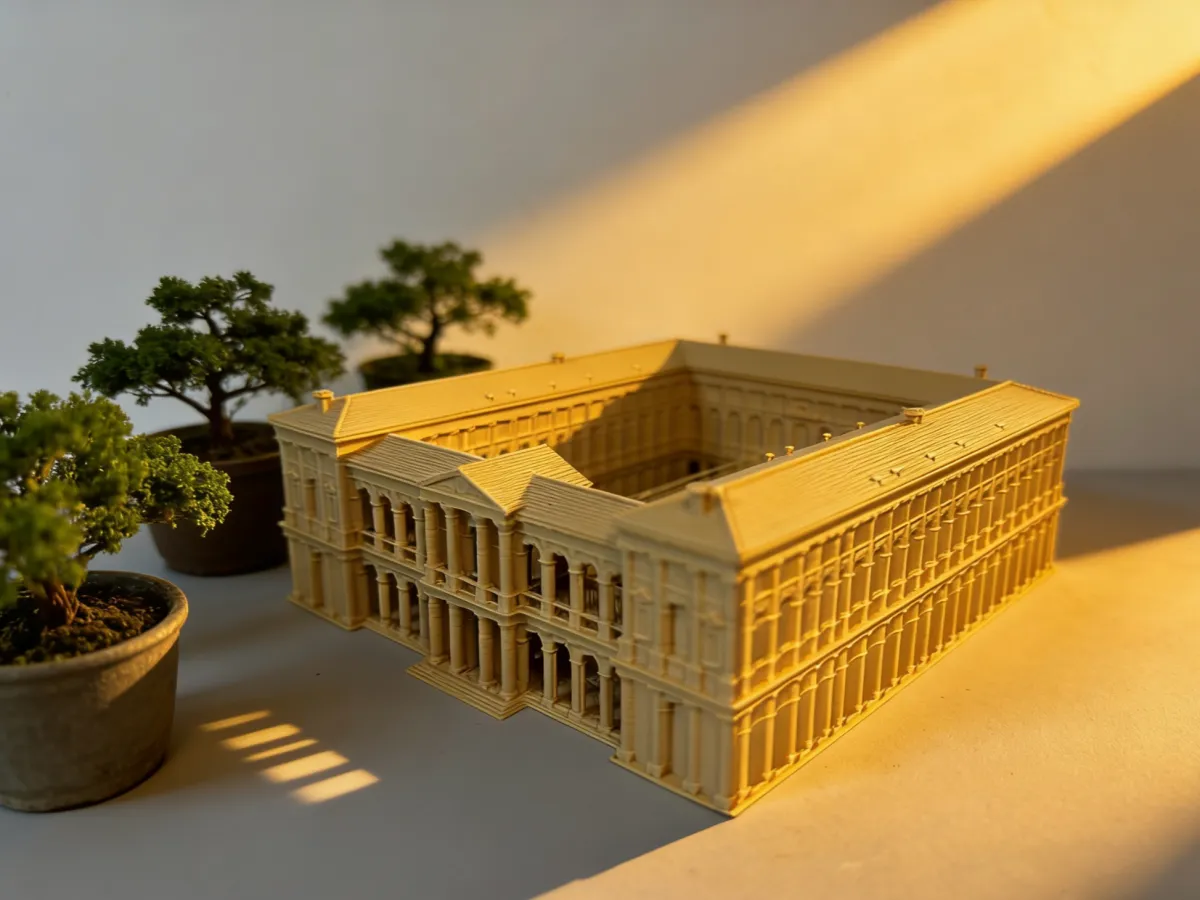
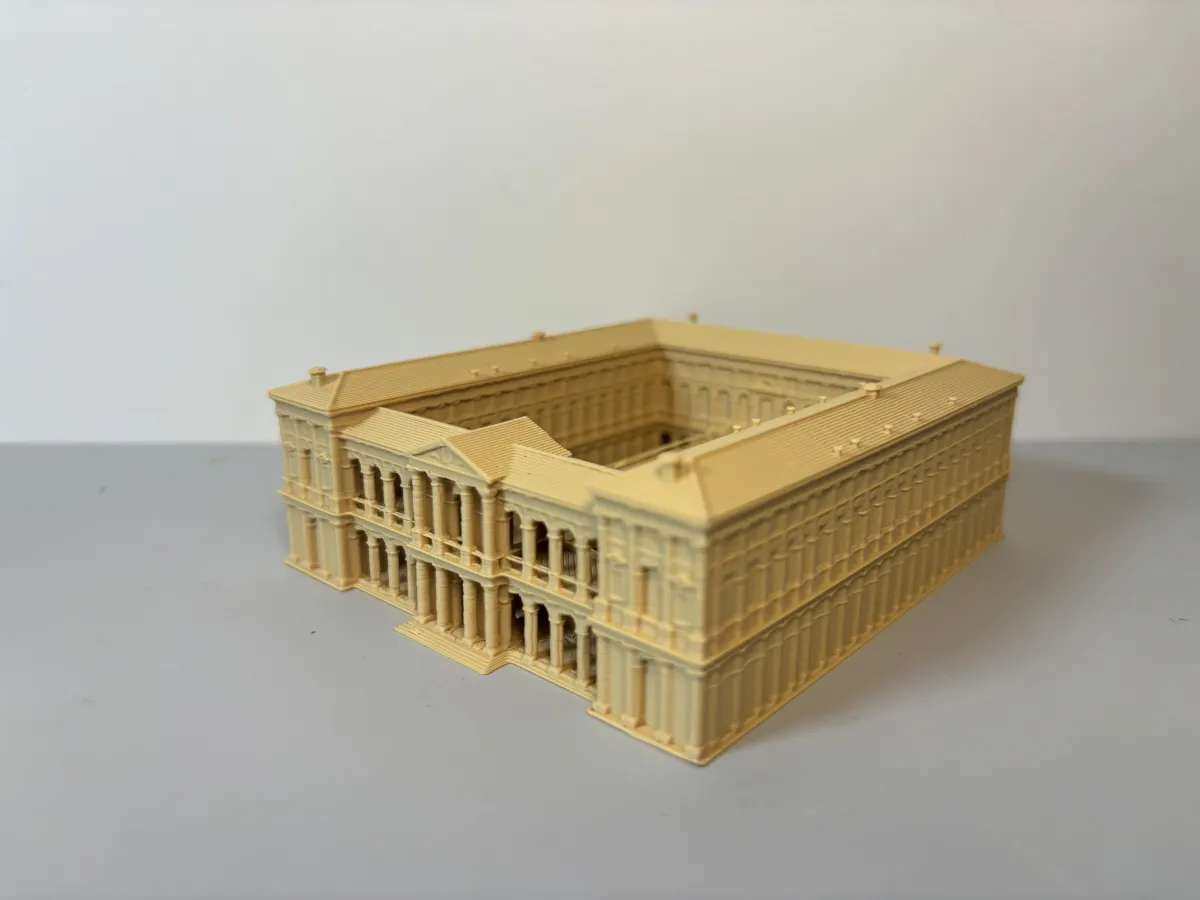
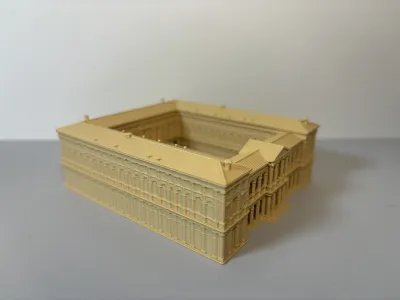
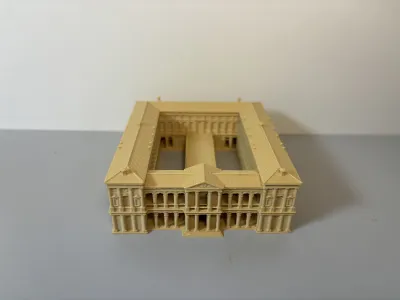
The classic colonnaded courtyard layout, with a square inner courtyard at its core surrounded by double-tiered porticoes, is the most representative spatial configuration of Renaissance palaces and mansions. This layout both carries forward the spatial order of ancient Roman architecture and, through its open, airy colonnades, creates an open, symmetrical humanist atmosphere that breaks away from the sense of enclosure characteristic of medieval buildings.
The façade features a tiered columnar design: the massive columns on the ground floor support semicircular arches, while the upper level is adorned with light, graceful colonnades, all in strict accordance with the proportional logic of classical architecture. As the central architectural grammar of the Renaissance, the column not only serves as a structural element but also pays homage to the aesthetics of ancient Greece and Rome; its rhythmic, repetitive arrangement reinforces the building’s rationality and sense of order.
The relentless pursuit of symmetry and proportion results in an overall form that adheres rigorously to principles of central symmetry and geometric regularity. The façade exhibits clear layering, crisp cornice lines, and gently sloping roofs—fully embodying the Renaissance architectural ideal of “using mathematical proportions to create harmonious beauty.” Every detail of the building has been meticulously calibrated according to precise proportional relationships, reflecting the architects’ supreme devotion to classical aesthetics during that era.
Unlike the religious transcendence of medieval Gothic architecture, the Renaissance architecture represented by this model serves as the material embodiment of humanist spirit: through its use of classical columns and symmetrical layouts, it highlights human scale and rationality. It is a quintessential microcosm of aristocratic residences and civic buildings from the Renaissance period, bearing witness to Europe’s momentous shift in architecture—from theocracy to humanism.
Originality of the Model
The author declares that this work is their personally original model
This model is licensed under the following terms:
Credit must be given to the creator
Models(1)
- 文艺复兴A.3mfDesigner

19.60 MB

2026-04-08


