












Ming Dynasty Furniture
Table
Side Table

- Layer height: 0.16 mm, wall thickness: 2 layers, infill density: 15%

1-disc
PLA
Designer

26

6
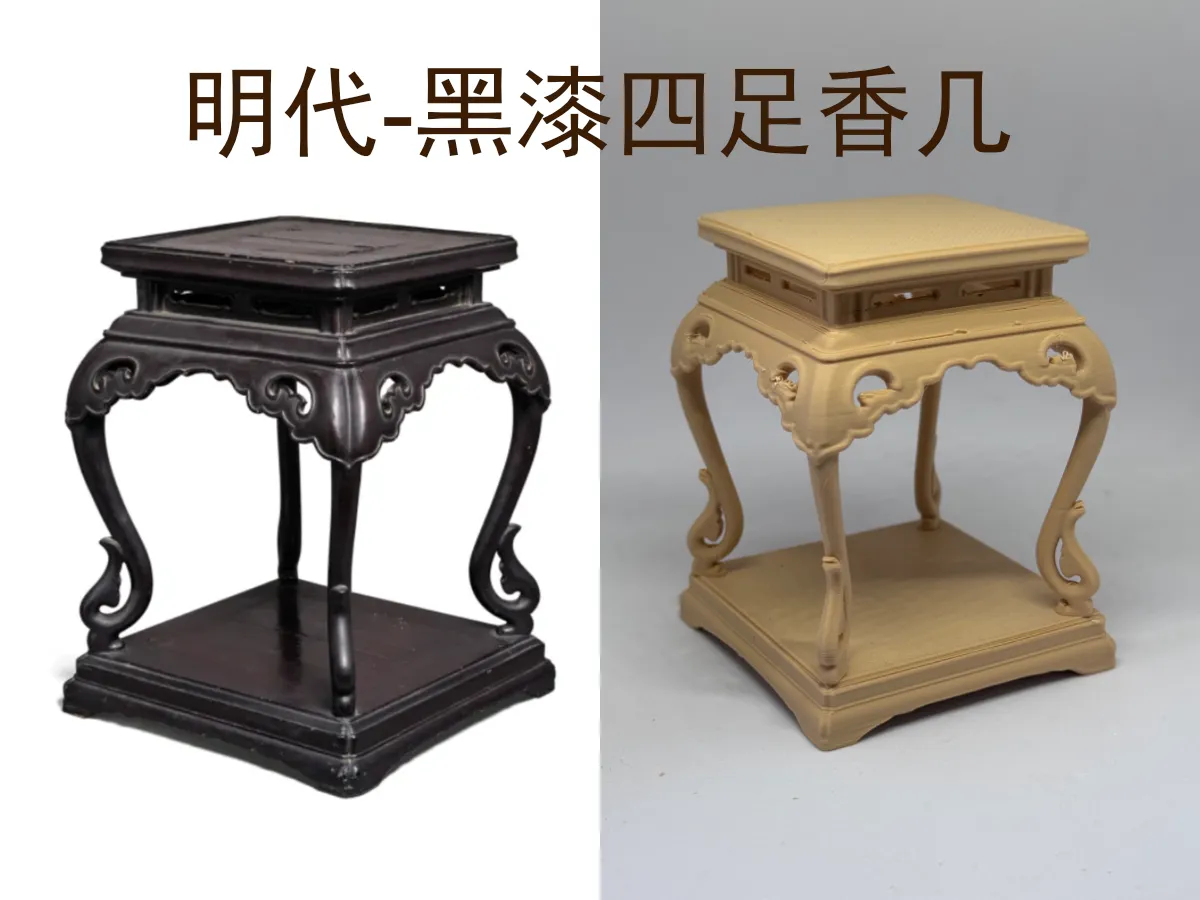
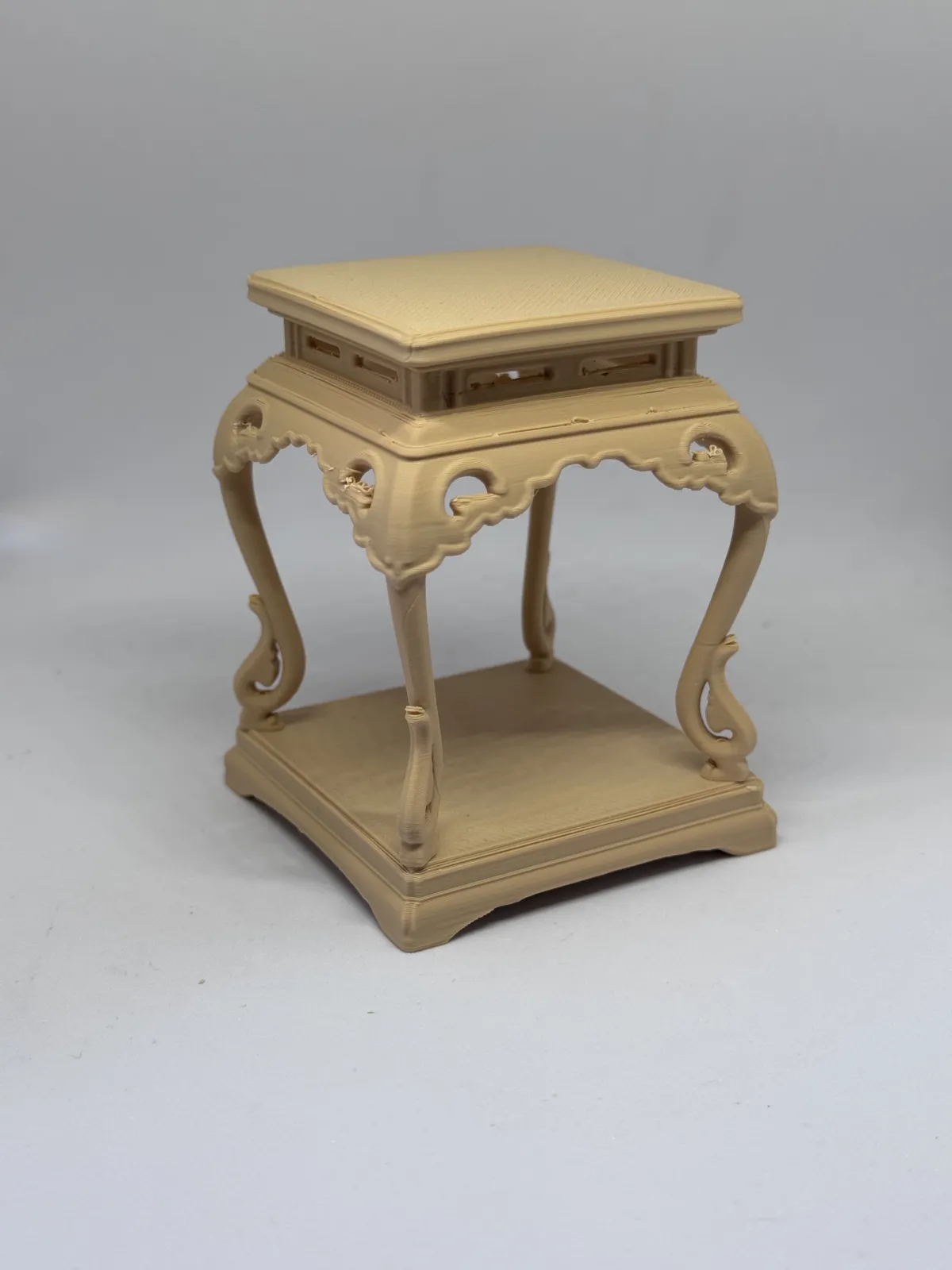
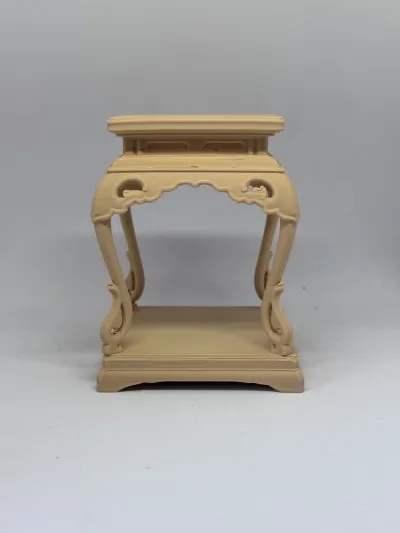
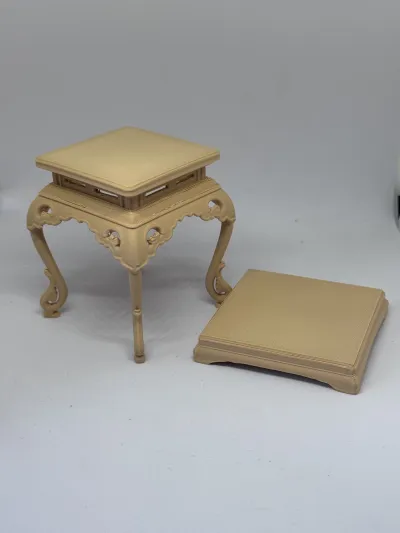
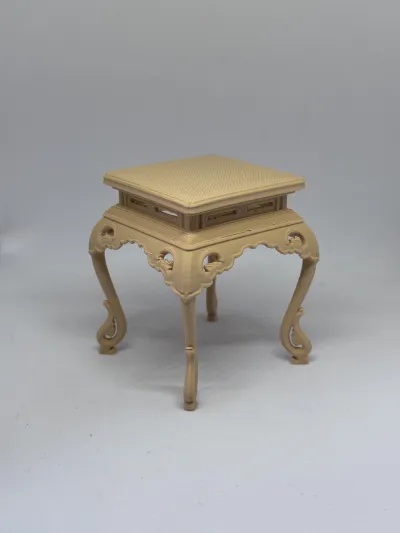
This incense table exudes a rich Song and Yuan aesthetic, boasting remarkable preservation. Its floral and foliate motifs feature free‑flowing, romantic curves that convey both grace and vitality—bold yet uncluttered, embodying an exceptionally refined design sensibility. The entire piece is coated with a thin layer of black lacquer, yielding a pure, deep hue that radiates an inner luminosity. The tabletop is shaped as a flattened hexagon, with the overall form and structure meticulously crafted to follow this organic contour. A raised waterline runs around the perimeter of the top, while the central area of the surface displays a verdant sheen, creating a striking contrast with the surrounding frame.
The base of the table tapers gracefully into three distinct tiers toward the bottom—a hallmark feature of early furniture design. Beneath the tabletop, a large character “Jing” in cursive script, rendered in vermilion, is inscribed—this Buddhist term underscores the table’s intended use as an incense stand. The waist is sharply defined, with legs that emerge boldly from the corners, styled like Sichuan-style pillars and carved in a double‑segment bamboo joint motif. This design element was a common technique employed in the waist sections of Sumeru pedestals during the Song and Ming dynasties. The waist is adorned with a decorative band featuring ruyi-shaped panels, each flanked by a symmetrical pair of floral and foliate motifs, collectively composing an abstract pattern reminiscent of a blossoming peony.
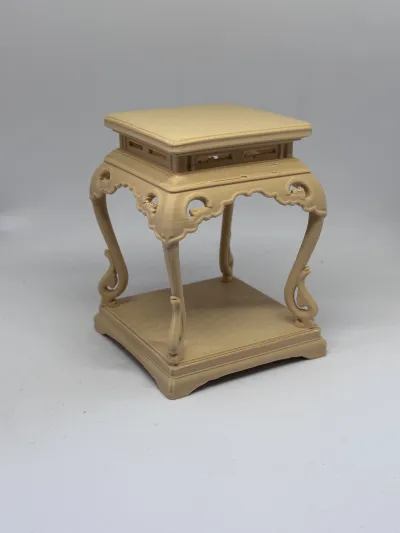
Below the waist, the pedestal features intricately carved, multi‑tiered aprons that resemble stepped platforms. The panelled apron wraps elegantly around the legs, its outer edge shaped like a ruyi cloud. The legs themselves are crafted in a graceful, three‑curved form—bulging outward at the midsection before gently tapering inward and curving upward at the tips into stylized scrolling foliage. The exaggerated curves lend the piece a delicate, almost sculptural beauty, while the fluid lines evoke a sense of freedom and spontaneity characteristic of early furniture design. The inner sides of the legs are hollowed out, with leftover material carved into a single stem bearing two leaves, which extend along the length of the leg, providing both decorative flair and structural support. A matching base complements the overall design, echoing the elegant contours of the waist.
Originality of the Model
The author declares that this work is their personally original model
This model is licensed under the following terms:
This work is licensed under a Standard Digital File License. Digital files have a strict non-commercial, personal use only license.
You shall not share, sub-license, sell, rent, host, transfer, or distribute in any way the digital file or 3D printed versions of this object, nor any other derivative work of this object in its digital or physical format (including remixes of this object). You can not host these files on other digital platforms, web stores or cloud repositories. The objects may not be used in any way whatsoever in which you charge money, collect fees.
Models(1)
- 黑漆四足香几001.3mfDesigner

19.35 MB

2025-12-15


