


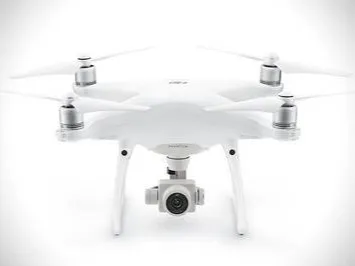
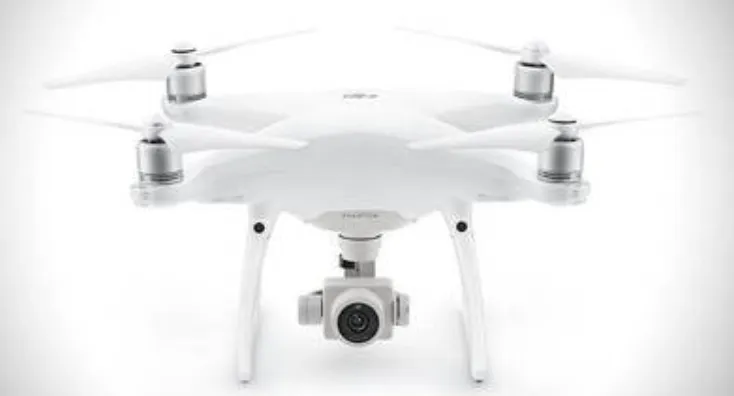


DJI Phantom

- 0.2 mm layer height, 2‑wall walls, 15% infill density

1-disc
PLA
Designer

4

0
DJI Phantom 4: Redefining the Era of Intelligent Aerial Photography for Consumer‑Grade Drones
I. Introduction: A Revolutionary Leap in Consumer‑Grade Drones
In 2016, DJI launched the Phantom 4, marking a pivotal shift in consumer‑grade drones—from manual control to intelligent flight. As the world’s first quadcopter equipped with environmental perception and autonomous obstacle avoidance, the Phantom 4 quickly set a new industry benchmark thanks to its groundbreaking technology, exceptional imaging capabilities, and user‑friendly design. This article delves into its core technologies, standout features, and broader industry impact.
II. Design and Appearance: A Paragon of Technological Aesthetics
Aerodynamic Body and Aerospace‑Grade Materials
The Phantom 4 boasts a sleek, all‑white monocoque design with a matte finish, balancing lightweight construction with wind resistance. Weighing just 1,380 grams and featuring a 350‑mm wheelbase, it delivers a 30% improvement in power efficiency.
Modular Architecture
Quick‑release propellers and foldable landing gear enhance portability, while an integrated dual‑battery heating system ensures reliable operation even in cold conditions.
Enhanced Human‑Machine Interaction
New status indicator lights and a dual‑frequency GPS antenna, along with a 5.5‑inch high‑definition display on the remote controller (available on select models), streamline the user experience.
III. Core Technologies: Three Innovations That Set Industry Standards
1. Binocular Vision Obstacle Avoidance System
Forward obstacle detection: Equipped with two sets of stereo vision sensors, it generates real‑time 3D environmental maps, offering a detection range of up to 15 meters and enabling automatic obstacle avoidance during flights at speeds of 5–10 m/s.
Smart Return‑to‑Home: Combining visual data, ultrasonic sensors, and IMU readings, it achieves centimeter‑level precision during landing.
2. FlightAutonomy Intelligent Flight Platform
Integrating five visual sensors, two infrared sensor arrays, one ultrasonic module, and dual‑mode GPS/GLONASS positioning, it enables stable hovering even without GPS signals.
3. TapFly and ActiveTrack Smart Follow‑Me Modes
Point‑and‑Fly: Simply tap the screen to define a flight path, and the drone autonomously navigates around obstacles.
Dynamic Tracking: Capable of identifying and tracking moving subjects such as people or vehicles, offering three follow‑me modes—orbiting, parallel tracking, and lock‑on.
IV. Imaging System: Professional‑Grade Aerial Photography
Camera Hardware
A 1‑inch, 20‑megapixel CMOS sensor (with optional upgraded versions)
Mechanical shutter (eliminating the “jelly effect”)
A 94° wide‑angle lens with an f/2.8 aperture
Video Performance
4K video recording at 60 fps
Support for D‑Log color profile (12.8 stops of dynamic range)
Three‑axis gimbal stabilization, capable of withstanding winds up to Beaufort force 8
Smart Shooting Modes
Path‑Follow Timelapse: Customize flight paths to generate time‑lapse videos
Gesture‑Based Selfies: Capture images by simply making a hand gesture
V. Performance and Endurance: Pushing Physical Limits
Maximum Flight Speed: 72 km/h (in Sport mode)
Flight Time: 28 minutes under typical operating conditions
Image Transmission: Lightbridge 2.0, enabling real‑time 1080p streaming up to 7 kilometers away
Anti‑Interference Capability: Dual‑frequency signal redundancy boosts stability by 50% in complex electromagnetic environments.
VI. Application Scenarios: From Hobbyists to Professional Fields
Film and Video Production: Hollywood crews have adopted it as a cost‑effective aerial‑filming solution.
Surveying and Inspection: Paired with GS Pro ground station software for precise route planning.
Emergency Rescue: The thermal‑imaging variant (Phantom 4 RTK) is used for disaster assessment.
VII. Market Response and Industry Impact
Sales Figures: Over 100,000 units sold globally within the first month of release, maintaining top rankings in Amazon’s drone category for years.
Awards and Recognition: CES Innovation Award and Red Dot Design Award in 2016.
Technology Transfer: Subsequent models, such as the Mavic series, inherited its visual obstacle‑avoidance and smart follow‑me algorithms.
VIII. Conclusion: A Milestone in Drone Intelligence
The significance of the Phantom 4 extends beyond hardware upgrades; its AI‑driven “perception‑decision‑execution” flight logic has established a new technological paradigm for consumer‑grade drones. Even years after its launch, its strong secondhand market underscores the enduring value of this classic model.
Originality of the Model
The author declares that this work is their personally original model
This model is licensed under the following terms:
Credit must be given to the creator
Only noncommercial uses of the work are permitted
Remixes must be shared under the same license
Models(1)
- Dji精灵.3mfDesigner

7.26 MB

2026-07-23


