




Mechanical Enthusiast
Custom Pet Products
3D Printing Community
Miniature Mecha
3D‑Printed Pet Products
Pet Supplies
Cat Feeding Bowl
Mechanical Cat Feeder
Household Goods
Joint Structure
Adhesive Reinforcement
Tech-Infused Aesthetic
Creative Home Decor
Pet Technology
Print‑Friendly

- 0.2 mm layer height, 3‑layer walls, 15% infill density

2-disc
PLA
Designer

11

1
1. Model Inspiration
1.1 Core Pain Points and Creative Intentions
The genesis of this bipedal mech-inspired cat food bowl stems entirely from real-world challenges encountered in everyday pet care and 3D printing practice—rather than from abstract aesthetic flourishes. As a seasoned pet owner and avid 3D printing enthusiast, I’ve long been plagued by two persistent issues:
1. Functional shortcomings of traditional cat food bowls: Most commercially available cat bowls are either overly smooth, causing them to slip and slide easily when cats eat, or they feature bulky, awkward designs that clash with modern home interiors. What’s more, many bowls are set at far too low a height, forcing cats to bend their necks downward for extended periods while eating—and placing unnecessary strain on their cervical spines.
2. Challenges in translating 3D-printed functional components into practical, usable objects: While experimenting with various mech-inspired models, I discovered that many designs were visually striking but functionally lacking—especially when it came to bipedal support structures. These often fractured at the joints during support removal, leaving printed parts little more than decorative displays rather than fully functional items ready for daily use.
With this in mind, my creative goal was crystal clear: to craft a bipedal cat food bowl that seamlessly blends “mech aesthetics” with practical functionality and print‑friendly design. It needed not only to resemble a true miniature mech, boasting sharp lines and intricate mechanical details—but also to address three core pain points: “slippage,” “cervical strain,” and “difficult printing”—so that 3D printing could truly serve everyday life.
1.2 Design and Structural Inspiration
Every element of this model is purposefully designed with both function and printability in mind. All mech-inspired features are carefully integrated to enhance usability while ensuring the design remains viable for 3D printing:
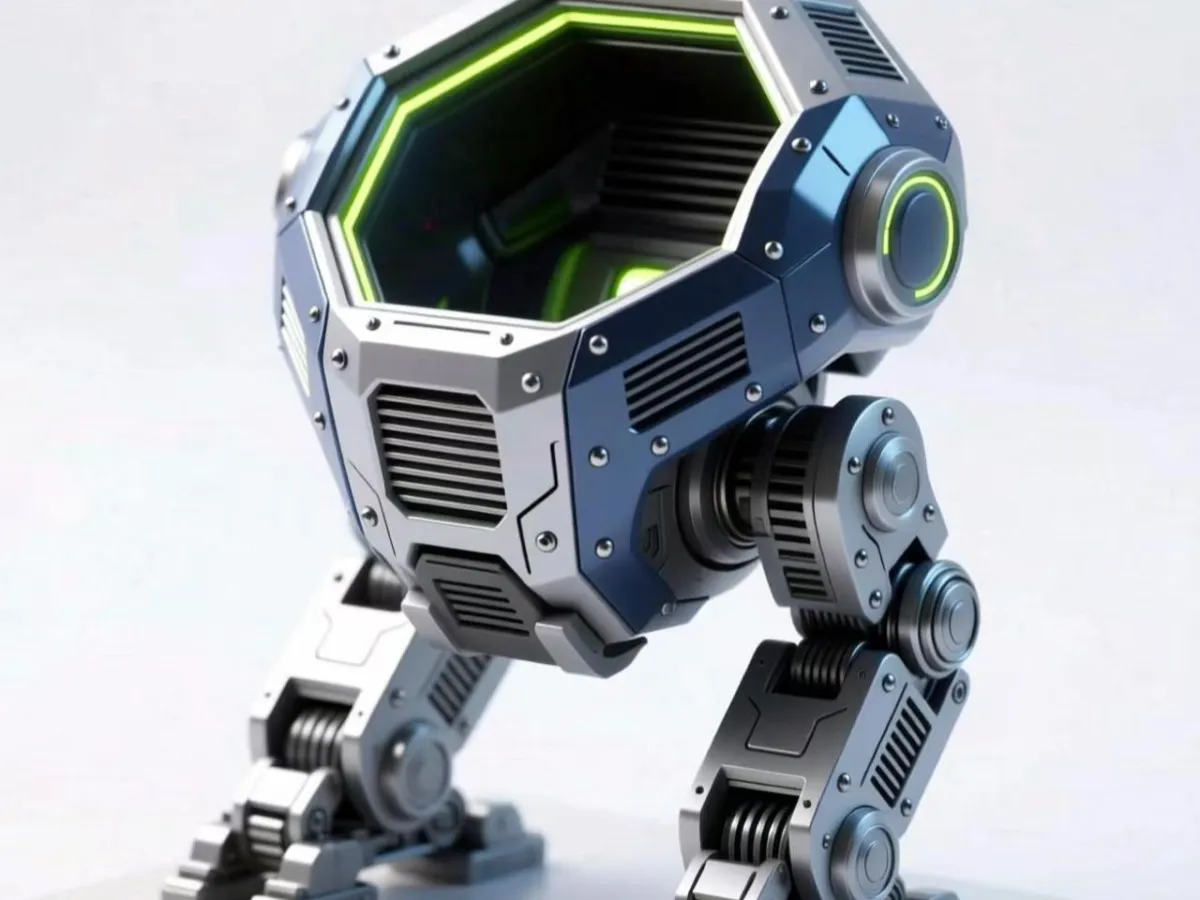
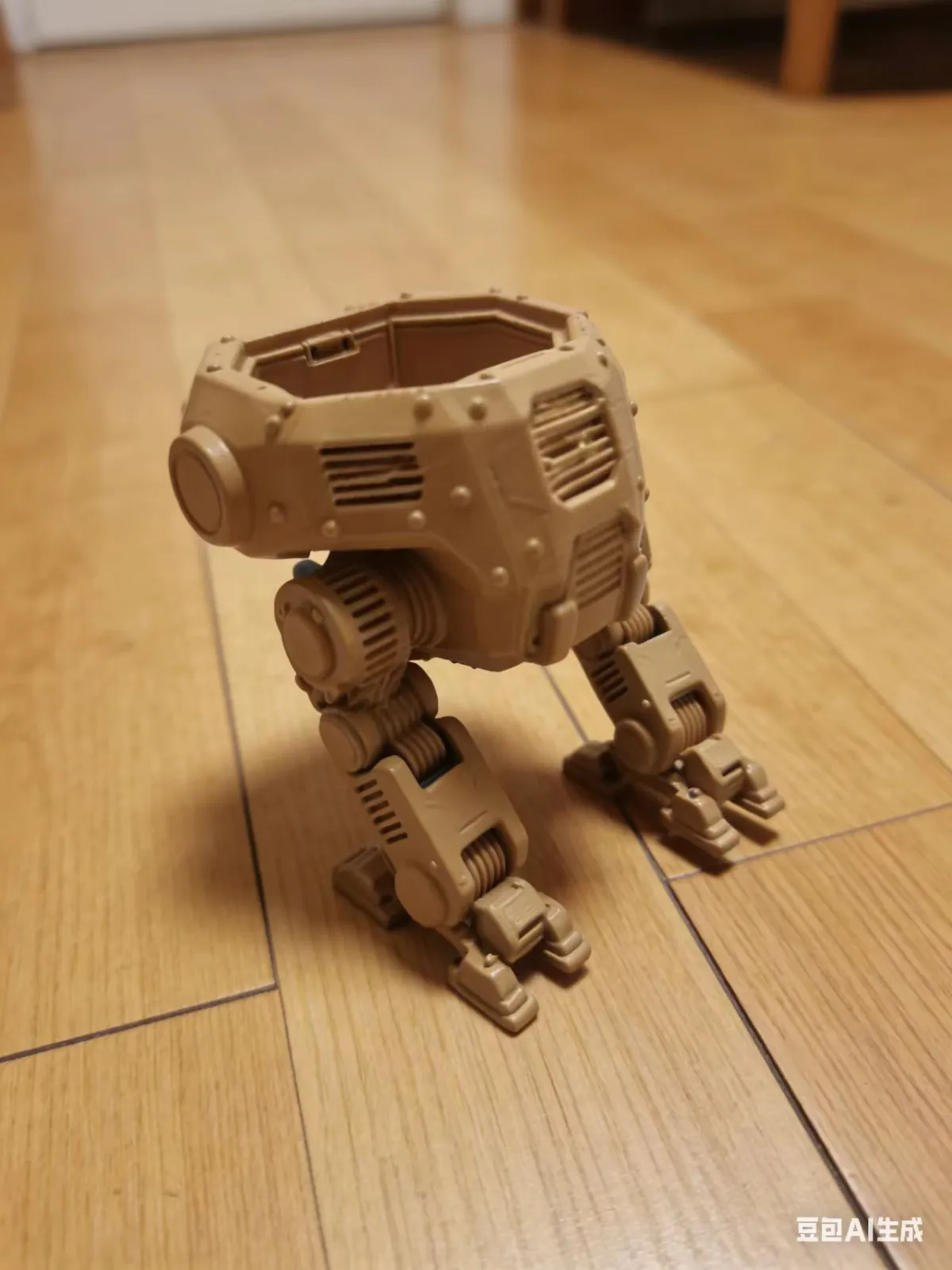
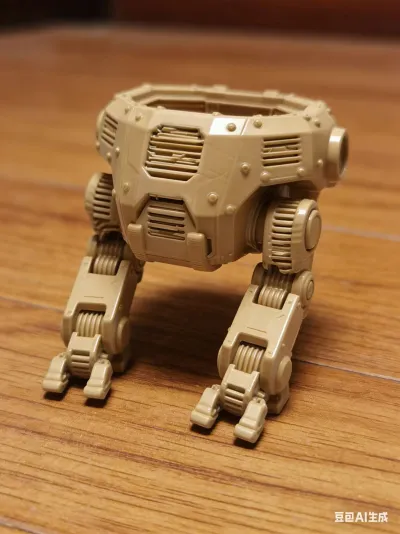
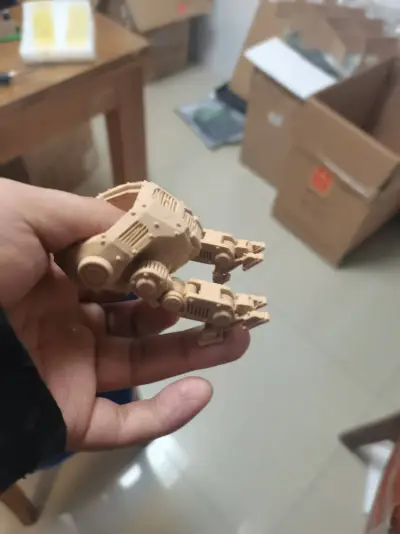
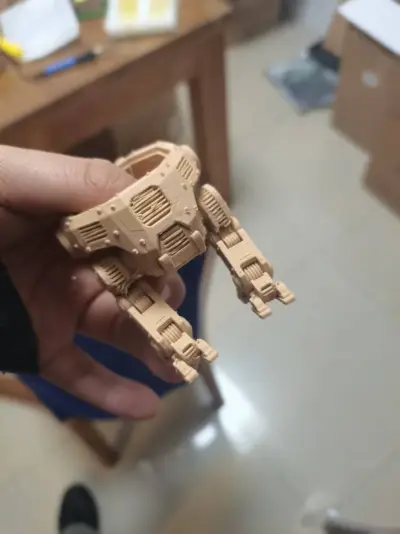
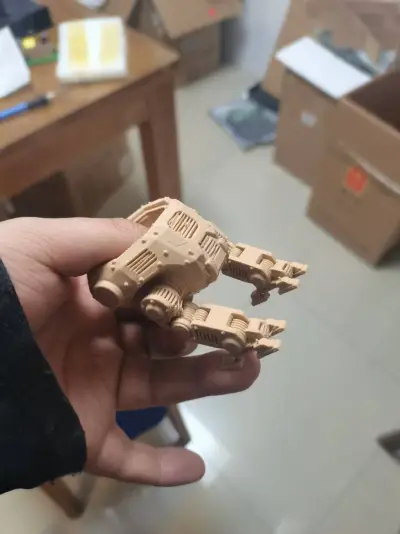
- Bipedal Support Structure: Inspired directly by the hydraulic leg systems found in industrial robots and mecha warriors, this design adopts a “thick‑at‑the‑top, thin‑at‑the‑bottom” biomimetic approach. By distributing the impact forces generated during feeding through robust thigh segments to the ground, the design effectively prevents tipping. Meanwhile, the junctions between the legs and the bowl body are reinforced with thickened “joint armor”—a design choice that not only lends a distinct mech aesthetic but also strengthens the most vulnerable areas, significantly boosting print success rates.
- Bowl Body Design: The bowl’s rounded octagonal profile draws inspiration from mecha cockpits, offering a sleek, curved shape that protects cats’ faces from sharp edges while efficiently containing and directing food toward the center—preventing spillage and keeping kibble neatly contained. The ring of “rivets” and “heat‑dissipating grilles” along the bowl’s edge serves dual purposes: beyond their mech‑style ornamentation, these features also increase structural rigidity, helping to prevent warping during printing and use.
- Print‑Friendly Design: From the very beginning of the design process, I took full account of FDM printing limitations. The entire model was broken down into three independent components—“bowl body,” “left leg,” and “right leg”—to minimize the risk of failure associated with printing large, single‑piece parts. At the same time, all support contact points were strategically placed in concealed areas such as the inner sides of the legs and the bottom of the bowl body, ensuring that post‑print support removal would not compromise the final appearance.
1.3 Creative Objectives
The ultimate goal of this model is to achieve “one‑time print success, simple and secure assembly, and safe, durable performance.” Beyond being a uniquely styled pet accessory, this project represents a practical step toward moving 3D printing from “hobby” to “real‑world utility,” demonstrating that with thoughtful design, we can indeed produce everyday objects that are both beautiful and long‑lasting.
2. Printing Requirements
2.1 Equipment and Material Requirements
2.1.1 Equipment Requirements
- Recommended Printers: Top-tier FDM printers such as the Techbot A1C / P1P, Prusa MK4, and Creality K1 Max.
- Core Requirements:
- Build Plate Size: ≥200×200 mm, ensuring that both individual legs and the bowl body can be printed in a single build.
- Essential Features: Automatic bed leveling (or precise manual leveling) and filament runout detection—both critical for longer prints like the leg components.
- Calibration Requirements: Before printing, ensure that the nozzle and heated bed are precisely calibrated to guarantee strong first‑layer adhesion and eliminate any risk of warping or delamination.
2.1.2 Material Requirements
Component Name | Recommended Material | Core Reason
---|---|---
Bowl Body | Food‑grade PLA | Directly in contact with cat food, the material must be safe and non‑toxic; PLA also delivers high printing accuracy and a smooth surface finish.
Legs | PETG (preferred) / High‑Strength PLA | Legs bear significant weight and are prone to wear and tear—PETG offers superior toughness and impact resistance, effectively preventing breakage during support removal.
Material Specifications | 1.75 mm, tolerance ±0.03 mm | Ensures printing accuracy and strong interlayer adhesion.
Drying Requirements | PETG should be dried at 60°C for 4 hours | Prevents moisture absorption in the filament, which can lead to bubbling and layer separation during printing.
2.2 Slicing and Printing Parameters (Taking the Techbot A1C as an Example)
2.2.1 Bowl Body (Food‑grade PLA)
Parameter | Recommended Value | Key Notes
Layer Height | 0.2 mm | Balances print speed with surface smoothness.
Wall Thickness | 2.0 mm (5 walls, using a 0.4 mm nozzle) | Provides structural rigidity and helps prevent warping.
Fill Density | 20% grid fill | Reduces weight while maintaining structural strength.
Nozzle Temperature | 205°C | Optimal printing temperature for food‑grade PLA.
Bed Temperature | 65°C | Enhances first‑layer adhesion and minimizes warping.
Print Speed | Outer Walls: 40 mm/s, Fills: 60 mm/s | Slow outer wall speeds ensure a smooth surface, while faster fill speeds save time.
Supports | None | The bowl body contains no overhanging geometry, so supports are unnecessary.
2.2.2 Legs (PETG)
Parameter | Recommended Value | Key Notes
Layer Height | 0.16 mm | Improves interlayer adhesion, reduces layer lines, and enhances leg strength.
Wall Thickness | 2.4 mm (6 walls, using a 0.4 mm nozzle) | Strengthens the legs, particularly at critical connection points.
Fill Density | 35% honeycomb fill | Offers an optimal balance of strength and lightweight construction.
Nozzle Temperature | 235°C | Optimal flow temperature for PETG.
Bed Temperature | 75°C | Prevents PETG from warping during printing.
Print Speed | Outer Walls: 30 mm/s, Fills: 50 mm/s | Slow outer wall speeds ensure fine detail and structural integrity in the legs.
Supports | Tree‑like supports (only on the inner sides of the legs) | Tree‑like supports have minimal contact area, making them easy to remove and reducing damage to connection points.
Support Contact Z‑Distance | 0.15 mm | Avoids excessive adhesion between supports and the model, minimizing the risk of damaging connections during support removal.
Fan Speed | 50% throughout | Overly aggressive fan speeds can lead to poor interlayer adhesion in PETG.
Print Orientation | Legs positioned vertically, with connection ends facing upward | Ensures flat connection surfaces and reduces the need for supports.
2.3 Print Process Control
1. First‑Layer Monitoring: During the first five layers, closely monitor the print to ensure that the first‑layer line width is consistent, the layer adheres tightly to the heated bed, and there is no warping or stringing.
2. Leg Monitoring: When printing the legs up to the connection base, pay special attention to the formation of support structures—prevent support collapse that could render the model unusable.
3. Cooling Requirements: After printing, allow the model to cool completely to room temperature (approximately 30 minutes) before removing supports—avoiding high‑temperature removal that could cause deformation.
4. Initial Inspection: Once supports are removed, immediately check the leg connections for any subtle cracks or interlayer separation; if present, mark these areas and repair them before assembly.
3. Assembly Instructions
3.1 Pre‑Assembly Preparation
1. Component Pre‑Processing:
- Sanding: Use 180‑grit sandpaper to remove all support residue and burrs, then refine the leg connection ends and bowl connection holes with 240‑grit sandpaper to ensure smooth assembly.
- Cleaning: Wipe all components with isopropyl alcohol or clean water to remove sanding dust and oil residues, then dry thoroughly and set aside.
- Defect Repair: For minor cracks at the leg connections, apply a small amount of 401 instant adhesive to the affected areas, let it dry, then lightly sand the surface to achieve a smooth finish.
2. Tool Preparation: 401 instant adhesive (essential), tweezers, 240‑grit sandpaper, isopropyl alcohol, rubber bands or clips (for securing components).
3.2 Core Assembly Steps (Bipedal Connection)
Step 1: Pre‑Assembly and Positioning
- Insert the connection ends of both legs into the corresponding connection holes at the bottom of the bowl, testing the fit. Ideally, the legs should slide in smoothly with a slight snug feel—no obvious looseness.
- If the fit is too tight, gently sand the connection ends with sandpaper; if it’s too loose, wrap a thin layer of masking tape around the connection end to add thickness, or reinforce the joint directly with adhesive.
- Adjust the angle of the legs so that both are parallel and perpendicular to the ground. Use a marker to draw a positioning line around the connection points, preventing misalignment during adhesive application.
Step 2: Precise Adhesive Application (The Core Step)
1. Remove the legs from the bowl. Using tweezers, carefully apply a thin, even bead of 401 instant adhesive along the side of each leg’s connection end—keep the adhesive layer thin yet uniform.
2. Key Point: At the root of the leg–bowl connection—the most fragile area—apply a slightly thicker layer of adhesive to create a “bonding reinforcement.” This is crucial for preventing future fractures.
3. Prohibition: Do not apply adhesive inside the bowl’s connection holes—excess adhesive that spills out is difficult to clean and can lead to assembly failure.
Step 3: Pressing and Curing
1. Quickly align the adhesive‑coated legs with the positioning marks, reinsert them into the connection holes, and press firmly until the connection is secure.
2. Gently secure the legs to the bowl with rubber bands or clips to prevent shifting during the curing process.
3. Use a cotton swab dipped in a small amount of isopropyl alcohol to promptly wipe away any excess adhesive that has leaked at the connection points—this ensures a clean, polished finish without compromising the overall appearance.
4. Curing Time: While 401 instant adhesive sets within 10–30 seconds, it takes 24 hours to reach its maximum strength. During this period, avoid touching or moving the model.
3.3 Final Inspection and Usage
- Once the adhesive has fully cured, check that the connections are secure—gently shake the legs, and there should be no sign of looseness.
- Finish the connection points with a final light sanding to blend them seamlessly with the overall design.
- Clean the interior of the bowl, and it’s ready for use.
Originality of the Model
The author declares that this work is their personally original model
This model is licensed under the following terms:
Credit must be given to the creator
Models(1)
- 机械双脚猫盆.3mfDesigner

19.31 MB

2026-02-23


