










Clamping
G‑Type Caliper
Fastening
Tools

- 0.2 mm layer height, 2‑wall walls, 15% infill density

1-disc
PETG
Designer5(1)

38

12
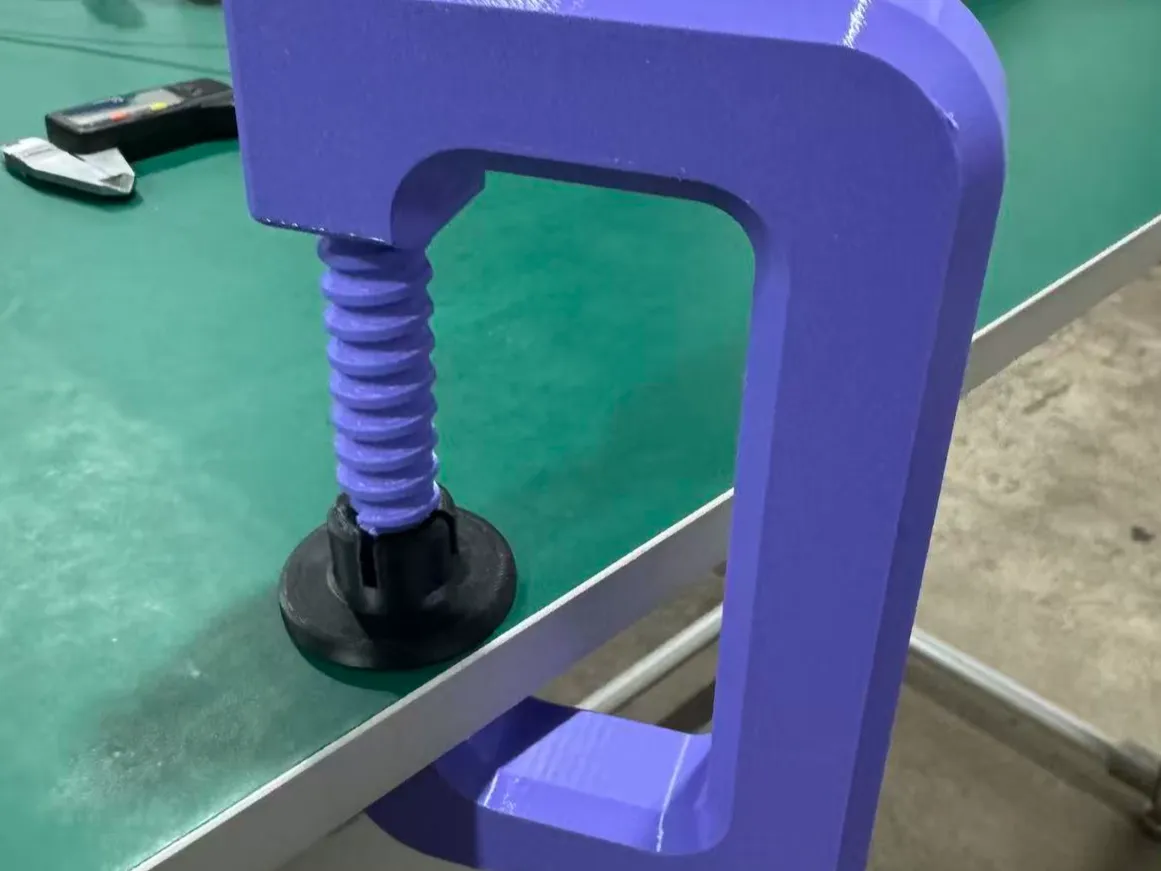
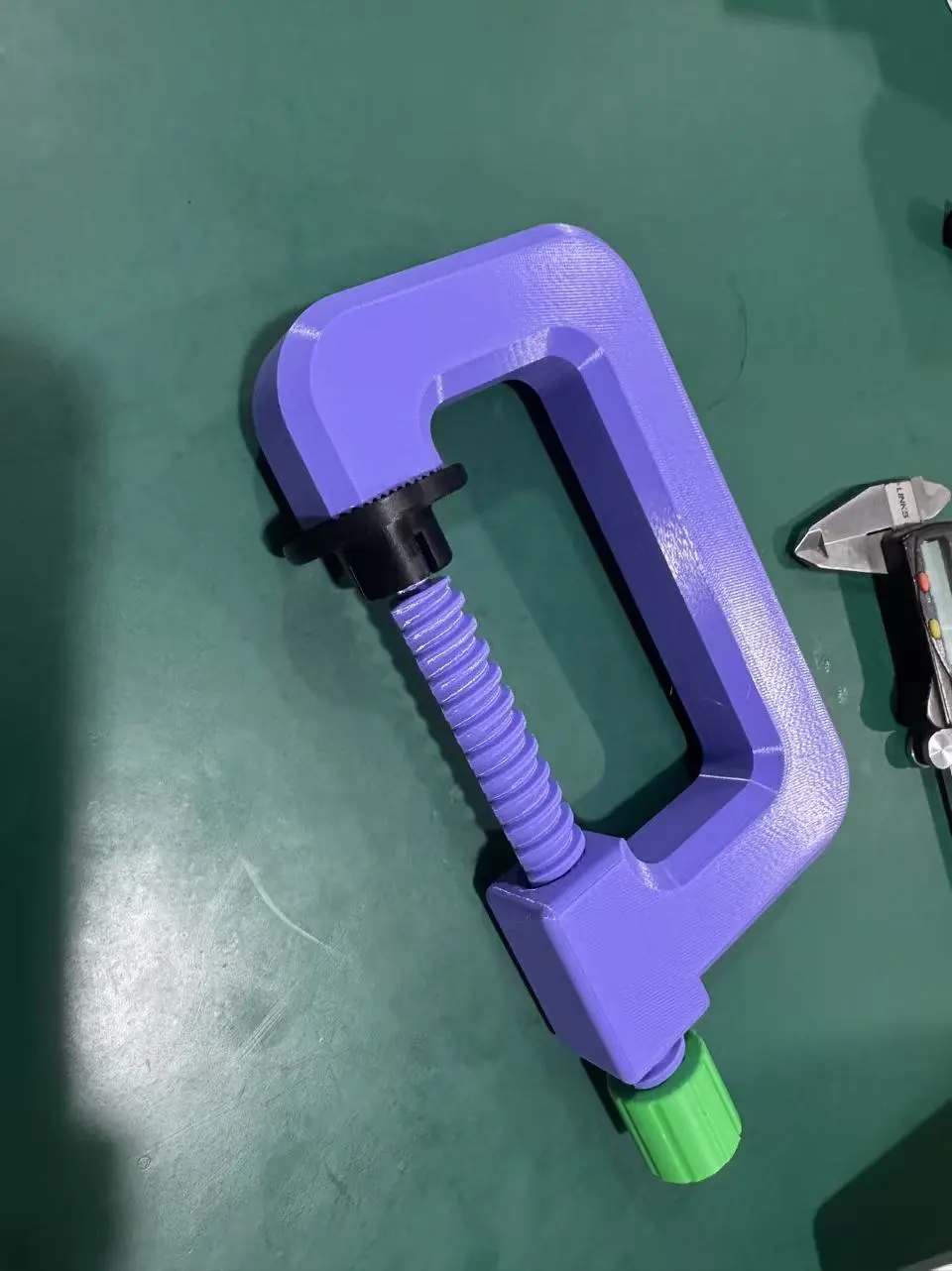
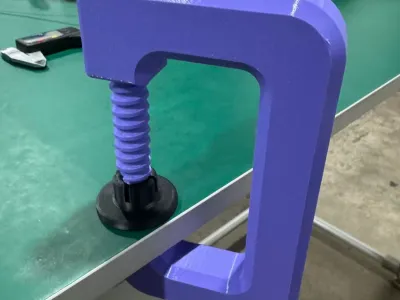
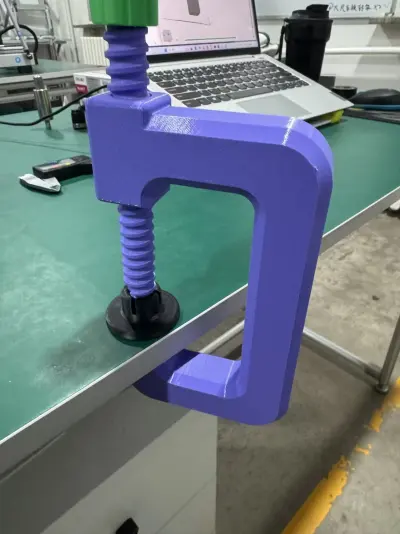
The operating principle of G‑clamps—also known as G‑jaws, C‑clamps, or G‑shaped clamping tools—is actually quite straightforward: they leverage screw-driven mechanisms and lever action to generate substantial clamping force.
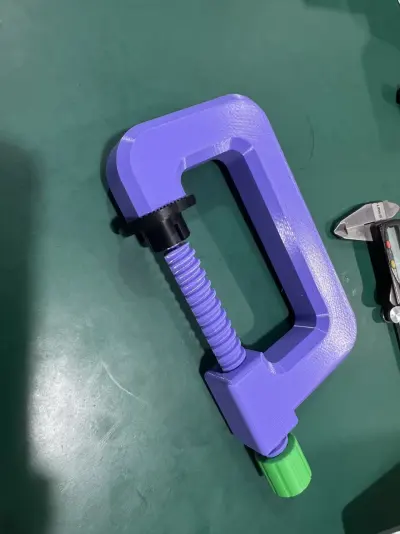
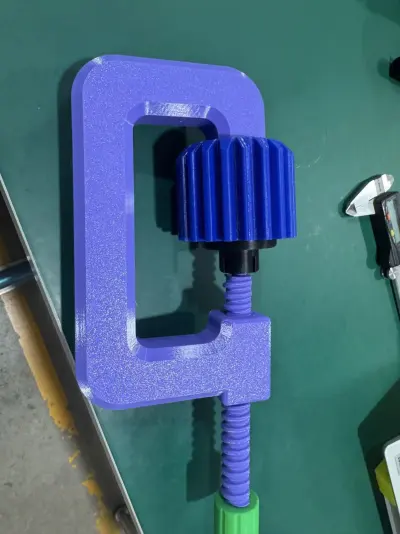
The typical structure of a G‑clamp consists of:
• A fixed G‑shaped frame, with one side featuring a threaded hole for the screw and the other side equipped with a stationary jaw.
• A threaded screw fitted with a handle, whose distal end houses the movable jaw.
• A precise threaded engagement between the screw and the frame.
Operating Principle:
1. Screw Drive
When you turn the handle, the screw advances or retracts along the threaded bore within the frame. The threads convert rotational motion into linear motion.
2. Mechanical Advantage (Force Multiplication)
The screw’s pitch is relatively small, meaning that each full rotation of the handle results in only a slight movement of the jaws—but the force is amplified many times over (much like the principle behind a jack). The longer the handle, the more pronounced the mechanical advantage and the greater the ease of operation.
3. Self‑Locking Mechanism
Because the lead angle of the screw is less than the coefficient of friction, once the G‑clamp is fully tightened, it will remain securely locked even if the handle is released, maintaining a stable clamping force without slipping.
4. Applications
G‑clamps are primarily used for temporarily securing workpieces—for example, during woodworking, metalworking, or welding—holding parts firmly in place on a workbench or in a specialized fixture.
Originality of the Model
The author declares that this work is their personally original model
This model is licensed under the following terms:
Credit must be given to the creator
Models(1)
- Gxing.3mfDesigner

857.76 KB

2025-12-07


