



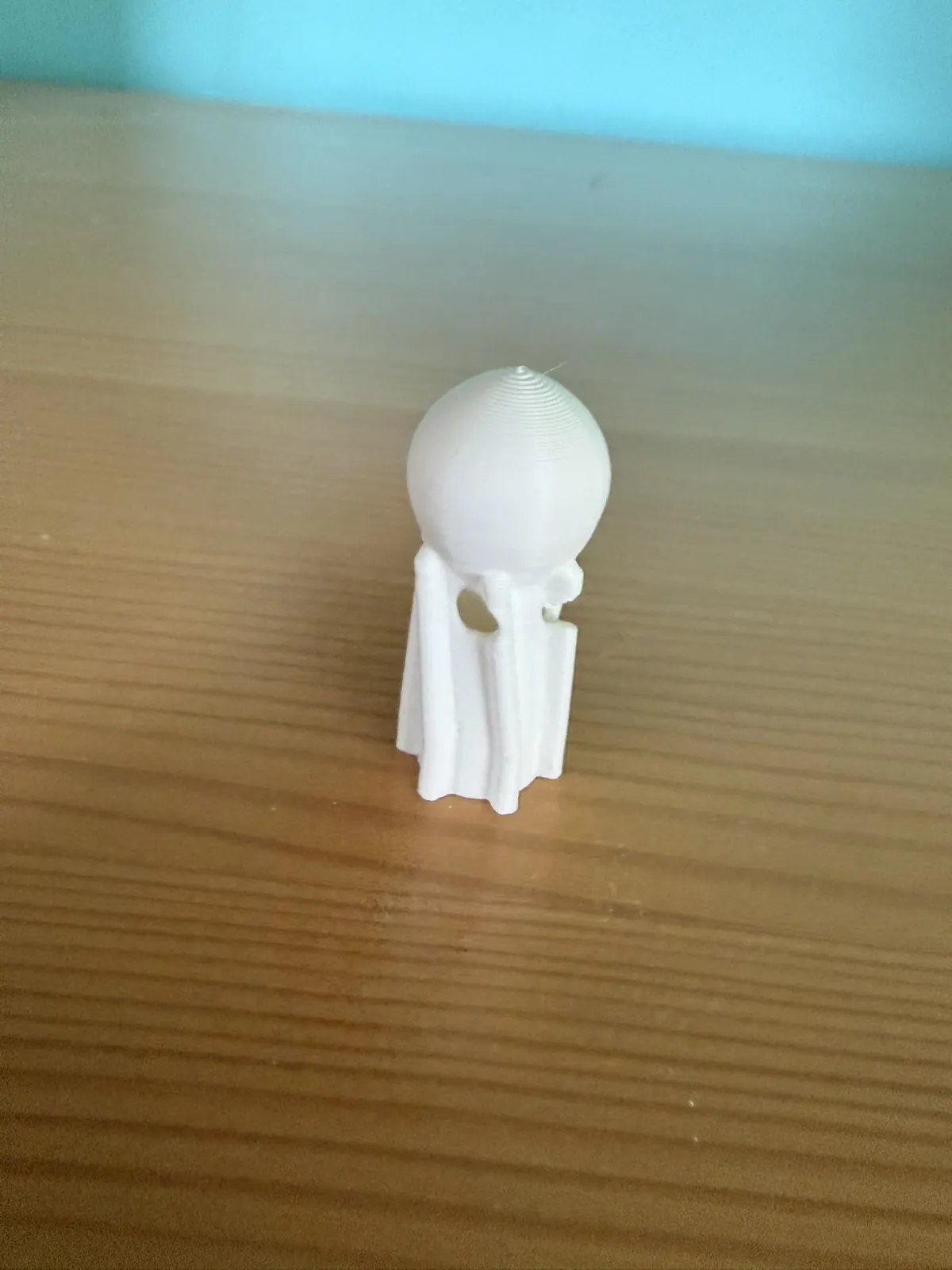

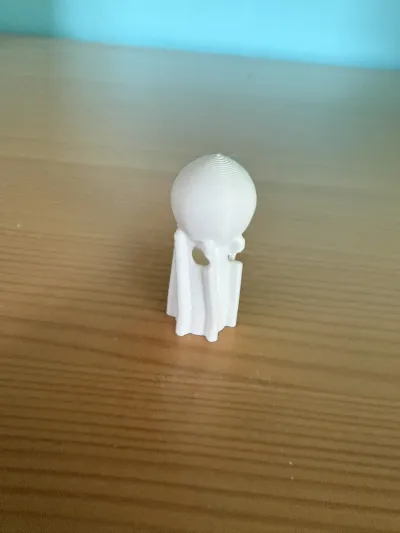

diver
cartesian
bottle
water
experiment
physics
school
project
kids

 0.2mm layer, 6 walls, 20% infill
1-disc
PLA
Designer

1

0
The Cartesian Diver Experiment
The Cartesian Diver is a classic physics demonstration named after the French philosopher and mathematician René Descartes. It beautifully illustrates the relationships between pressure, density, and buoyancy in fluids.
Fill the bottle: Fill your plastic bottle to the very brim with water.
Assemble: Gently place a diver into the bottle and screw the cap on tightly.
Perform: Squeeze the sides of the bottle firmly with your hands. Observe the diver sink. Release your grip, and watch it rise back to the top.
Physical Explanation (How It Works)
The experiment relies on two fundamental principles of fluid mechanics: Pascal's Principle and Archimedes' Principle, as well as Boyle's Law regarding gases.
Step 1: Squeezing the Bottle (Pascal's Principle & Boyle's Law)
When you squeeze the bottle, you apply pressure to the water. According to Pascal's Principle, this increased pressure is transmitted equally throughout the entire fluid.
Water is practically incompressible, but the air trapped inside the diver is highly compressible. The increased pressure forces water up into the diver, compressing the air pocket into a smaller volume. According to Boyle's Law, as pressure increases, the volume of the gas decreases.
Step 2: Sinking (Archimedes' Principle & Density)
According to Archimedes' Principle, the buoyant force acting on an object is equal to the weight of the fluid it displaces.
Before squeezing: The air pocket is large enough that the average density of the diver (plastic + air + a little water) is less than the density of the surrounding water, so it floats.
While squeezing: As water enters the diver and compresses the air, the diver displaces less water than before. Its overall weight increases while its volume stays the same, so its average density exceeds that of water. As a result, the buoyant force is no longer enough to keep it up, and it sinks.
Step 3: Releasing the Bottle
When you let go of the bottle, the pressure drops back to normal. The compressed air pocket inside the diver expands, pushing the excess water back out. The diver's average density falls below that of water again, and it floats back to the surface.
Originality of the Model
The author declares that this work is their personally original model
This model is licensed under the following terms:
This work is licensed under a Standard Digital File License. Digital files have a strict non-commercial, personal use only license.
You shall not share, sub-license, sell, rent, host, transfer, or distribute in any way the digital file or 3D printed versions of this object, nor any other derivative work of this object in its digital or physical format (including remixes of this object). You can not host these files on other digital platforms, web stores or cloud repositories. The objects may not be used in any way whatsoever in which you charge money, collect fees.
Models(2)
- diver_2.3mfDesigner

195.65 KB

2026-05-17
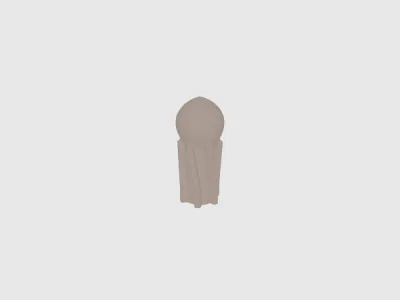 diver_2.stlDesigner
540.02 KB
2026-05-17


