


'%3e%3cpath%20id='Rectangle%20995'%20d='M0%200H24C26.2091%200%2028%201.79086%2028%204V52C28%2054.2091%2026.2091%2056%2024%2056H0V0Z'%20fill='black'%20fill-opacity='0.2'/%3e%3cpath%20id='Vector'%20d='M17%2022L11%2028L17%2034'%20stroke='white'%20stroke-opacity='0.85'%20stroke-width='1.5'%20stroke-linecap='round'%20stroke-linejoin='round'/%3e%3c/g%3e%3cdefs%3e%3cclipPath%20id='clip0_1639_4805'%3e%3crect%20width='28'%20height='56'%20fill='white'/%3e%3c/clipPath%3e%3c/defs%3e%3c/svg%3e)
'%3e%3cpath%20id='Rectangle%20995'%20d='M0%204C0%201.79086%201.79086%200%204%200H28V56H4C1.79086%2056%200%2054.2091%200%2052V4Z'%20fill='black'%20fill-opacity='0.2'/%3e%3cpath%20id='Vector'%20d='M11%2022L17%2028L11%2034'%20stroke='white'%20stroke-opacity='0.85'%20stroke-width='1.5'%20stroke-linecap='round'%20stroke-linejoin='round'/%3e%3c/g%3e%3cdefs%3e%3cclipPath%20id='clip0_1639_4802'%3e%3crect%20width='28'%20height='56'%20fill='white'/%3e%3c/clipPath%3e%3c/defs%3e%3c/svg%3e)
Model
Blind Box
Geography
Landmark Architecture
- 0.2 mm layer height, 2‑wall walls, 15% infill density
'%20fill='%23B3B3B3'/%3e%3crect%20id='Rectangle%201051'%20x='8'%20y='2'%20width='12'%20height='0.5'%20transform='rotate(90%208%202)'%20fill='%23D9D9D9'/%3e%3crect%20id='Rectangle%201052'%20x='11'%20y='2'%20width='12'%20height='0.5'%20transform='rotate(90%2011%202)'%20fill='%23B3B3B3'/%3e%3cpath%20id='Rectangle%201048'%20d='M2%202H14V14H11L10.5%2014.5H8H5.5L5%2014H2V2Z'%20stroke='%23828282'%20stroke-linejoin='round'/%3e%3c/g%3e%3c/g%3e%3c/svg%3e)
7-disc
PETG/PLA
Designer

6

2
“Beijing in the Palm of Your Hand” Through 3D Printing – A Miniature Model of Tiananmen Square
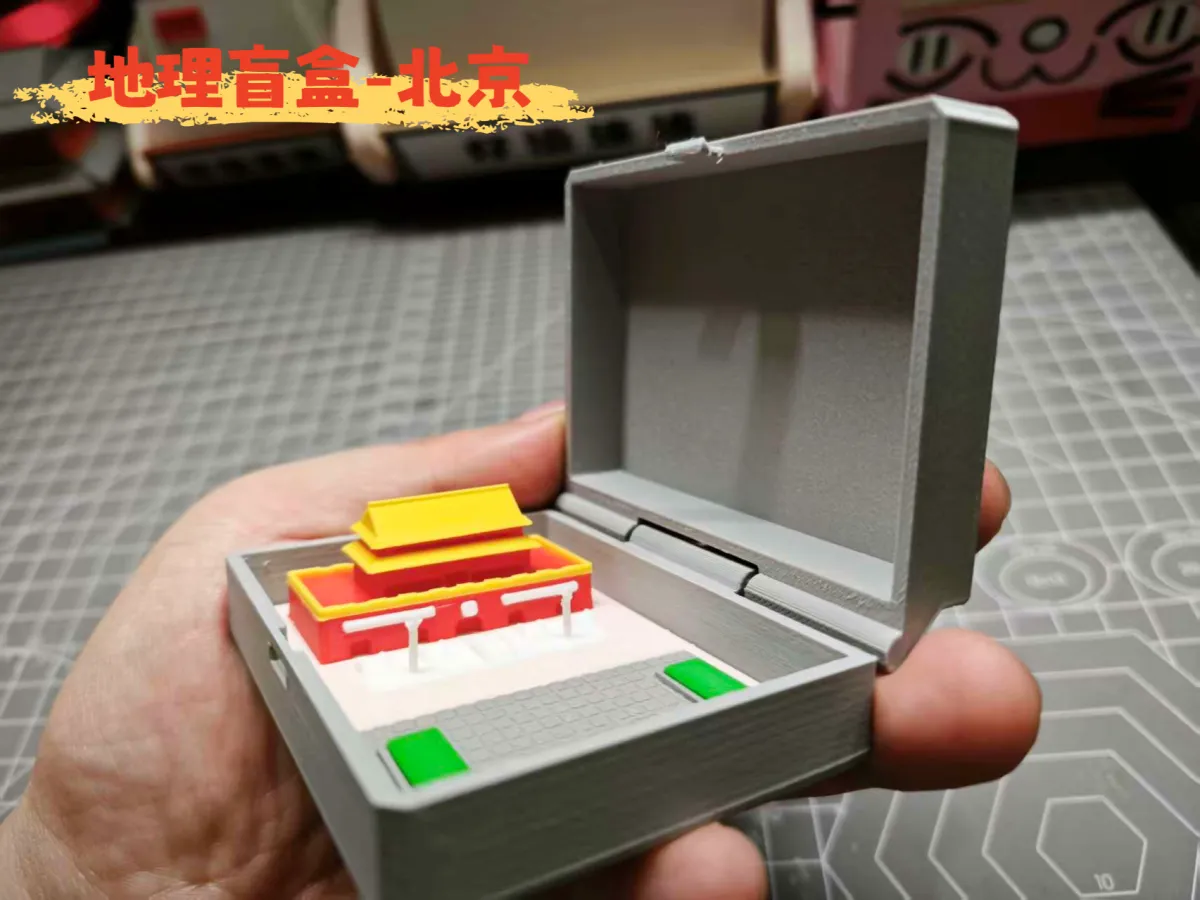
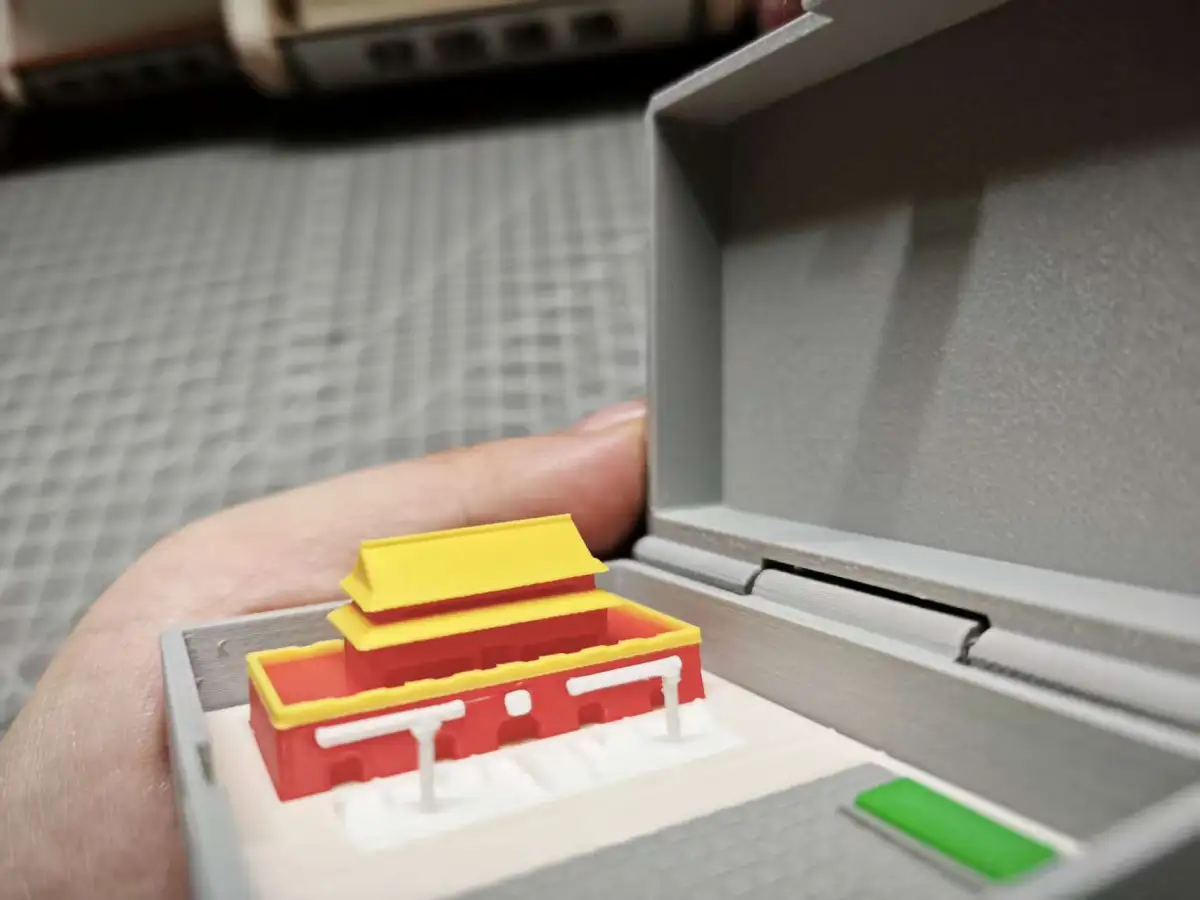
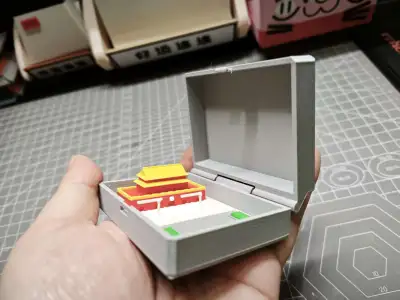
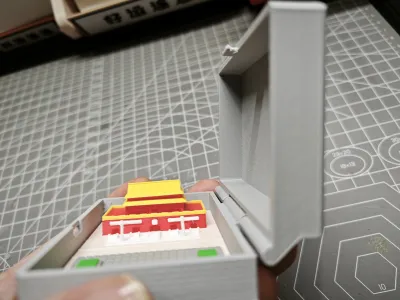
This miniature model of Tiananmen Square is crafted using advanced 3D printing technology, presenting Beijing’s iconic landmark as a “treasure held in the palm,” seamlessly blending cutting‑edge technology with profound cultural significance.
I. Design and Manufacturing Process
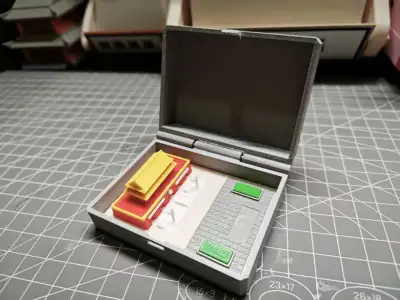
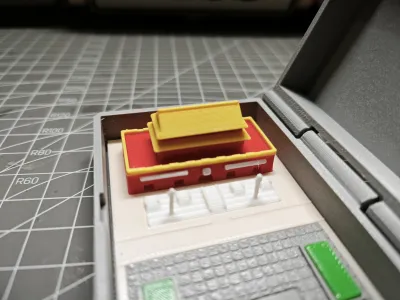
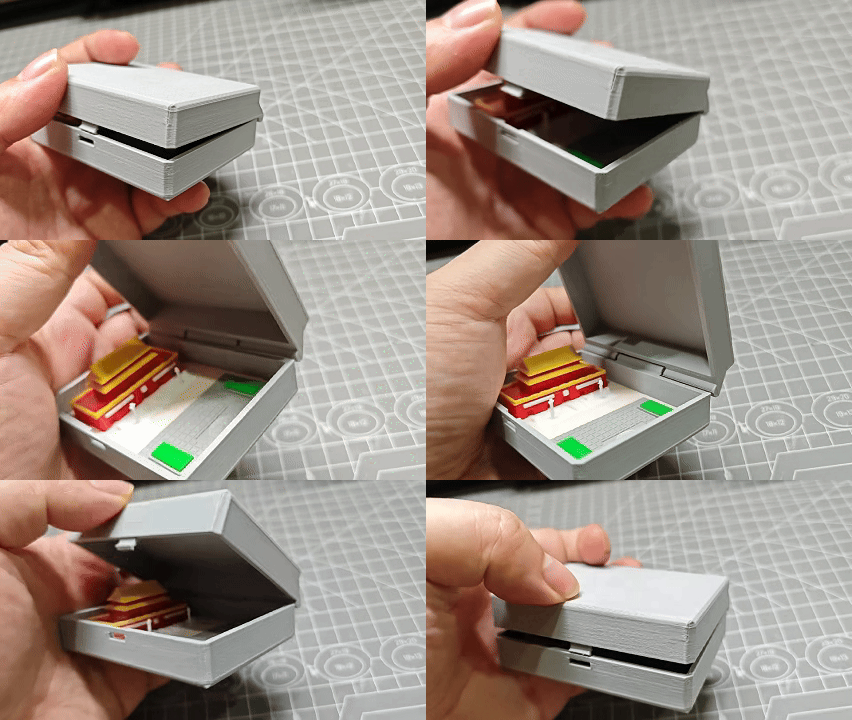
– Architectural Precision: The model faithfully reproduces Tiananmen Square’s defining features—its striking red city gate, elegant yellow double-eaved hip roof, ornate huabiao pillars flanking the gate, and pristine white marble pedestals—using color and structural detailing to preserve the building’s distinctive character while scaling it down to an incredibly small form factor without sacrificing recognizability.
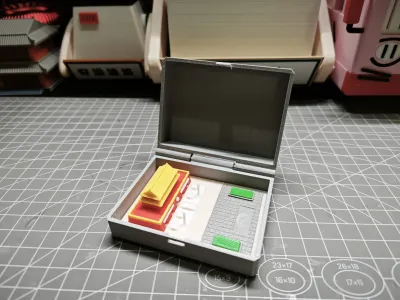
– Scene‑Driven Presentation: The model is housed within a “box‑in‑box” design that recreates the expansive plaza environment, transforming the landmark from a solitary structure into a vivid, narrative‑rich setting that invites exploration and storytelling.
II. Geographical and Cultural Significance
– Geographical Landmark: As the geographic and cultural heart of Beijing, Tiananmen Square served as the main gate to the imperial capital during the Ming and Qing dynasties—and today stands as one of China’s most enduring national symbols. This miniature model distills the essence of Beijing’s “urban core” into a compact, yet evocative form.
– A Harmonious Fusion of Technology and Culture: By leveraging 3D printing, traditional architectural heritage is reimagined through modern manufacturing techniques. Beyond serving as a culturally enriching文创 product for promoting Beijing’s unique identity, this model also functions as an educational tool, offering users a tangible, visual understanding of the structural and spatial relationships inherent in landmark architecture.
The entire model is printed in a single piece, eliminating the need for supports; hinges and snap‑fit connectors are all integrally molded. The main body is constructed from PETG—a material known for its durability and resistance to breakage. While PLA could be used for the connectors, it tends to be more prone to cracking under stress. All internal scene components are made from PLA, designed to fit snugly into their designated slots—but due to the tiny scale of the parts, applying a small amount of glue can further enhance stability. Because different materials have varying degrees of expansion and contraction, some of the interlocking pins may feel slightly tight; a gentle sanding will ensure a smoother fit. Overall, assembly is remarkably straightforward—this represents a fresh, innovative approach aimed at reducing both print time and assembly complexity. We hope you’ll enjoy this unique creation!
Originality of the Model
The author declares that this work is their personally original model
This model is licensed under the following terms:
This work is licensed under a Standard Digital File License. Digital files have a strict non-commercial, personal use only license.
You shall not share, sub-license, sell, rent, host, transfer, or distribute in any way the digital file or 3D printed versions of this object, nor any other derivative work of this object in its digital or physical format (including remixes of this object). You can not host these files on other digital platforms, web stores or cloud repositories. The objects may not be used in any way whatsoever in which you charge money, collect fees.
Models(1)
- 地理盲盒-北京.3mfDesigner
'%3e%3cpath%20id='Vector'%20d='M13.6663%201.33331H2.33301C1.78072%201.33331%201.33301%201.78103%201.33301%202.33331V13.6666C1.33301%2014.2189%201.78072%2014.6666%202.33301%2014.6666H13.6663C14.2186%2014.6666%2014.6663%2014.2189%2014.6663%2013.6666V2.33331C14.6663%201.78103%2014.2186%201.33331%2013.6663%201.33331Z'%20stroke='%23808080'%20stroke-linejoin='round'/%3e%3cpath%20id='Vector_2'%20d='M11.3333%201.33331V7.33331H5V1.33331H11.3333Z'%20stroke='%23808080'%20stroke-linejoin='round'/%3e%3cpath%20id='Vector_3'%20d='M9.66699%203.66669V5.00002'%20stroke='%23808080'%20stroke-linejoin='round'/%3e%3c/g%3e%3cdefs%3e%3cclipPath%20id='clip0_3212_168684'%3e%3crect%20width='16'%20height='16'%20fill='white'/%3e%3c/clipPath%3e%3c/defs%3e%3c/svg%3e)
762.00 KB
'%3e%3cpath%20id='Vector'%20d='M7.99967%2014.6666C11.6816%2014.6666%2014.6663%2011.6819%2014.6663%207.99998C14.6663%204.31808%2011.6816%201.33331%207.99967%201.33331C4.31777%201.33331%201.33301%204.31808%201.33301%207.99998C1.33301%2011.6819%204.31777%2014.6666%207.99967%2014.6666Z'%20stroke='black'%20stroke-opacity='0.49'%20stroke-linejoin='round'/%3e%3cpath%20id='Vector_2'%20d='M8.00235%204.00006L8.00195%208.00299L10.8284%2010.8295'%20stroke='black'%20stroke-opacity='0.49'%20stroke-linecap='round'%20stroke-linejoin='round'/%3e%3c/g%3e%3cdefs%3e%3cclipPath%20id='clip0_1890_13189'%3e%3crect%20width='16'%20height='16'%20fill='white'/%3e%3c/clipPath%3e%3c/defs%3e%3c/svg%3e)
2025-10-15


