




Eastern Aesthetics
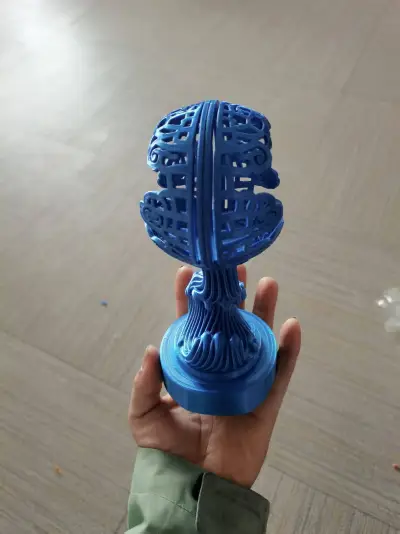
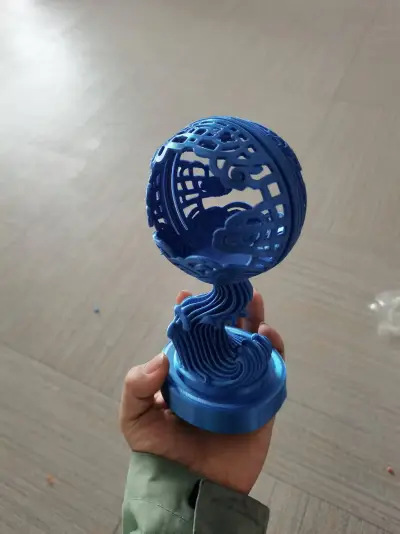
Hollow Wave Candle Holder
3D‑printed candle holder
Light and Shadow Projection
Hollowed-out texture
Layer-by-Layer Pause for Color Changes
Photography Background
Traditional Chinese-style props
Bedside table lamp
Study Room Furnishings
Entranceway Decor
Gift Decorations
Tea Room Decorations
Imagery-Driven Design
Traditional Chinese Patterns
Wabi-Sabi Style
Flowing Light and Shadows
Window lattice elements
Poetic Decorative Pieces
Hollow spherical lampshade

- 0.2 mm layer height, 3‑layer walls, 15% infill density

2-disc
PLA
Designer

2

0
🌊 Hollow Wave Candleholder: A Complete Guide to Design Inspiration, Printing, and Assembly
✨ Design Inspiration
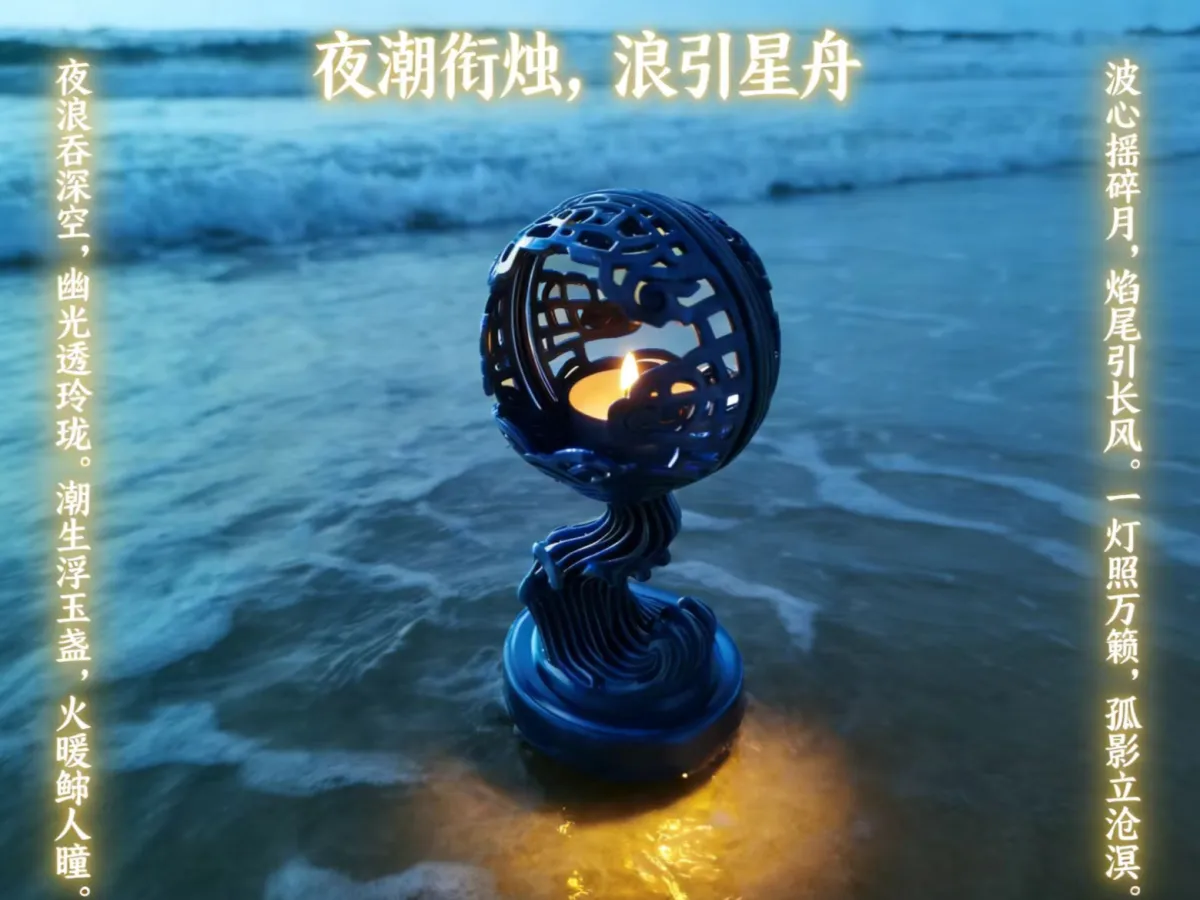
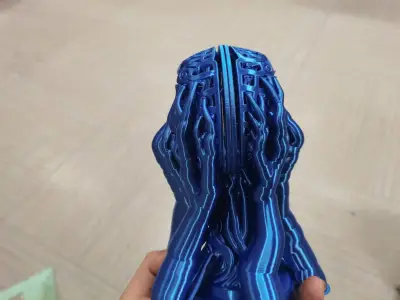
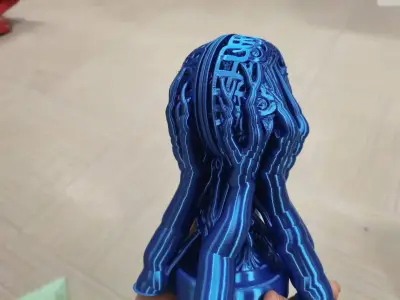
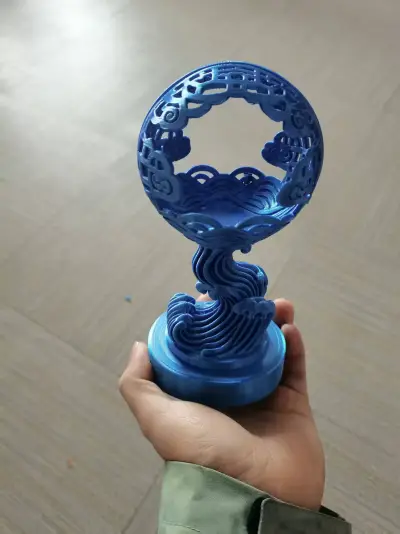
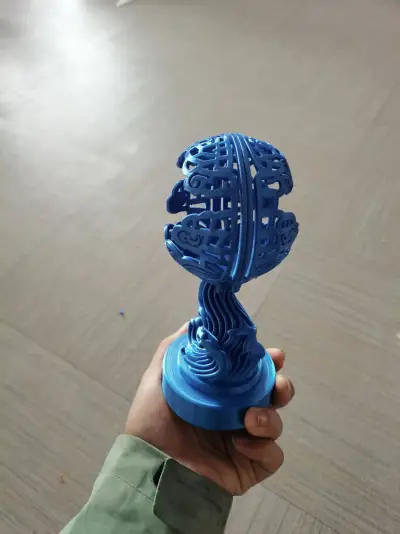
This candleholder draws its creative essence from the “water‑wave motif” in Eastern aesthetics and the philosophical concept of “heaven round, earth square.”
The overall form centers on the wave as its core element: layered water‑wave patterns on the base and pillars gently cradle a hollow, spherical lampshade that rises upward, evoking the poetic imagery of “tides give birth to floating jade cups, waves surge to embrace the starry river.” Intricate cloud and spiral motifs are seamlessly integrated with the carved textures of traditional Chinese window lattices, allowing candlelight to filter through the intricate patterns and cast flowing shadows and light onto the surrounding walls—creating a serene atmosphere where “a single lamp illuminates all sounds, and a solitary figure stands amidst the vast, boundless sea.”
🛠️ Printing Requirements
Basic Parameters
- Filament: PLA/PLA+ (recommended for stable build quality and easy post‑processing)
- Layer Height: 0.15 mm (to ensure crisp, detailed hollow patterns)
- Wall Thickness: 2.4–2.8 mm (6–7 layers, providing robust structural integrity)
- Infill Density: 15%–20% (balancing light transmission with sufficient strength)
- Print Speed: 50–60 mm/s overall, with the first layer printed at 30–40 mm/s
Supports and Build Plate
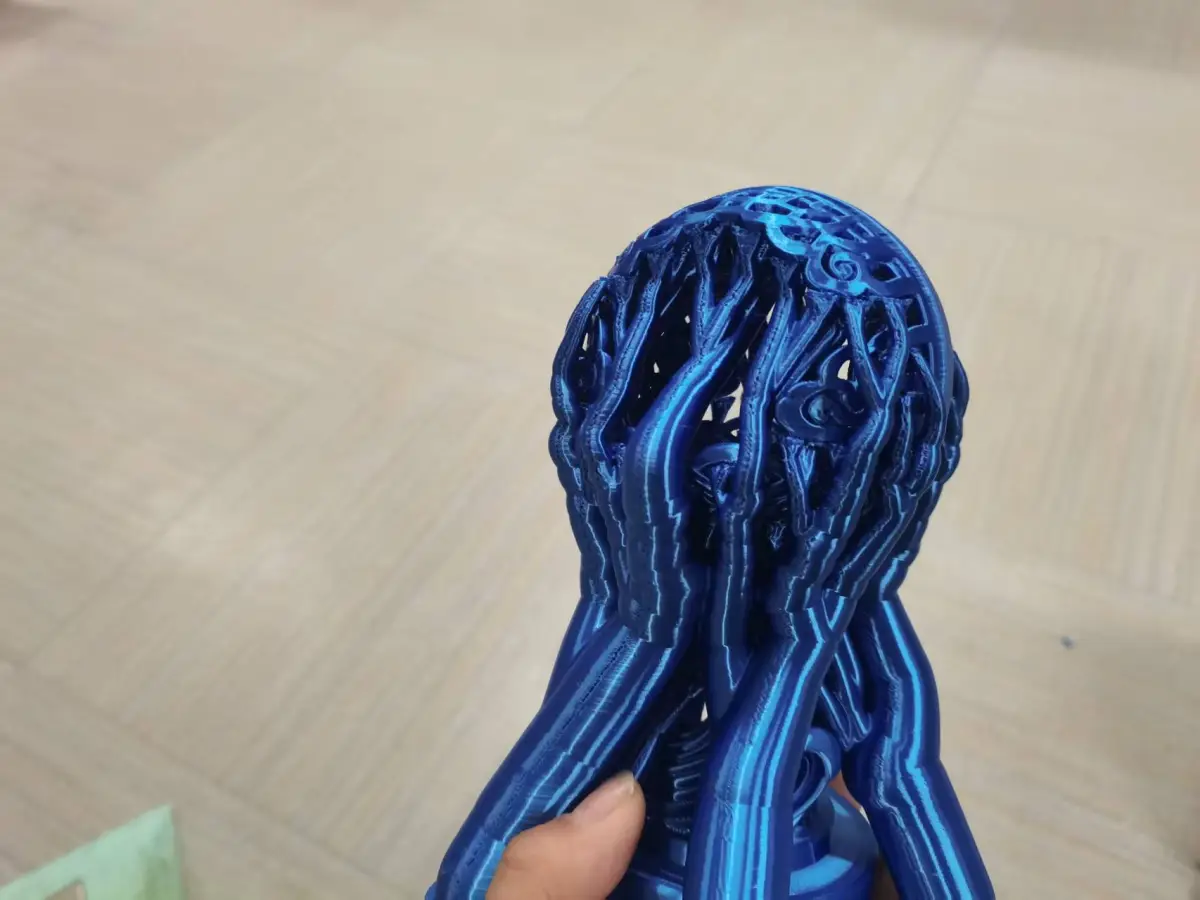
- Supports: Tree‑like supports with a density of 15%–20%, featuring contact points of 0.2–0.3 mm. Generate supports only beneath hollow areas and within the sphere itself to minimize residual material.
- Raft: Enable a single layer with a width of 10–12 mm to monitor extrusion performance and ensure strong bed adhesion.
- Build Plate Prep: Use a glass or PEI‑coated build plate paired with Magigoo adhesive or painter’s tape; set the bed temperature to 60–65°C to prevent warping and delamination.
Layer‑Color Switching Option (Advanced Feature)
This customizable feature is designed for experienced users who wish to pause color changes at specific structural layers:
1. Base Layer: Pause printing once you reach the top edge of the base, then switch to the first color—such as deep sea blue.
2. Wave‑Pillar Layer: Pause printing when the pillar meets the sphere, then switch to the second color—such as light cyan blue.
3. Hollow‑Sphere Layer: When printing the sphere’s framework, switch to the third color—such as moonlight white.
Note: This feature requires slicing software that supports “color‑pause” settings and additional filament—customers can choose whether to enable it based on their preferences.
🧩 Assembly Instructions
1. Remove Supports: After printing, carefully snip each tiny support point around the hollow areas using fine‑tipped diagonal pliers; avoid pulling or tugging forcefully. Then, use tweezers to gently lift out any remaining support material, taking care not to scratch or damage the delicate hollow patterns.
2. Sand and Clean: Lightly sand any residual support marks with 120–400 grit sandpaper, paying special attention to the junctions between the sphere’s interior and the wave‑like contours. Finally, brush away loose debris or use isopropyl alcohol (IPA) to wipe away stubborn stains.
3. Assemble the Candleholder: This is a single‑piece printed model—no additional assembly required. Simply place a candle into the recessed cavity within the hollow sphere and enjoy.
4. Usage Tips: We recommend using LED electronic candles to avoid direct flame and high temperatures, which could cause PLA material to warp or deform.
Originality of the Model
The author declares that this work is their personally original model
This model is licensed under the following terms:
Credit must be given to the creator
Models(1)
- d6296d0c14da663073a6fa78a1301957.3mfDesigner

20.34 MB

2026-02-07


