








filament clip
filament holder
3d printer accessory
tangle free
storage
spring clip
tangle
free
filament
clip
organizer
spring
flexi

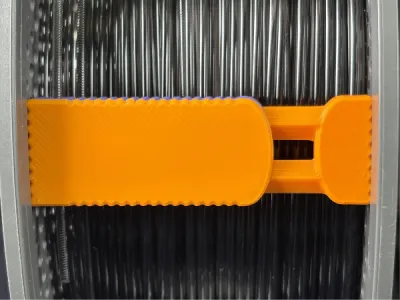 Standard (58 mm to 64 mm Inner Spool Width)
6-disc
PETG
Designer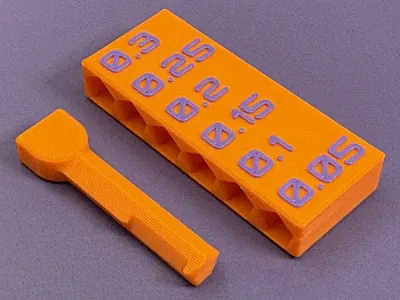 Printer Tolerance Test
1-disc
PETG
Designer

1.2k

55

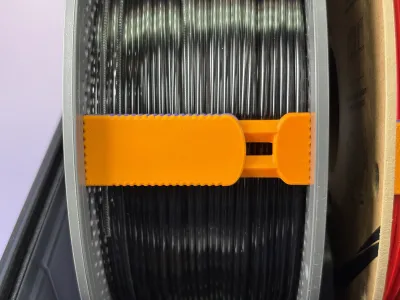
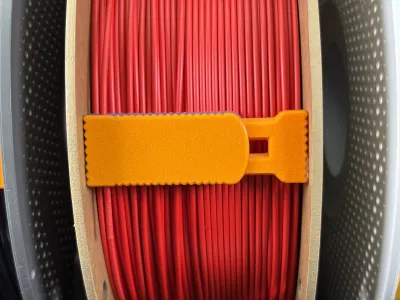
A filament clip that solves the three most common problems of traditional filament clips.
Plastic Fatigue
Most filament clips rely on a printed flex geometry to generate clamping force. Repeated use and elevated drying temperatures gradually reduce the clamping force as the plastic permanently deforms.
True Spring Solution

The clamping force is generated by a real steel compression spring. The printed parts only guide the movement.
No Plastic Fatigue. Constant tension.
Filament Stress
Many filament clips bend the filament sharply by securing it through spool holes or around the spool rim. Brittle materials may break after long term storage.
True Spring Solution
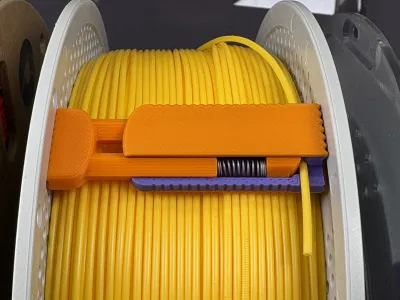
The filament is secured close to the spool core with a large bending radius, minimizing unnecessary stress while keeping the filament securely retained.
Tangle Risk
Some clips secure the filament directly to the wound filament. This can increase the risk of accidental tangles when the spool is handled carelessly.
True Spring Solution
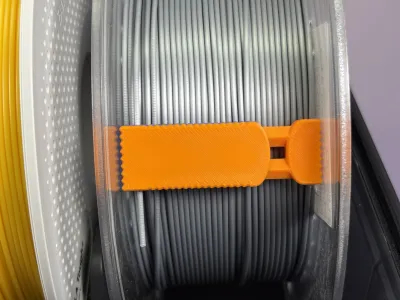
The filament is retained independently of the wound filament. Nothing is attached to the filament winding itself.
Hardware
The clip uses two inexpensive compression springs.
You can either use a cheap 0.4*5*20 mm spring or simply try the spring from an old ballpoint pen. Many common pen springs fit perfectly.
No screws.
No glue.
No tools.
Everything simply snaps together.
Printer Tolerance Test
Every printer and every filament behaves slightly differently. Since this model relies on precisely fitting moving parts, I strongly recommend printing the Printer Tolerance Test first.
The test consists of one plunger and six labeled test sockets with clearances of 0.05 mm, 0.10 mm, 0.15 mm, 0.20 mm, 0.25 mm and 0.30 mm.
The correct fit should move smoothly with minimal friction while having as little play as possible.
Don't feel like running the calibration?
Simply print Print Plate 1 (0.15 mm clearance). It provides a good fit for most printers and materials.
Temperature Testing
Successfully tested after 24 hours of continuous filament drying:
- PETG - 45 °C
- ASA - 65 °C
- ASA - 80 °C
- PC - 85 °C
For comparison, I tested a popular Flexi Filament Clip under identical print settings, using the same material and identical drying conditions. After 24 hours at the respective drying temperatures, the flex geometry had permanently deformed and the remaining clamping force was no longer sufficient for reliable reuse.
If you have ever dried filament while using this type of clip, you probably know exactly what I mean.
Recommended Materials
PETG works perfectly for everyday use.
For frequent filament drying or elevated temperatures I recommend ASA or PC.
Assembly
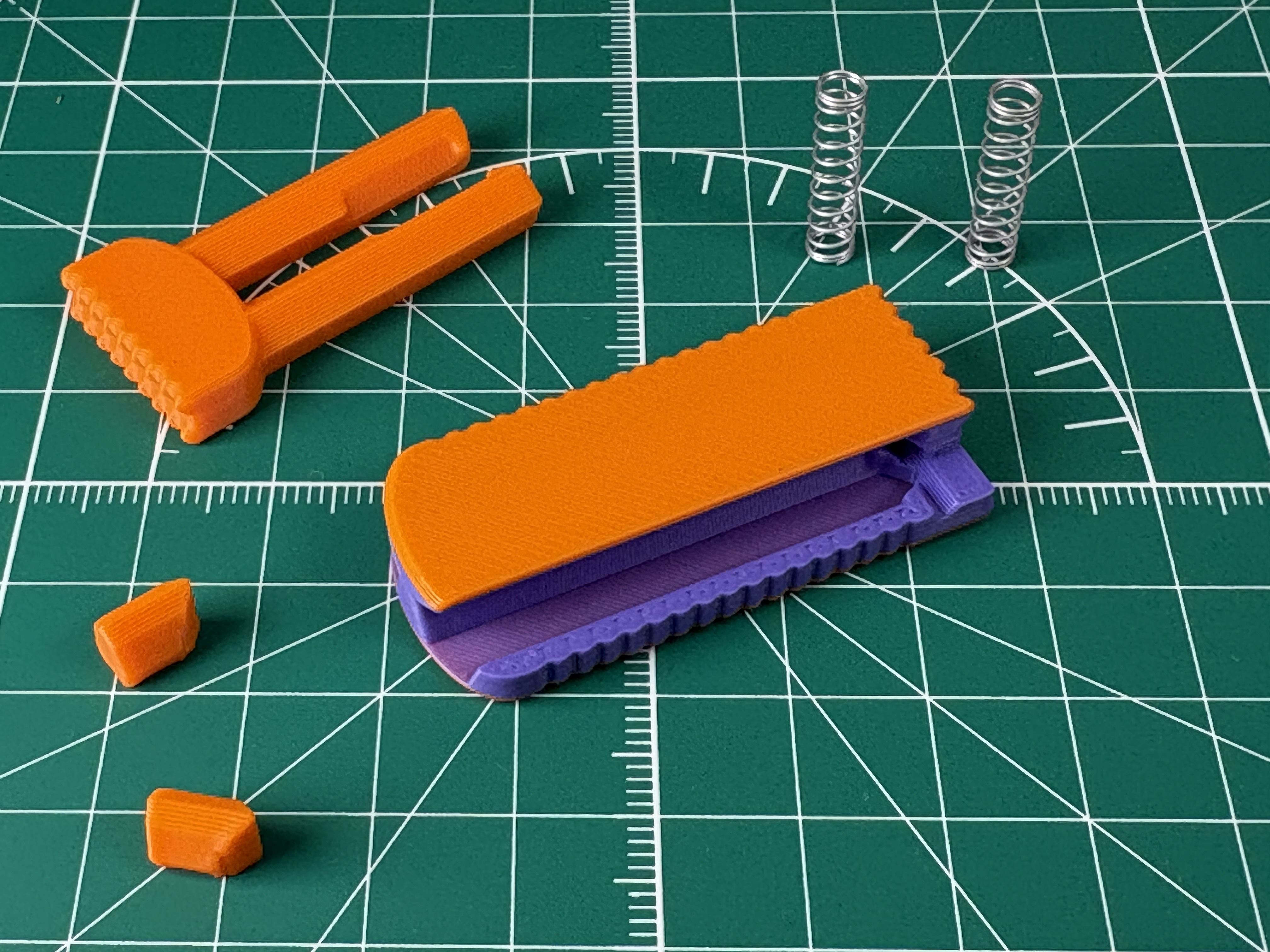
Printed parts and two compression springs.
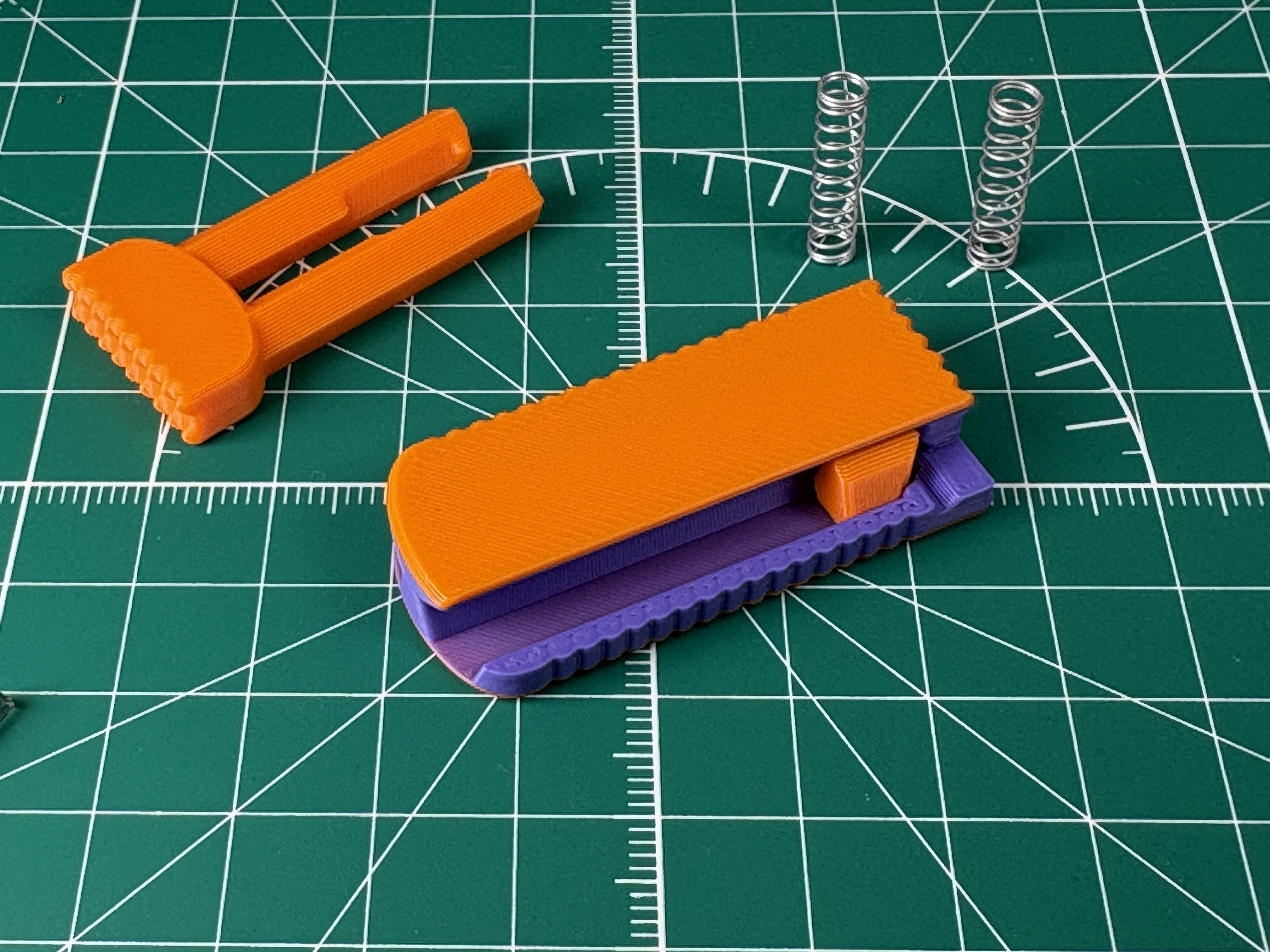
Insert the filament clamps.
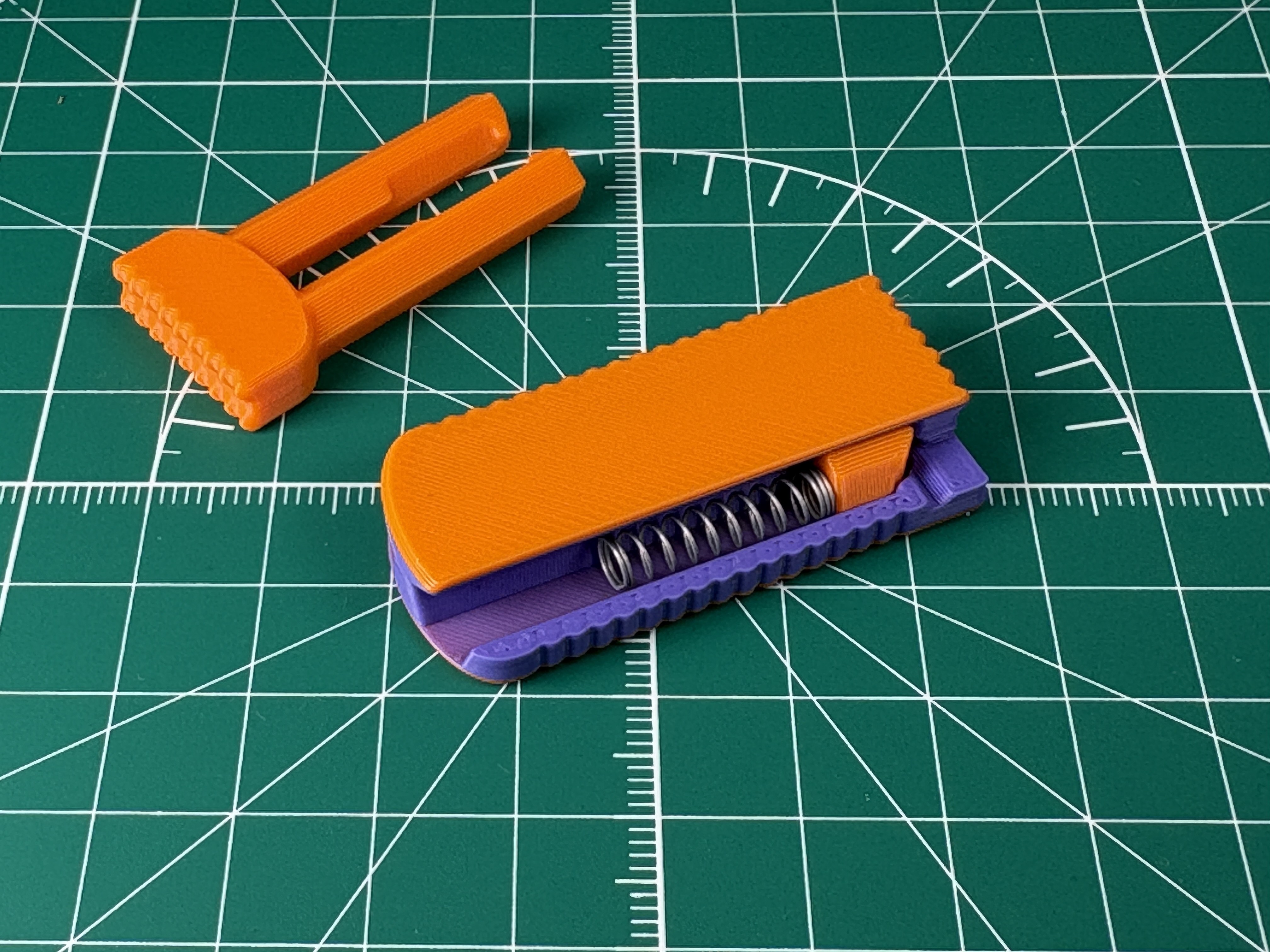
Insert the springs.
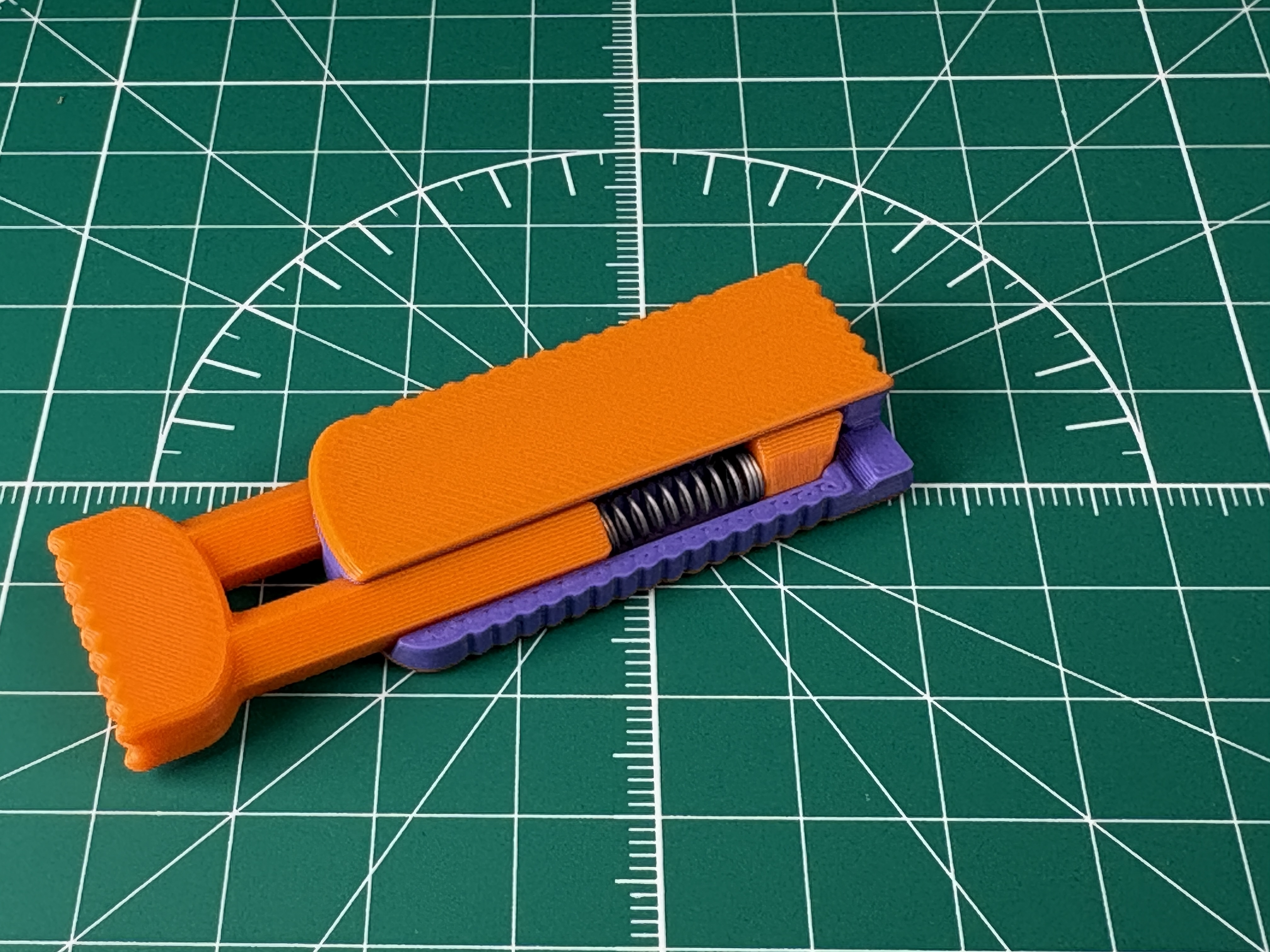
Insert the Double Plunger and press firmly.
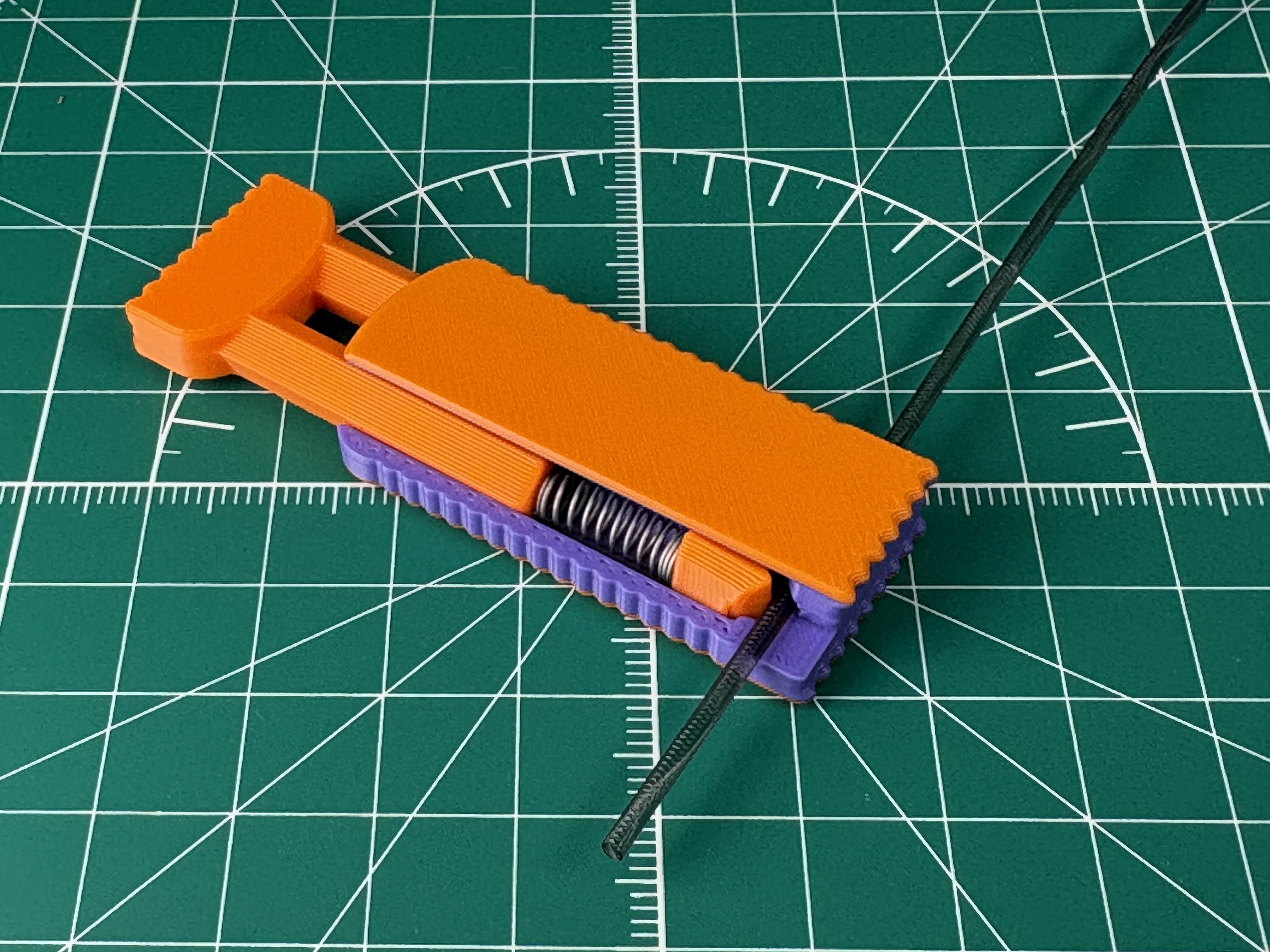
Finished, enjoy.
Bill of materials
- NameQuantityNotes
- 1Compression Spring20.4*5*20 mm (12 mm travel)
Originality of the Model
The author declares that this work is their personally original model
This model is licensed under the following terms:
Credit must be given to the creator
Models(2)
- Professional3D-True-Spring-Filament-Clip-Tolerance-Test.3mfDesigner

110.57 KB

2026-07-15
- Professional3D-True-Spring-Filament-Clip-Standard-64-58.3mfDesigner
634.92 KB
2026-07-15


