


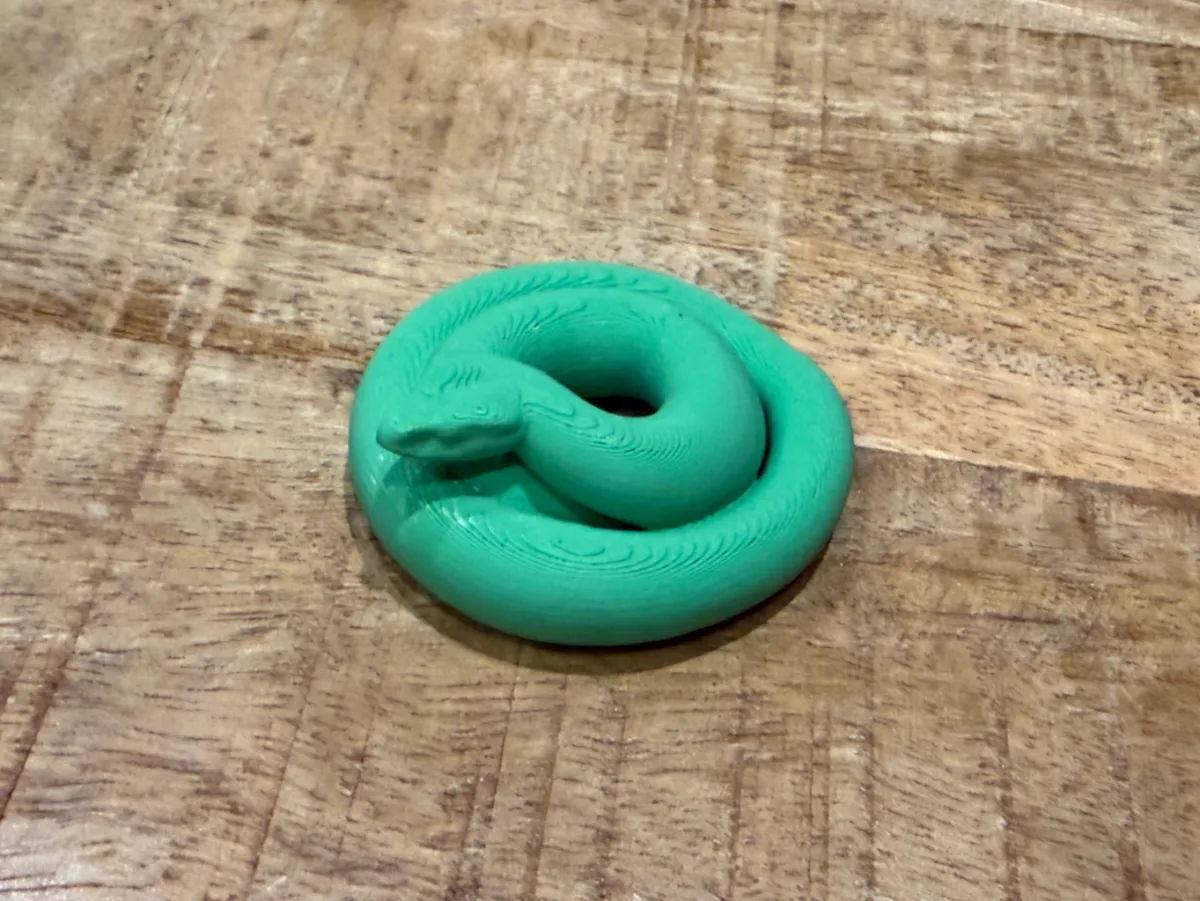
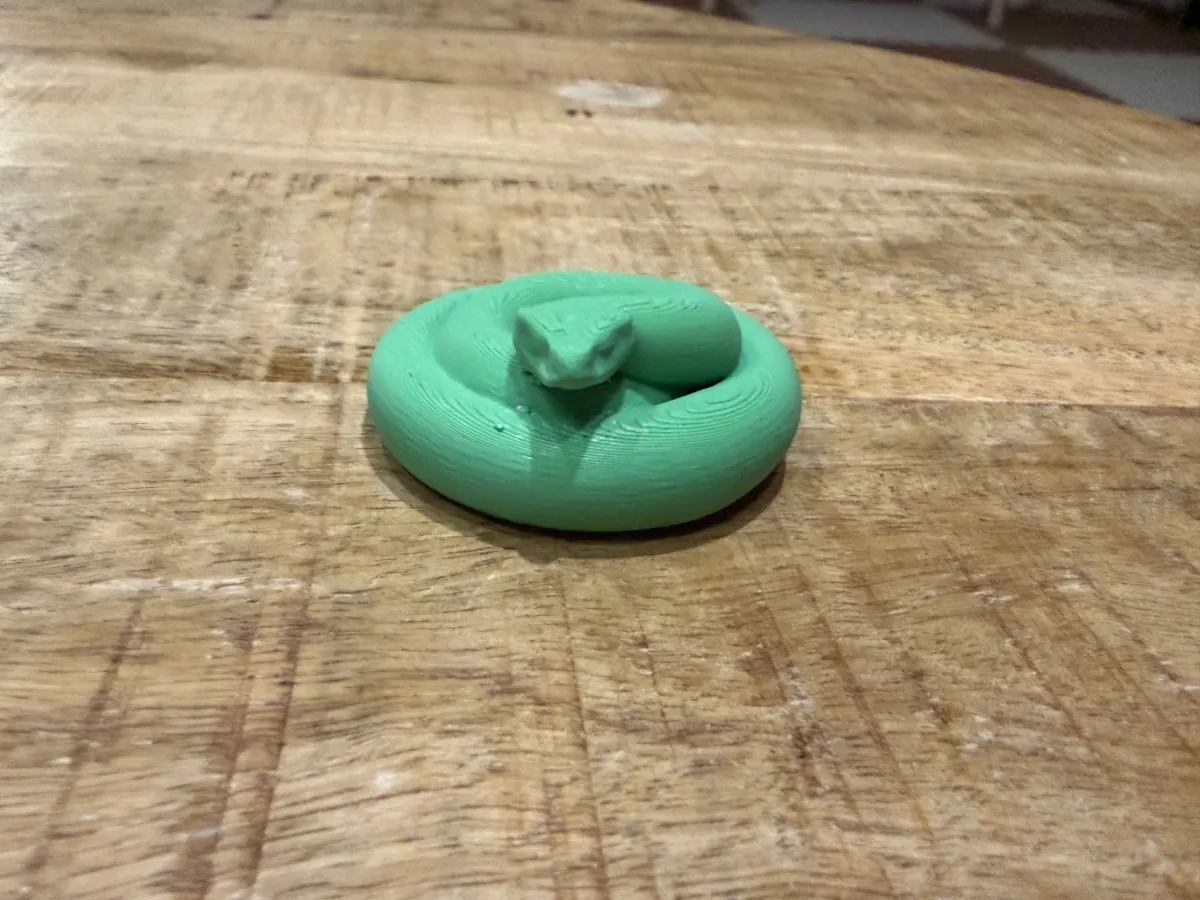

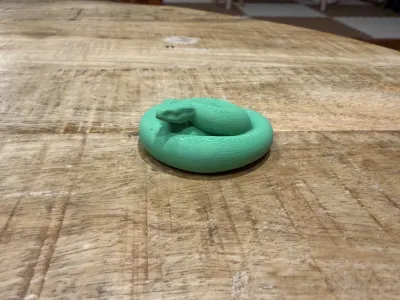
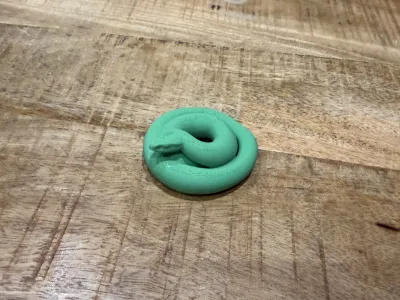
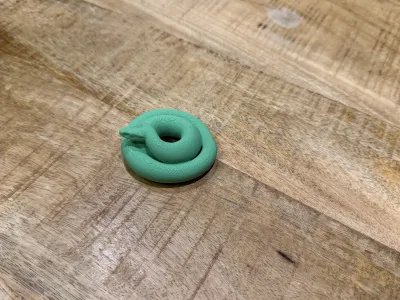

snake
snakes
reptile
animal
exotic
tropical
real
realisitc
snakeanimal
animalpet
pet
toy

- 0.2mm layer, 6 walls, 25% infill

1-disc
PLA
Designer

11

3
🐍 What Is a Snake?
Scientific name: Suborder Serpentes (within the class Reptilia)
Origin: Found on every continent except Antarctica — from dense jungles to deserts, forests, and oceans.
Type: Legless reptile — known for its elongated body, silent movement, and remarkable adaptability.
The snake is a creature of fluid motion and quiet precision — graceful, controlled, and deeply attuned to its environment. Without limbs, it moves through the world in curves and waves, embodying efficiency and elegance.
Often misunderstood, the snake is not a symbol of chaos, but of balance — a hunter shaped by patience, awareness, and restraint.
🌿 Appearance & Character
Color: Incredibly diverse — earth tones, vibrant patterns, stripes, bands, or solid hues depending on species and habitat.
Shape: Long, cylindrical body with seamless continuity from head to tail.
Skin: Covered in smooth or keeled scales — flexible, protective, and often subtly reflective.
Head: Distinct or streamlined depending on species; features include sharp eyes, forked tongue, and specialized sensory organs.
Eyes: Clear, lidless, and watchful — giving an impression of constant awareness.
Movement: Flowing, silent, and continuous — a series of coordinated muscular waves.
Personality: Calm, observant, and precise — the snake feels deliberate, never rushed, always aware.
☀️ Growth & Expression
Snakes are ectothermic, relying on external heat sources to regulate their body temperature.
They shed their skin periodically, revealing fresh layers beneath — a process often associated with renewal.
Some species are solitary, while others may gather in shared environments during certain seasons.
Their behavior is efficient — they conserve energy, strike with precision, and move only when needed.
The snake expresses transformation — growth through shedding, movement through adaptation.
💧 Habitat & Care (General Nature Context)
Environment: Varies widely — forests, grasslands, deserts, wetlands, and oceans.
Temperature: Requires warmth from sunlight or surrounding environment.
Shelter: Often seeks hidden or protected spaces — under rocks, in burrows, or dense vegetation.
Diet: Carnivorous — feeding on small animals, insects, or other prey depending on species.
Activity: Many are most active during specific times — day, night, or twilight.
Snakes thrive in balance — their survival depends on harmony with their surroundings.
🌍 Fun Facts
👅 Snakes use their forked tongue to “smell” the air and detect prey or danger.
🦴 They can consume prey much larger than their head thanks to flexible jaws.
🌱 Shedding skin allows them to grow and remove parasites.
🌡️ As cold-blooded animals, they rely on environmental heat to stay active.
✨ The snake’s beauty lies in its motion — silent, continuous, and perfectly adapted.
Originality of the Model
The author declares that this work is their personally original model
This model is licensed under the following terms:
This work is licensed under a Standard Digital File License. Digital files have a strict non-commercial, personal use only license.
You shall not share, sub-license, sell, rent, host, transfer, or distribute in any way the digital file or 3D printed versions of this object, nor any other derivative work of this object in its digital or physical format (including remixes of this object). You can not host these files on other digital platforms, web stores or cloud repositories. The objects may not be used in any way whatsoever in which you charge money, collect fees.
Models(1)
- RealSnake.3mfDesigner

322.84 KB

2026-03-23


