




cos
- 0.16 mm layer height, 5‑layer walls, 10% infill density

6-disc
PLA
Designer

23

7
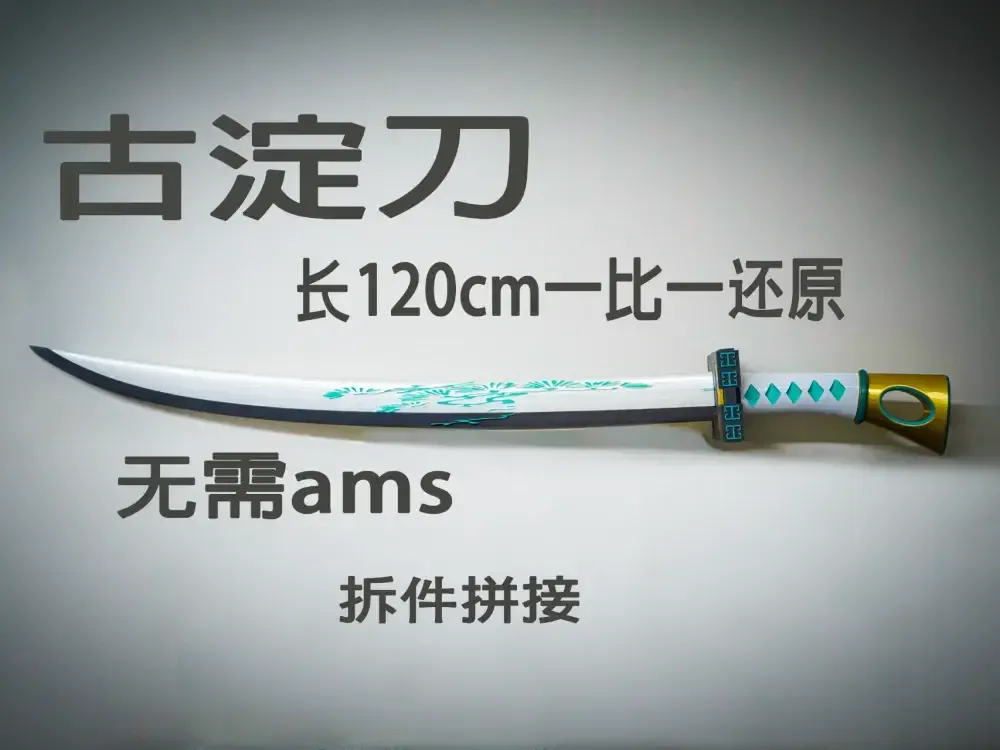
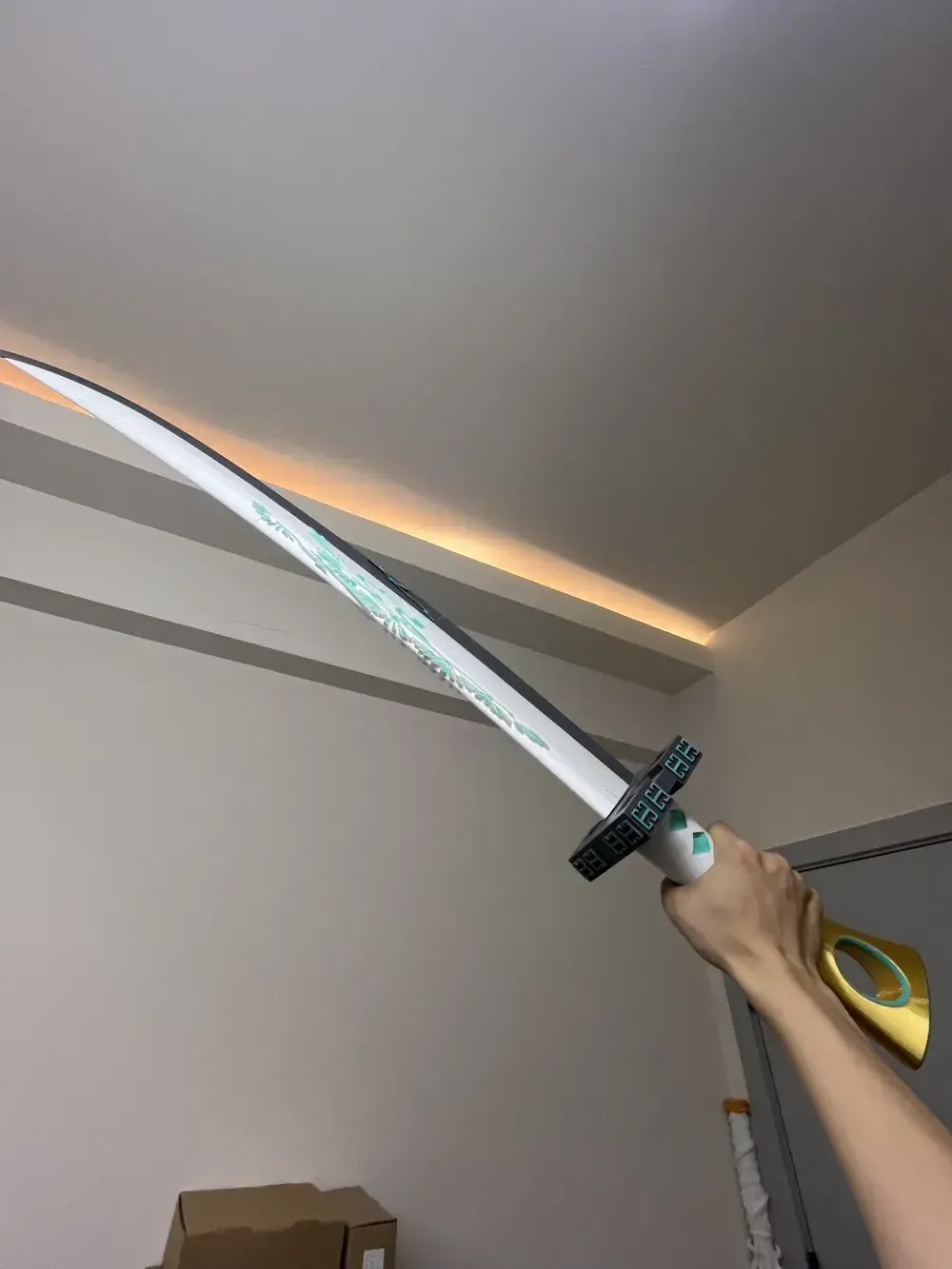
This design draws inspiration from historical traditions while incorporating modern aesthetic sensibilities. It preserves all the distinctive features of the ancient “Guyu Dao” and vividly renders the intricate “pine‑grain” texture, enhancing its visual appeal. The design also retains the hallmark characteristics of the ring‑headed sword,
1. The blade often embodies symbolic attributes—such as the “Pine‑Grain Ancient Ingot Sword,” whose forged surface reveals a natural pine‑grain pattern, symbolizing both razor‑sharp precision and noble prestige.
2. Ring‑Head Design: The blade’s hilt terminates in a circular ring, a quintessential feature of ancient Chinese swords and sabers that combines decorative elegance with practical functionality—for easy hanging or secure gripping.
In ancient times, this weapon was known as the “Guyu Dao” or “Guding Dao.” Its form is highly distinctive: blades vary in length, but the hilt typically adopts the ring‑head configuration most commonly seen in Han‑dynasty swords. The hilt is slightly flattened and subtly curved toward one side, while the blade itself is shaped like an inverted “U,” with slightly raised ends and a gently concave spine running down the center. The blade tip is sharply pointed and gracefully upturned. With its slender, lightweight profile, the standard length of an ancient ingot sword usually exceeds 1.2 meters—a versatile cavalry saber suited for mounted combat. In “Romance of the Three Kingdoms,” we find a vivid depiction of Sun Jian wielding this treasured blade: “Sun Jian donned gleaming silver armor, a crimson headscarf, and gripped the ancient ingot sword as he rode his horse with flowing mane.” This type of sword was most densely distributed in the Jiangnan region. Its earliest origins can be traced back to the “ring‑headed bronze sword” mentioned in historical records dating to the Shang Dynasty—these two designs share striking similarities in form, leading scholars to regard them as part of a continuous lineage.
The ancient ingot sword was a cherished heirloom weapon passed down through Sun Jian’s family; it was the very blade Sun Jian wielded at the Battle of Sishui Pass. After Sun Jian’s death, his son Sun Ce entrusted the sword to Zhou Yu.
Originality of the Model
The author declares that this work is their personally original model
This model is licensed under the following terms:
Credit must be given to the creator
Only noncommercial uses of the work are permitted
Remixes must be shared under the same license
Models(1)
- gdd-2.3mfDesigner

1.63 MB

2025-10-05


