










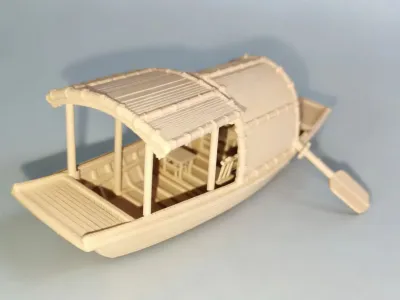

Wu-style covered boat
Small boat model
Small Boat in Jiangnan
Wupeng Boat Model
Landscape Boat
Painted Boat Model
Miniature Boat
Desktop Decorations
Miniature Landscapes
Traditional small boat
Traditional Chinese-style boat
Chinese-style vessel
Water Town Boat
Integrated Printing
Traditional Chinese-style ornaments

- 0.2 mm layer height, 3‑layer walls, 15% infill density

1-disc
PLA
Designer

27

7
1. Model Inspiration
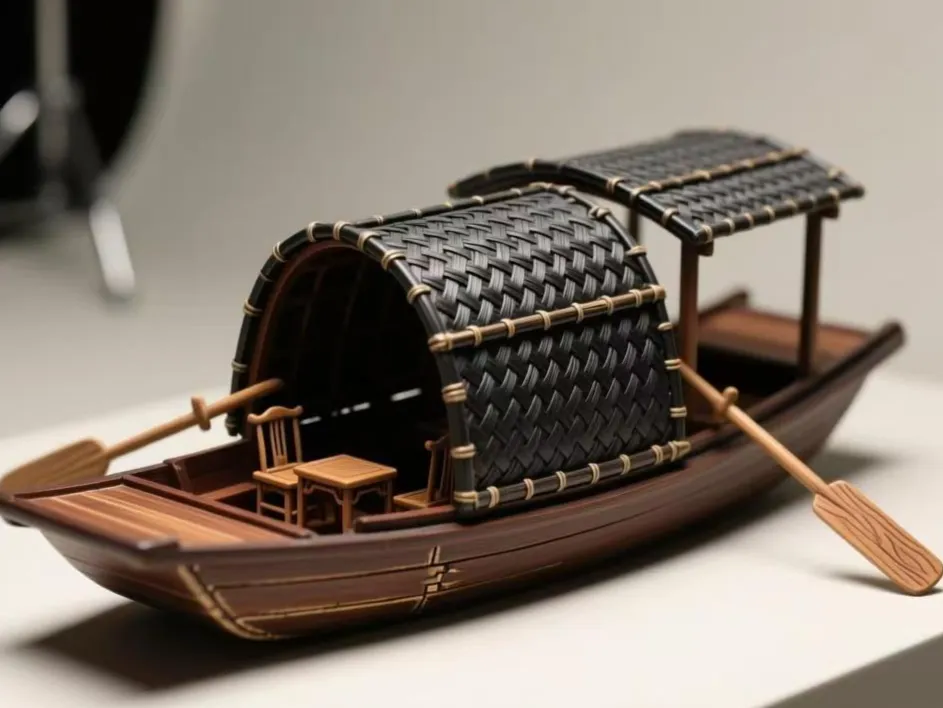
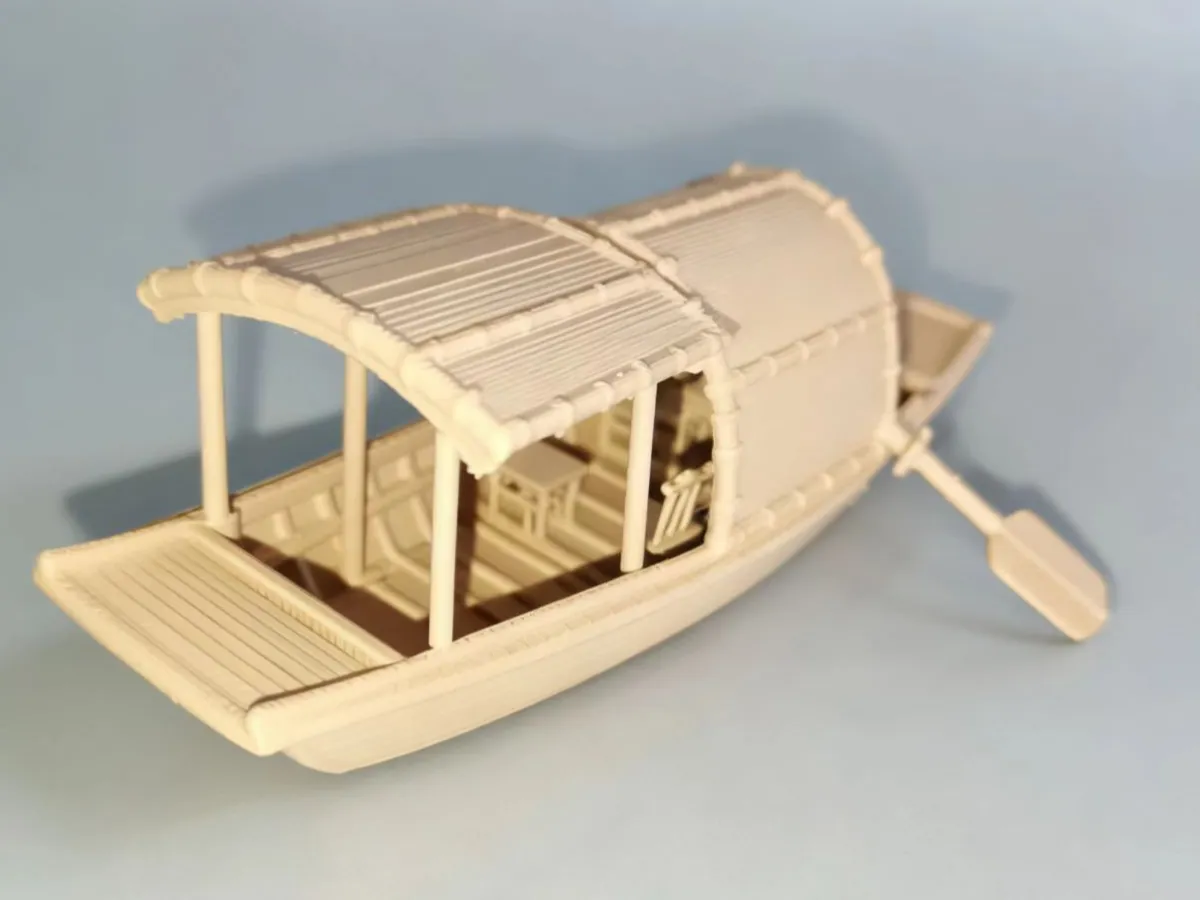
This Wupeng small boat model draws its inspiration from the most iconic design of Wupeng boats found in the water towns of Jiangnan. Compact, lightweight, and meticulously crafted, it captures the timeless charm of traditional wooden vessels while lending itself perfectly to miniature landscapes, desktop decorations, and creative cultural products.
In the design process, I focused on faithfully recreating the boat’s most distinctive features: its narrow, elongated hull; the gracefully curved sail; the gently upturned prow; and the streamlined, curvaceous contours along both sides of the vessel—elements that lend the whole model an air of rustic elegance, natural grace, and enduring visual appeal.
To enhance the model’s refinement, I added a small, round pavilion to the midsection of the hull, supported by four slender, cylindrical pillars topped with delicate finials. This not only adds a sense of depth and composition to the piece but also transforms the boat into a picturesque scene—reminiscent of a floating pleasure barge or a serene viewing boat straight out of an ancient painting.
The entire model eschews exaggerated sci‑fi elements and unnecessary ornamentation; instead, it strives for simplicity, understated elegance, faithful reproduction, ease of printing, and lasting aesthetic appeal. Whether displayed at home, perched on a desk, or showcased as a 3D‑printed artwork, this model is an ideal choice.
The original design intent was clear: to enable even casual users with a standard home FDM printer to produce a complete, visually appealing, and durable little boat that’s both easy to print and hard to break.
2. Printing Requirements (Extremely Detailed—Focused Solely on This Boat)
1. Recommended Overall Dimensions
- Recommended print length: 12 cm–18 cm
- Height: 6 cm–10 cm
- The smaller the model, the more intricate and delicate it becomes—but also the more fragile it tends to be.
- The larger the model, the easier it is to print, with greater structural integrity and safer support removal.
2. Recommended Filament Types
- Preferred: PLA / PLA+
These filaments are easy to print, resistant to warping, and deliver crisp, detailed results—making them the perfect choice for this boat.
- Not recommended: ABS, ASA
These materials are prone to warping, especially when printing long, slender components like the boat’s hull; even a slight warp can render the entire model unusable.
3. Basic Slicing Parameters
- Layer height: 0.15 mm–0.2 mm
- Wall thickness: 1.2 mm–1.6 mm
- Infill: 10%–15% is sufficient
- Print speed: 30–40 mm/s for outer walls
- Fan settings: Full fan speed throughout the print
4. Support Structures (Critical!)
The following areas of this boat absolutely require supports:
- The under‑sail, overhanging sections
- The curved bottom surfaces at the bow and stern
- Most crucially: the four slender pillars supporting the central round pavilion
Support recommendations:
- Support type: Tree‑like supports or easy‑to‑remove supports
- Support density: 10%–15%
- Increase the spacing between supports slightly to prevent accidentally snapping the thin pillars during removal.
Special Notes:
- For small‑scale prints (under 12 cm), the four slender pillars are extremely delicate—so supports must be light, minimal, and easy to remove.
- For large‑scale prints (over 15 cm), the pillars are thicker and stronger, significantly reducing the risk of breakage during removal.
5. Skirt Settings
- We recommend enabling skirt features and avoiding the use of a base plate.
- Skirt width: 4 mm–5 mm
- Number of skirt layers: 2 layers
Benefits:
- The boat’s hull is long and narrow, with a small contact area—adding a skirt helps prevent warping and shifting during printing.
- When it’s time to remove the supports, the skirt peels off cleanly without affecting the model’s appearance.
6. Glue Requirements
- The entire boat is printed in one piece and does not require assembly.
- Glue should only be used for: repairing any thin pillars that may snap during support removal.
- Recommended glue: low‑yellowing, fast‑drying adhesive.
3. Assembly Instructions (Specifically for This Boat—Extremely Detailed)
This boat is printed as a single, integrated piece and requires no complex assembly—there are just three key steps to focus on:
Remove supports → Repair broken pillars → Clean and refine
1. Removing Supports (The Most Critical Step)
The sequence must be followed precisely:
1. First, remove the large supports from the hull, bottom, and sail.
2. Finally, carefully remove the supports surrounding the slender pillars of the central round pavilion.
Tools needed:
- Small needle‑nose pliers, small scissors, and a small utility knife
- Never try to pry or bend supports apart with your hands!
Removal method:
- Gently grip the base of each support, rotate slowly, and carefully lift it away.
- The four slender pillars are particularly brittle—take your time and proceed with extreme care.
- Be extra cautious with smaller models; even a slight bit of force can cause them to snap.
2. Repairing Broken Pillars (If Any Breakage Occurs)
If any of the four slender pillars break:
1. Align the broken ends neatly.
2. Use a toothpick to apply a tiny dab of glue to the fracture points.
3. Press firmly for 10 seconds to secure the bond.
4. Allow the glue to dry completely for 5 minutes before handling again.
After repair, the breaks are virtually undetectable, and the pillars retain sufficient strength to withstand normal use.
3. Cleaning and Finishing
- Use a small utility knife to carefully remove any remaining support material.
- Lightly sand the bottom and edges of the hull with fine sandpaper for a smoother finish.
- No polishing or painting is required—the boat’s natural color looks stunning on its own.
4. Final Placement
- Simply lay the boat flat on a surface.
- The hull rests steadily and remains upright—no risk of tipping over.
- The central round pavilion remains intact, with all four slender pillars standing tall and straight, resulting in an overall appearance that is both refined and elegant.
Originality of the Model
The author declares that this work is their personally original model
This model is licensed under the following terms:
Credit must be given to the creator
Models(1)
- 小船2.3mfDesigner

20.60 MB

2026-02-21


