




Back to School-School Supplies
Nothing much.
No zero
Bagless
Integrated Printing
Hinge
Origami
Magnet
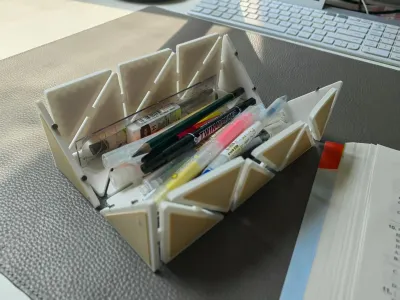
Pencil Case
Practical
School
Stationery

- 0.2 mm layer height, 3‑layer walls, 15% infill density

1-disc
PLA
Designer

75

4
Origami, Giving Rise to the Unseen
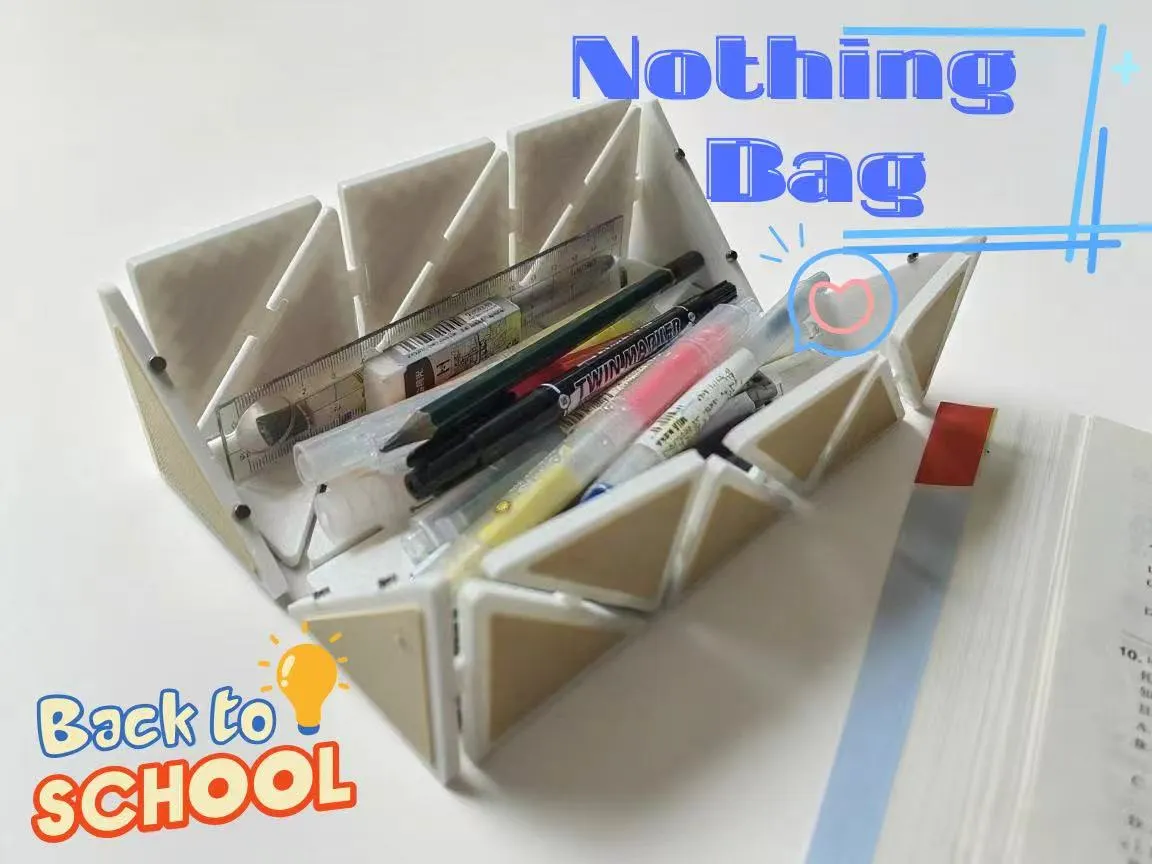
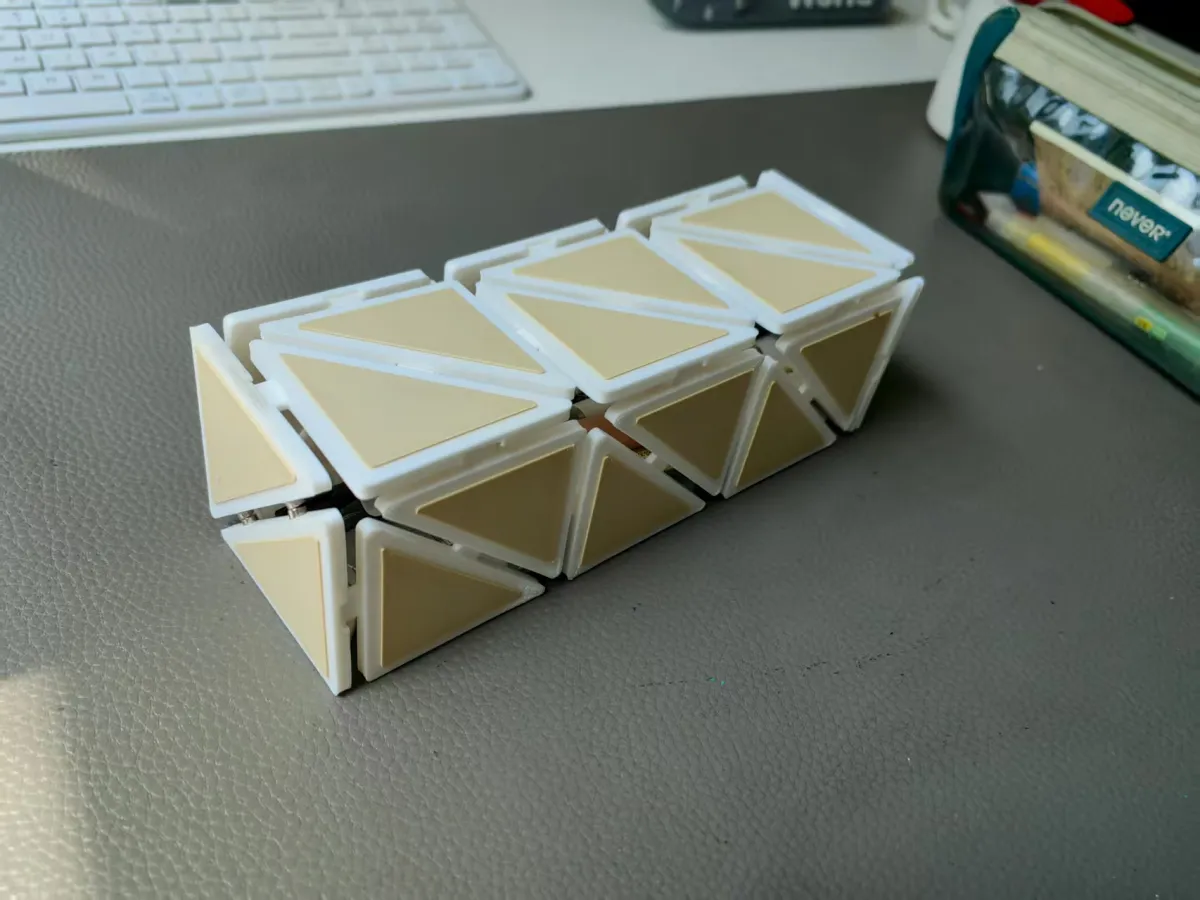
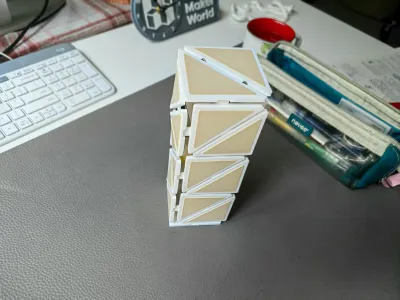
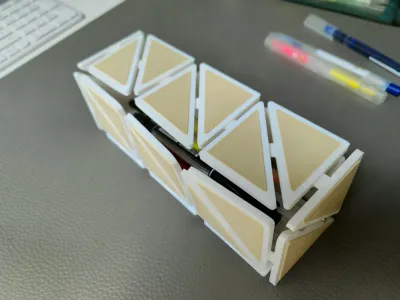
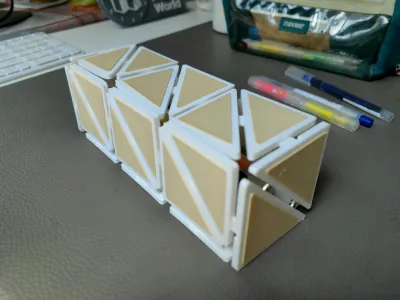
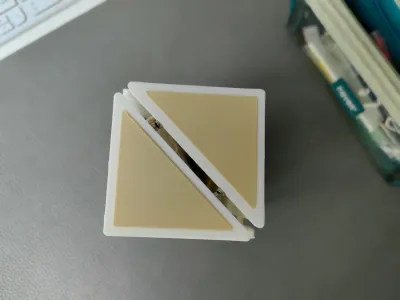
The Nothing Bag prints as a single, seamless piece—no supports required—using an N4max file. With just a few hinges, simple folding, and snap‑together joints, coupled with eight 4×2 magnets for magnetic latching, the bag comes together effortlessly.
So today, the hardware list is remarkably short:
8 × 4×2 magnets
This design makes assembly so intuitive that I almost hesitate to even put it into words—it’s that easy. Anyone can do it.
Today, there’s no backstory—instead, I’d like toshare something entirely different
Starting with the Chinese Dragon that sold a million copies on Printables, hinge-based designs have pushed 3D printing into a whole new realm—flexibility.
What once was a rigid, solid 3D‑printed object has now been transformed: that Chinese Dragon has become a delicate thread of filament, its hinges constantly pushing creative boundaries—point, line, surface—and some truly visionary creators have even crafted fully flexible, pliable forms. For 3D‑printed “lines,” we commonly refer to them as “hinges”; for 3D‑printed “surfaces,” we often call them “fabrics.”
“Fabric” is actually quite fitting—its ultra‑small structure allows it to undulate up and down like real fabric, and even to fold back and forth. But here’s the catch: unlike traditional fabric, “fabric” cannot be cut or tailored in the same way. That’s precisely what I find somewhat limiting—but what if we were to scale up each individual “fabric” unit, enlarging it to a few centimeters in size? Suddenly, that “fabric” would transform into a “rigid fabric.” And when you add hinges to the mix, you arrive at a brand‑new concept: “paper.”
As we all know—or perhaps don’t—my Nothing series is less about finished models and more about conceptual explorations. Nothing Island pioneered Cyberbrick+ dynamic micro‑scale miniatures, while Nothing Q1 introduced the multi‑in‑one material tray and a bold, expansive Nothing Phone aesthetic. Sure, some of these ventures didn’t quite hit the mark—Nothing Q1, for example, struggled to gain traction on Makerworld—but each of them represented something truly “new.” That’s why I consider Nothing Truck to be a bit of a misstep for the Nothing brand.
Back to our main topic: “paper” means we can take a single, continuous 3D‑printed sheet, cut it apart, and then flip it over—just like origami. While I’ll admit that achieving a full 180‑degree fold with 3D‑printed hinges is nearly impossible, the real advantage lies in this: paper is inherently flexible, whereas 3D‑printed “paper” is rigid. This allows us to use origami techniques to craft three‑dimensional, highly geometric forms. In fact, my very first Makeronline award‑winning design—a sleek, minimalist, geometric crossbody bag called V2Pro—already bore the seeds of this idea. Back then, though, it was still just a “fabric”‑like sheet.
So after patiently nurturing this concept for five months, I finally brought it to life.
As the inaugural model in my Nothing sub‑series, Bothing Zero—which focuses on light luxury, minimalism, and geometric design, with an emphasis on simplicity and ease of assembly—Nothing Bag is here to explore new possibilities once again.
Let’s do it—Nothing Bag, redefine the 3D‑printed pencil case, rediscover “paper,” and redefine what “paper” can be.
Origami: Creating the Unexpected
Bill of materials
- NameQuantityNotes
- 1磁铁4*2/Magnet 4*28
Originality of the Model
The author declares that this work is their personally original model
This model is licensed under the following terms:
Credit must be given to the creator
Only noncommercial uses of the work are permitted
Models(1)
- elegoo(large).3mfDesigner

883.45 KB

2025-09-07
Attachments(1)
pdf
Nothing Bag组装指南.pdf
739.70 KB
2025-09-07


