


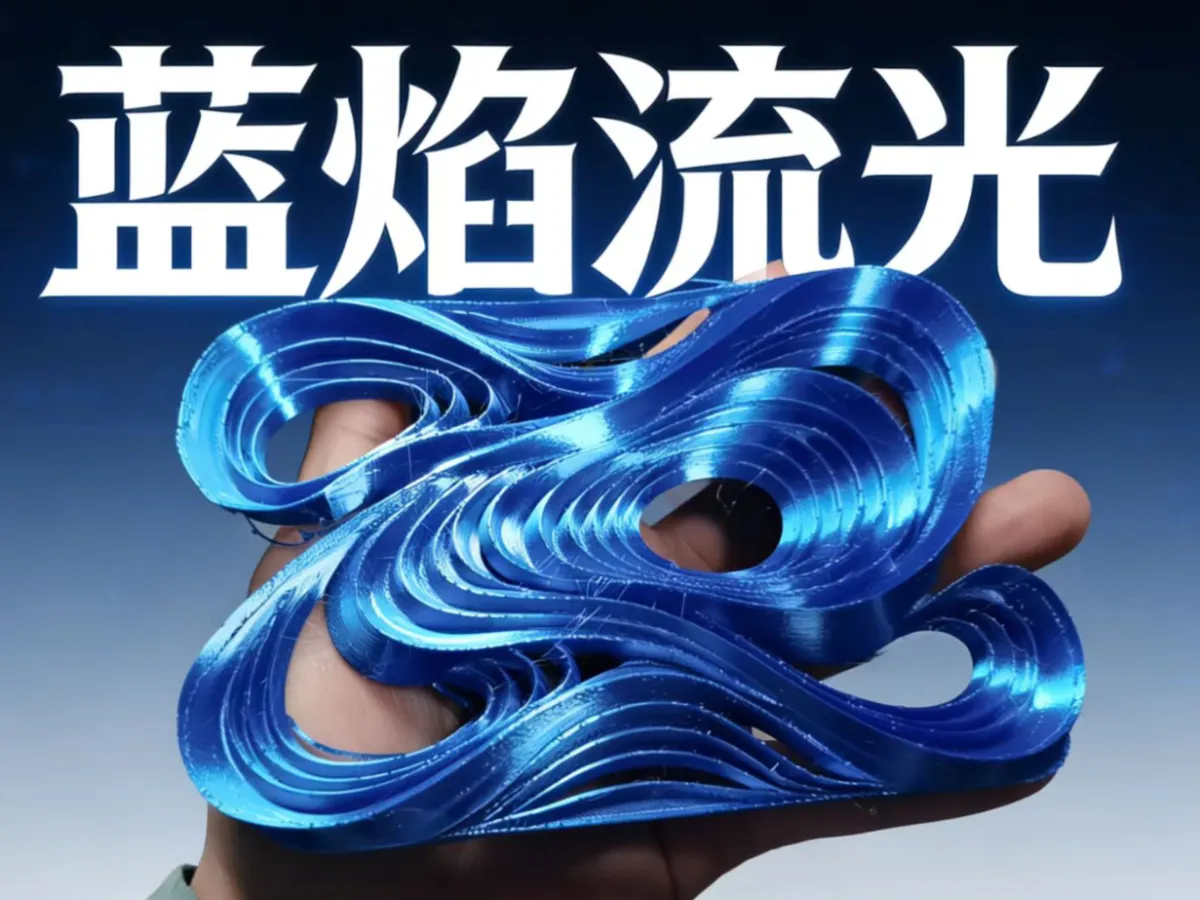

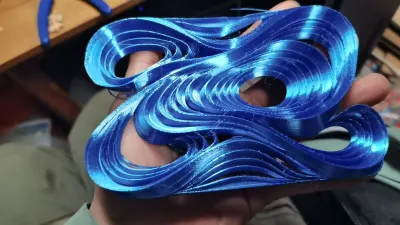
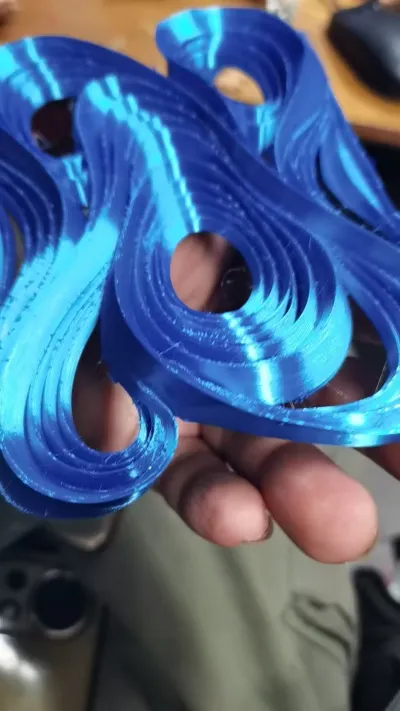

Ocean Wave Ring
Abstract Art
Decorative ornaments
Wall Decorations
Desktop Decorations
Silk PLA
Integrated Molding
No assembly required
Minimalist Design
Modern Minimalism
Home Decor
Soft furnishings and decorative accents
Marine Style
Wave‑style Design
Circular Art
Light Luxury Decor
Curvilinear Art

- 0.2 mm layer height, 3‑layer walls, 15% infill density

1-disc
PLA
Designer

7

0
I. Sources of Inspiration and Design Philosophy
1. Sources of Inspiration
The creative inspiration behind this Ocean Wave Ring model stems from the dynamic rhythms and ever‑changing interplay of light and shadow found in nature’s ocean waves. Whether it’s the ripples that dance across the sea’s surface as the wind stirs, the layered, cascading patterns of the waves themselves, or the shimmering reflections that emerge when sunlight dances upon the water, each element has served as a core reference for this design. The designer sought to capture the softness, fluidity, lightness, and intricate layering of water—translating these qualities into a three‑dimensional form through abstract art, so that even a static model could evoke a sense of movement and dynamism.
At the same time, the design draws inspiration from modern minimalist decorative arts and the aesthetic principles of abstract sculpture. By eschewing complex, representational forms and instead relying on smooth, flowing curves, circular structures, and carefully crafted hollowed-out layers, the model conveys the profound depth and boundless freedom of the ocean. Rather than being confined to a single stylistic approach, the piece is designed to seamlessly integrate into a variety of settings—be it contemporary home interiors, sleek office spaces, or artistic exhibition environments—serving as a decorative accent that marries beauty with evocative visual appeal.
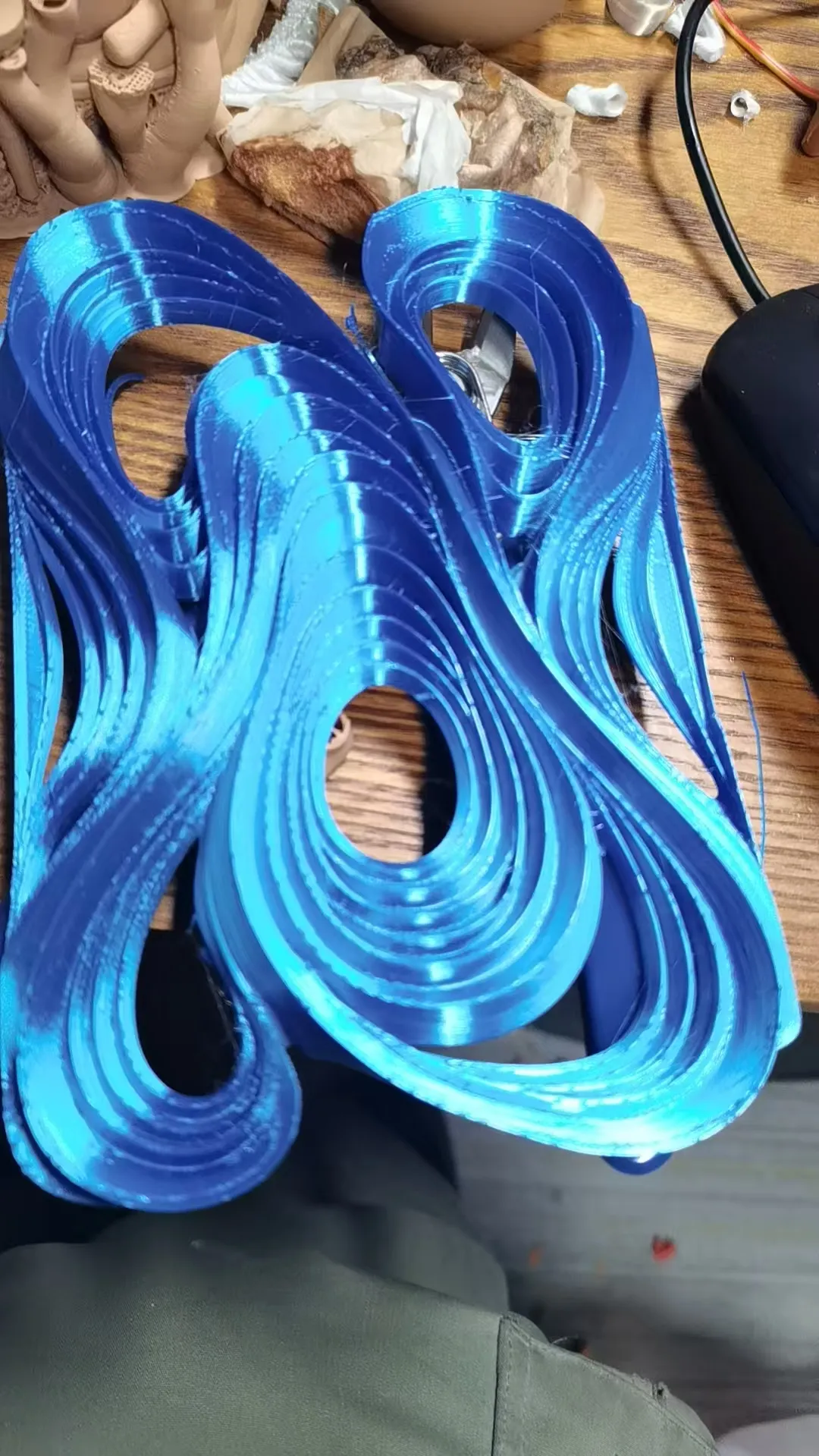
The choice of blue silk 3D printing filament was made specifically to faithfully reproduce the ocean’s rich color palette and mesmerizing wave effects. The unique luster of silk filament lends the model a delicate, nuanced play of light under varying conditions, mimicking the subtle, reflective sheen of ocean waves and bringing the essence of the sea closer to life.
2. Design Philosophy
The central design philosophy behind this model is to create a one‑piece, minimalist, highly decorative, and easily printable abstract ocean-themed ornament. With “flow,” “lightness,” “sophistication,” and “timeless elegance” at its core, the design eschews complex structural intricacies in favor of emphasizing clean lines, refined material textures, and seamless spatial integration.
The goal of the design is to empower 3D printing enthusiasts to effortlessly produce stunning decorative pieces—no complicated assembly required, no extensive post‑processing needed—resulting in an artful ornament perfect for desktop display or wall hanging. At the same time, by leveraging the unique properties of blue silk filament, the model’s visual质感 is amplified, allowing even standard FDM prints to achieve a finish that rivals fine craftsmanship, thus perfectly marrying artistic creation with 3D printing technology.
The model is positioned as a pure decorative artwork, balancing aesthetic appeal with print‑friendly design and practical usability. It’s ideal for personal collections, home decor, and space enhancement—and equally suited for showcasing 3D printed works, sharing ideas, and fostering community engagement.
II. Overview of the Model
The Ocean Wave Ring is a single‑piece, ring‑shaped abstract sculpture, composed entirely of continuous, fluid wave curves. Its layers are clearly defined, its structure is lightweight yet robust, and it features no sharp edges or harsh angles, resulting in a visually soothing form. The model requires no joins, no clips, and no assembly—once printing is complete, it emerges as a fully finished piece, dramatically lowering the barrier to entry for users.
The material has been specially optimized for blue silk PLA, maximizing the filament’s inherent luster and color vibrancy to bring forth a deep‑sea calmness and silky smoothness. From a structural standpoint, the design takes full advantage of FDM printing characteristics: few overhanging areas, stable flat surfaces, and minimal risk of warping or delamination—making it a model that’s both easy to print and forgiving of common printer tolerances, capable of being successfully produced on most mainstream desktop 3D printers.
III. Printing Requirements (Complete & Detailed)
1. Filament Requirements
This model is best printed using blue silk PLA filament, with a diameter of 1.75 mm—a material that delivers the model’s full aesthetic potential. The silk filament’s luminous sheen and rich color saturation lend the wave lines a striking sense of depth and artistic flair, far surpassing the results achieved with standard PLA, PETG, or other filaments.
Before use, it’s recommended to dry the filament thoroughly to prevent moisture from causing bubbles or rough layer lines that could compromise the final glossy finish. High‑toughness or flexible filaments are not advised, as they’re prone to warping, delamination, or loss of fine details during printing.
2. Printer Requirements
The model is compatible with the vast majority of FDM fused deposition modeling 3D printers; a heated bed size that matches the base dimensions of the model is sufficient. As long as the printer maintains normal precision—with no severe steps, missed layers, or uneven extrusion—it can reliably produce high‑quality prints.
3. Core Print Settings
- Nozzle Diameter: 0.4 mm (standard configuration, delivering optimal results)
- Layer Height: 0.15–0.2 mm—prioritize 0.15 mm for fine details, while opting for 0.2 mm for faster printing speeds
- Wall Thickness: 2–3 layers—just enough to ensure structural integrity
- Infill Density: 10%–20%—as a decorative piece, there’s no need for excessive infill
- Infill Pattern: Linear, honeycomb, or triangular patterns all work well
- Top and Bottom Layers: 3–4 layers—ensuring a smooth, even surface
- Nozzle Temperature: 200°C–215°C (adjust slightly based on the specific properties of the silk filament)
- Bed Temperature: 55°C–65°C—any platform material such as PEI, glass, or magnetic sheets will work well
- Cooling Fan: Turn off the fan during the first layer, then activate it starting from the second layer to ensure strong interlayer adhesion and proper shaping
- Print Speed: 30–50 mm/s for outer walls; inner walls and infill can be printed slightly faster to maintain a smooth surface
4. Platform and Adhesion Settings
The printing platform should be kept clean, free of oil, grease, or dust to ensure the model’s base remains stable and doesn’t warp. While different platform materials may yield slightly varying adhesion results, all commonly used platforms are capable of meeting the model’s printing needs.
The model’s base is a flat, stable surface with just the right amount of contact area with the platform—under normal circumstances, adhesion is strong and displacement is unlikely.
IV. Support and Skirt Settings: Key Considerations
1. Support Settings
This model only requires minimal support for a few overhanging sections; the main structure contains no large‑scale overhangs or significant inverted surfaces, meaning the overall reliance on supports is extremely low.
Supports can be configured as simple linear supports or tree‑like structures—there’s no need for overly dense support placement, as long as the supports can adequately cradle the overhanging areas. Because the number of supports is small, removal is straightforward, leaving minimal marks on the model’s surface and preserving the silk filament’s pristine luster.
The model’s main body lacks complex structures beyond flat surfaces, resulting in a small support footprint, reduced material usage, and faster printing times—making this an ideal low‑difficulty model for beginners.
2. Skirt Settings
The skirt can be tailored to two distinct use cases:
- Desktop Display Version: No skirt is required, and no glue is needed—reliance on the platform’s natural adhesion is sufficient for stable printing.
- Wall Mounting Version: A thin, narrow skirt is recommended to enhance adhesion during printing and prevent the model from shifting.
Skirt Characteristics:
- Skirts are relatively difficult to remove, so it’s best not to widen or thicken them—keeping the skirt to its minimum necessary width is sufficient.
- A light spray of platform adhesive along the skirt’s edge can further strengthen adhesion and ensure more stable printing.
- Removal Method: After the model has completely cooled, gently and steadily peel it away from the platform—avoid pulling or forcing the model, as this could damage the base.
- Frequent use of skirts is not recommended; only activate them when extreme stability is required.
V. Printing Notes
1. Before printing, be sure to verify that the model is complete and free of defects or errors—this helps prevent slicing failures.
2. The quality of the first layer directly impacts the overall success rate; slow down the print speed to ensure the base adheres firmly.
3. Silk filament is sensitive to temperature—too high a temperature can lead to oozing or stringing, while too low a temperature may result in insufficient interlayer adhesion. Adjust the temperature according to the recommended parameters.
4. When printing small overhanging sections, consider reducing the print speed slightly to better preserve detail integrity.
5. After printing, do not remove the model immediately—wait until the platform has fully cooled before demolding. This helps minimize warping, delamination, and damage during skirt removal.
VI. Assembly Instructions
This model is designed as a single‑piece, requiring no assembly whatsoever—no gluing, no snap‑together parts, and no component installation.
Once printing is complete, simply follow these easy steps:
1. Remove a small number of supports;
2. If a skirt is desired, carefully remove the skirt;
3. Gently clean any residual stringing or debris from the surface;
4. The model is ready to use.
The model boasts a stable structure and sufficient strength—designed purely as a decorative piece, it requires no additional reinforcement, no accessories, and no complex operations, truly embodying the principle of “print it, and you’re done; done, and you can use it.”
VII. Usage and Placement Scenarios
This model supports two primary usage scenarios:
1. Desktop Display
The model’s base is flat and stable, making it ideal for placement on desks, TV stands, entryways, nightstands, or display shelves—serving as a minimalist art piece that elevates the aesthetic quality of any space.
2. Wall Decoration
Use traceless adhesive, double‑sided tape, or nail‑free adhesive to affix the model to the wall as a nautical‑inspired wall decoration—perfect for living rooms, bedrooms, studios, or minimalist retail spaces.
The model’s versatile style complements a wide range of interior design aesthetics, including modern minimalism, Nordic design, Instagram‑style decor, coastal themes, and minimalist art—its high‑grade blue silk texture ensures it commands attention wherever it’s placed.
VIII. Summary of Model Features
1. Abstract Artistic Design: Smooth, flowing lines and evocative imagery capture the dynamic beauty of ocean waves.
2. Exclusive Blue Silk Filament: Rich, sophisticated colors and a细腻, lustrous finish deliver a near‑artisanal quality.
3. One‑Piece Construction: No assembly, no complex structures—printing is effortless and accessible to all.
4. Minimal Supports: Easy to print, easy to remove, and gentle on the model.
5. Optional Skirt: Use the skirt as needed, balancing stability with ease of removal.
6. Purely Decorative Focus: Prioritizes visual appeal, offers a premium质感, and adapts to a wide range of applications.
7. FDM‑Friendly: Low equipment requirements, high success rate—perfect for both beginners and experienced users.
Originality of the Model
The author declares that this work is their personally original model
This model is licensed under the following terms:
Credit must be given to the creator
Models(1)
- 海洋环.3mfDesigner

7.57 MB

2026-02-21


