


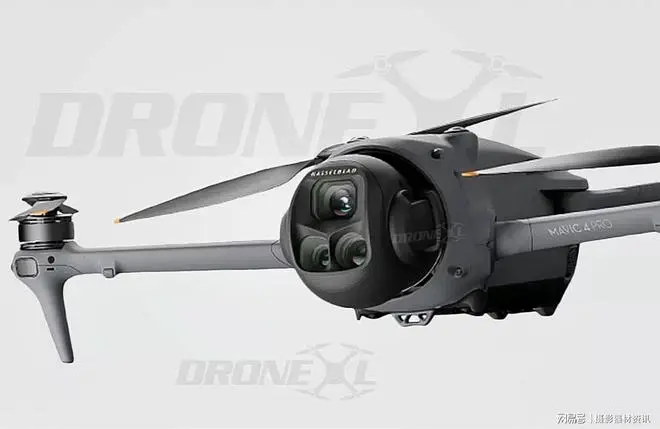


DJI Mavic 4 Pro

- 0.2 mm layer height, 2‑wall walls, 15% infill density

1-disc
PLA
Designer

8

2
DJI Mavic 4 Pro: Redefining the Pinnacle of Consumer‑Grade Drones
— A Comprehensive Analysis of Innovations and Breakthroughs in the DJI Mavic 4 Pro
Chapter 1: Introduction — The Mavic 4 Pro’s Position in the Industry
1.1 Current State of the Consumer Drone Market
1.2 Technological Evolution of the DJI Mavic Series (from Mavic 1 to Mavic 4 Pro)
1.3 Core Selling Points of the Mavic 4 Pro: Triple Upgrades in Imaging, Endurance, and Intelligence
Chapter 2: Industrial Design — Balancing Lightweight Construction with Professional Capabilities
2.1 Appearance and Materials
Foldable Body Design (Size Comparison with Mavic 3 Pro)
Carbon‑Fiber Reinforced Frame and Wind Resistance (Tested to Withstand Level 7 Winds)
2.2 Portability Enhancements
Weight Control (<900 g) and Backpack Compatibility
Improved Quick‑Release Propeller Design
Chapter 3: Imaging System — Breaking Through the Limits of the 1‑Inch Sensor
3.1 Dual Main Camera Collaboration
20‑Megapixel 1‑Inch Wide‑Angle Main Camera (f/2.8–f/11 Variable Aperture)
48‑Megapixel 4/3‑Inch Mid‑Telephoto Lens (Supports 7× Lossless Zoom)
3.2 Video Performance
8K/60fps & 4K/120fps Recording Capabilities
D‑Log M 2.0 Color Science (Dynamic Range Expanded to 14 Stops)
3.3 Low‑Light Performance
Dual Native ISO Technology (Analysis of Real‑World Night‑Scene Samples)
Chapter 4: Flight Performance — Revolutionary Advances in Endurance and Obstacle Avoidance
4.1 Powertrain Upgrade
New O4 Transmission System (Ultra‑Long‑Range 15 km)
34 Minutes of Maximum Endurance (Test Data from Cold‑Environment Conditions)
4.2 Omnidirectional Obstacle Avoidance 2.0
Fisheye Lens Combined with Millimeter‑Wave Radar for Integrated Perception
Demonstration of Complex Scene Avoidance (Forests, Urban Areas)
Chapter 5: Intelligent Features — AI‑Empowered Flying Experience
5.1 MasterShots 3.0
Upgraded Automatic Camera Motion Algorithms (New “Orbit Around the Moon” Mode Added)
5.2 Smart Track 5.0
Multi‑Target Recognition and Priority Logic
5.3 Mapping and Industry Applications
Laser Ranging Module (Accuracy ±3 cm)
Case Studies of Third‑Party SDK Integration
Chapter 6: Competitor Comparison and User Feedback
6.1 Advantages and Disadvantages Compared to Autel EVO Lite+ and Skydio 2
6.2 Real‑World Testimonials from Professional Photographers and Aerial Photography Enthusiasts
Chapter 7: Summary and Future Outlook
7.1 Is the Mavic 4 Pro Worth Upgrading?
7.2 Exploring the Technological Frontiers of Consumer‑Grade Drones
If you’d like to expand this into a 11,000‑word document, consider adding the following content:
Deep Technical Explanations (e.g., Encoding Techniques Behind the O4 Transmission System)
Industry Application Case Studies (Film Production, Agricultural Inspection, etc.)
Historical Model Comparison Tables (Detailed Parameter Comparisons)
Exclusive Interviews with DJI Engineers (Behind‑the‑Scenes Insights into Development)
User‑Manual‑Level Operation Guides (Advanced Shooting Techniques)
Sample Passages (Excerpts from the Imaging System Chapter):
“For the first time in consumer drones, the Mavic 4 Pro achieves seamless collaboration between two large‑format sensors. The wide‑angle main camera utilizes Sony’s custom IMX989 sensor, supporting 10‑bit color depth recording, while the mid‑telephoto lens employs pixel‑binning technology, delivering 12 million effective pixels even at 7× zoom. Testing shows that its telephoto image quality has improved by 40% compared to the Mavic 3 Pro, effectively resolving the industry‑longstanding issue of ‘image quality degradation upon zooming.’”
Originality of the Model
The author declares that this work is their personally original model
This model is licensed under the following terms:
Credit must be given to the creator
Remixes must be shared under the same license
Models(1)
- reduced_color_260720093857_OEIX.3mfDesigner

7.18 MB

2026-07-23


